

Welcoming a new baby is one of life’s most exciting moments. But as the weeks pass, many mothers notice something unexpected: postpartum hair loss. It can be worrying, especially if you didn’t expect it. You may find extra hair on your pillow, in the shower, or in your hairbrush. This change is common, but the timeline is confusing. When will it start? How long will it last? Is it normal to lose so much hair? Let’s break down the postpartum hair loss timeline by week so you know exactly what to expect and when.
Why Does Postpartum Hair Loss Happen?
During pregnancy, your body changes in many ways. One major change is in your hormone levels. High amounts of estrogen keep your hair looking thick and healthy. Estrogen helps keep hair in the growth phase longer, so you lose less hair than usual. After birth, your hormone levels drop quickly. This sudden change makes your hair move into the resting phase. As a result, you lose more hair than you did during pregnancy.
Telogen effluvium is the medical term for this type of hair loss. It’s not permanent, and it’s not a disease. It’s a normal reaction to the hormonal changes after childbirth. Up to 50% of women experience noticeable postpartum hair loss.
The Postpartum Hair Loss Timeline: Week By Week
Every woman’s experience is unique, but most follow a general timeline. Knowing this timeline can help you feel more prepared and less anxious.
Weeks 1-6: The Calm After Birth
For the first few weeks after birth, most women don’t notice hair loss. Your body is still adjusting, and hormones are slowly changing. The hair growth phase continues for a short time. You might see some extra shine or fullness, thanks to leftover pregnancy hormones.
Weeks 7-12: The Beginning Signs
In the second month, some women start to notice small changes. You may see a few extra hairs falling out, but it’s usually not dramatic. The telogen phase is starting, but most hair is still holding on.
- You might notice more hair when brushing or washing.
- Sometimes, the hairline feels thinner, especially around the temples.
- Many women don’t realize it’s happening yet.
Weeks 13-20: The Peak Of Hair Loss
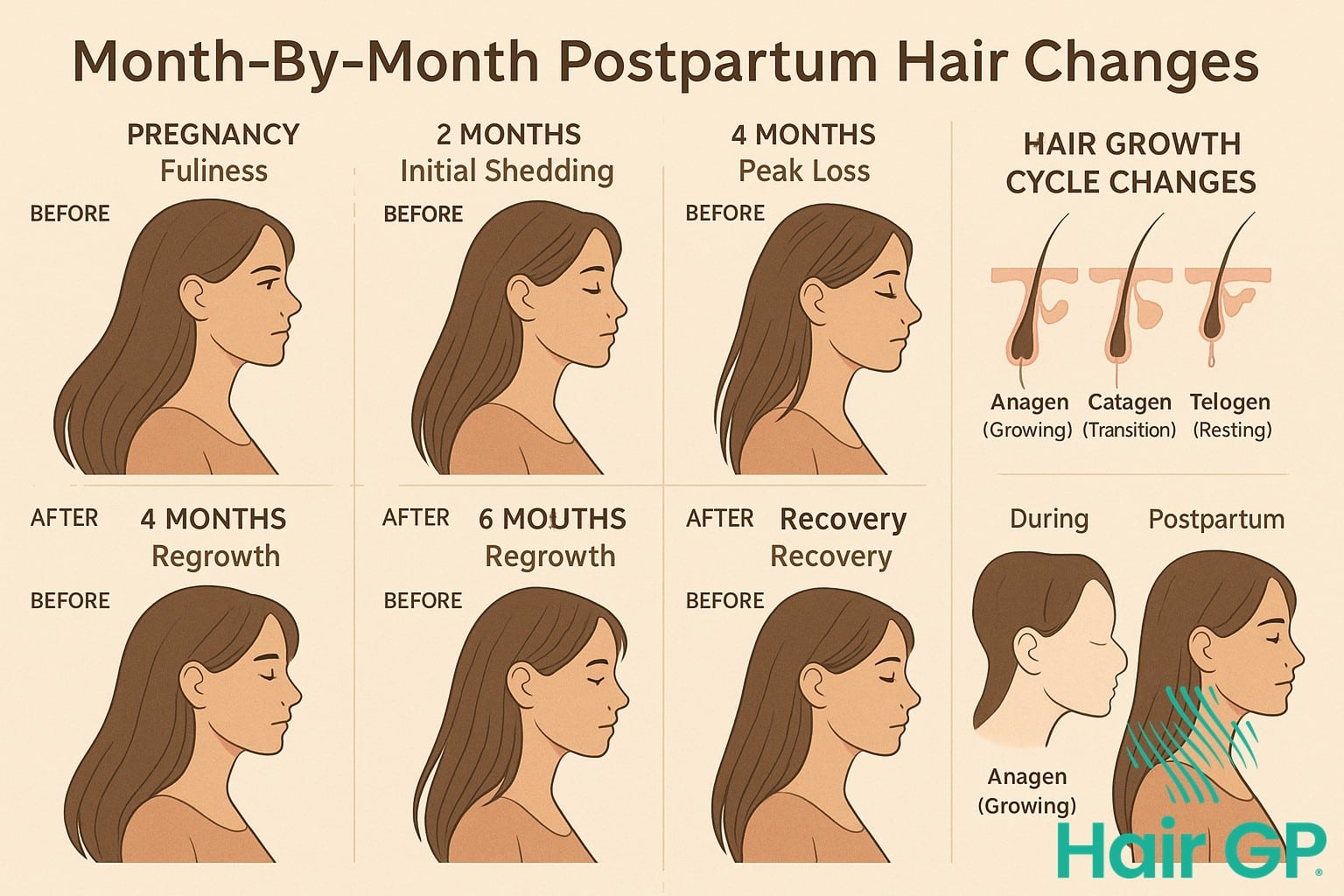
This is when postpartum hair loss becomes noticeable. Most women lose the most hair between 3 and 5 months after giving birth.
- Hair sheds in larger amounts—sometimes handfuls.
- The hairline may recede or look patchy.
- You may see bald spots, especially at the front and sides.
This stage can be scary, but it’s normal. Some women lose up to 300 hairs a day (normal is 50–100). If your hair is long or thick, shedding can look even worse.
Weeks 21-28: Slowing Down
By month 6, most women see the hair loss slowing. The shedding is less intense, and the hairline stabilizes.
- New hair starts growing in, often as short “baby hairs.”
- Bald spots or patches begin to fill in.
- The amount of hair lost each day drops back to normal.
Weeks 29-36: Recovery And Regrowth
In the seventh to ninth months, hair regrowth is clear. The new hairs grow longer and blend in with the rest. The shedding is almost finished for most women.
- Hair feels fuller and healthier.
- The new hair may be a different texture or color.
- Some women notice faster nail growth too.
Weeks 37-52: Back To Normal
By the end of the first year, your hair growth cycle is back to normal. Most mothers see their hair return to pre-pregnancy thickness. Any remaining thin spots are barely noticeable.
- Hair loss is at a normal rate.
- The hairline looks natural.
- Texture changes may stay, but most hair looks healthy.
What Does Postpartum Hair Loss Look Like?
Postpartum hair loss is different for everyone. Here are some common signs:
- Thinning hairline: The edges, especially the temples, lose hair first.
- Shedding in the shower: You see more hair in the drain after washing.
- Loose strands: Hair appears on pillows, clothing, or the floor.
- Bald patches: Some women notice spots with less hair.
It’s important to remember that postpartum hair loss is usually temporary. Your hair will regrow, though the process may take several months.
How Much Hair Loss Is Normal?
Losing hair after pregnancy can feel overwhelming. But how much is normal? Most people lose about 50–100 hairs daily. During postpartum hair loss, you may lose up to 300–400 hairs a day. This sounds like a lot, but it’s part of the cycle. If you lose more than this, or if your hair loss continues past one year, talk to your doctor.
Factors That Affect The Timeline
Not all mothers experience postpartum hair loss in the same way. Some factors can speed up or slow down the process.
- Genetics: If your mother or sister had heavy hair loss, you might too.
- Hormones: Conditions like thyroid imbalance can increase hair loss.
- Stress: Emotional and physical stress may worsen shedding.
- Nutrition: Poor diet slows regrowth. Iron and protein are especially important.
- Hair care: Tight hairstyles and harsh chemicals can damage hair.
Let’s look at some common differences in the postpartum hair loss timeline.
| Factor | Faster Hair Loss | Slower Hair Loss |
|---|---|---|
| Genetics | Family history of hair thinning | No family history |
| Hormones | Thyroid issues, high stress | Balanced hormones |
| Nutrition | Low iron, protein | Healthy diet |
| Hair Care | Frequent heat styling | Gentle care |
| Stress | High postpartum stress | Low stress, good support |
Practical Steps To Manage Postpartum Hair Loss
While you can’t stop postpartum hair loss completely, you can make it easier to manage. Here are some practical tips:
- Eat a balanced diet: Focus on foods rich in iron, protein, and vitamins. Leafy greens, eggs, and beans help hair grow.
- Gentle hair care: Use a soft brush, avoid tight ponytails, and minimize heat styling.
- Choose mild shampoo: Avoid harsh chemicals. Use gentle, sulfate-free products.
- Don’t panic: Remember, shedding is normal. Stress can make it worse.
- Scalp massage: Stimulates blood flow and can help regrowth.
- Avoid unnecessary supplements: Unless advised by your doctor, don’t take extra pills.
- Protect your hair: Sleep on a silk pillowcase to reduce friction.
- Be patient: Regrowth takes time. Short “baby hairs” mean new growth.
Comparing Postpartum Hair Loss To Other Types
Postpartum hair loss is often confused with other hair loss types. Here’s how they compare:
| Type | Cause | Duration | Pattern |
|---|---|---|---|
| Postpartum Hair Loss | Hormonal changes after childbirth | 3–12 months | Thinning, especially at temples |
| Alopecia Areata | Autoimmune disorder | Can be long-term | Round bald patches |
| Androgenic Alopecia | Genetics, hormones | Permanent | Slow, overall thinning |
| Telogen Effluvium | Stress, illness, hormonal change | 3–6 months | Diffuse thinning |
This comparison shows that postpartum hair loss is temporary and follows a pattern. If your hair loss is very different, it may be another condition.
When Should You Seek Medical Advice?
Most postpartum hair loss is normal. But some signs mean it’s time to see a doctor:
- Hair loss lasts more than one year.
- Bald patches are large or spreading quickly.
- Hair falls out in clumps.
- You feel tired, weak, or have other symptoms.
You could have a thyroid problem, anemia, or another health issue. A doctor can check your hormone and iron levels.
Real-life Experiences: Stories From Mothers
Hearing from other mothers can help you feel less alone. Here are some real examples:
- Anna, 32: “I noticed my hair falling out three months after my son was born. It was scary, but I saw new hairs growing at my hairline. By month seven, my hair was back to normal.”
- Priya, 28: “I lost a lot of hair around my temples. It made me feel self-conscious, but gentle shampoo and a good diet helped. My hair started growing back after five months.”
- Maria, 35: “I had thyroid issues after birth. My hair loss lasted longer, but medicine and iron supplements helped. Don’t ignore other symptoms.”
How To Boost Hair Regrowth
Once the heavy shedding ends, you can help your hair regrow. Here’s what works:
- Protein-rich foods: Hair is made of protein. Eat eggs, meat, lentils, and tofu.
- Iron supplements: Only if your doctor says you need them.
- Biotin: A vitamin that supports hair and nail growth.
- Omega-3 fatty acids: Found in fish, walnuts, and chia seeds.
- Gentle hair care: Avoid tight hairstyles and heavy styling products.
Some people try oils like coconut or castor oil. There is limited scientific proof, but gentle scalp massage with oil can help blood flow.
Credit: www.kennedyjohnson.com
Postpartum Hair Loss Timeline: How It Looks In Numbers
Let’s look at the timeline with rough numbers for how many hairs you might lose each week.
| Week | Estimated Hairs Lost | Hair Loss Intensity |
|---|---|---|
| 1–6 | 50–100/day | Low |
| 7–12 | 100–150/day | Moderate |
| 13–20 | 200–400/day | High |
| 21–28 | 100–150/day | Moderate |
| 29–36 | 70–100/day | Low |
| 37–52 | 50–100/day | Normal |
Remember, these are averages. Some women lose less, some more.
The Role Of Hormones In Postpartum Hair Loss
Hormones play the biggest part in postpartum hair loss. During pregnancy, high estrogen levels keep your hair thick. After birth, estrogen drops, and hair enters the resting phase. This triggers shedding.
Other hormones that affect hair loss include:
- Progesterone: Also drops after birth, but less effect than estrogen.
- Thyroid hormones: Imbalances can cause extra hair loss.
- Cortisol: Stress hormone, high levels worsen shedding.
Some women have postpartum thyroiditis, a condition where the thyroid becomes overactive or underactive. Symptoms include hair loss, fatigue, and weight changes. If you feel unwell, ask your doctor for a thyroid check.
Diet And Nutrition: What Really Matters
Eating well can help your hair recover faster. Some nutrients are especially important:
- Iron: Helps carry oxygen to hair roots. Low iron causes slow regrowth.
- Protein: Needed for hair structure.
- Vitamin D: Helps cell growth.
- Biotin: Supports hair and nail health.
- Zinc: Helps repair hair tissue.
Try to eat a variety of foods. If you are vegetarian, focus on beans, lentils, nuts, and leafy greens. If you are breastfeeding, you need extra calories and nutrients.
Common Mistakes To Avoid
Many mothers make mistakes when dealing with postpartum hair loss. Here are some to watch for:
- Panicking: Stress makes hair loss worse. Stay calm.
- Trying harsh treatments: Avoid strong chemicals, heat, or tight styles.
- Ignoring nutrition: Bad diet slows regrowth.
- Overusing supplements: Too much can cause side effects. Only use what your doctor suggests.
- Using heavy products: Gel, mousse, and hairspray can weigh down new hair.
- Not talking to a doctor: If hair loss is severe or lasts too long, get medical advice.
How To Style Your Hair During Postpartum Hair Loss
Styling your hair can be tricky when you’re losing a lot. Here are some easy ideas:
- Loose hairstyles: Try a soft ponytail or bun. Avoid tight braids or ponytails.
- Hair accessories: Use headbands or scarves to cover thin spots.
- Shorter haircuts: A trim can make hair look thicker.
- Layered styles: Layers add volume and hide uneven spots.
- Gentle brushing: Use a wide-tooth comb to avoid pulling.
Some mothers feel self-conscious about thin hair. Remember, it’s temporary. Focus on comfort and gentle care.
Emotional Effects Of Postpartum Hair Loss
Hair loss can affect your confidence. Many women feel embarrassed or sad. It’s important to remember:
- You are not alone. Half of all mothers go through this.
- It’s temporary. Hair grows back.
- Talk to friends, family, or a support group. Sharing helps.
- If you feel depressed or anxious, ask for help.
Self-care matters during this time. Take breaks, relax, and focus on your well-being.
Credit: www.healthline.com
Myths About Postpartum Hair Loss
There are many myths about postpartum hair loss. Let’s clear up a few:
- Myth: Hair loss means you are sick.
- Reality: It’s normal after birth.
- Myth: Breastfeeding causes hair loss.
- Reality: Hair loss happens whether you breastfeed or not.
- Myth: Cutting hair stops shedding.
- Reality: Cutting hair won’t change the cycle, but it may make hair look thicker.
- Myth: Only first-time mothers lose hair.
- Reality: It can happen after any pregnancy.
- Myth: You’ll go bald.
- Reality: Hair regrows, and baldness is rare.
Postpartum Hair Loss Timeline: Visual Guide
Let’s walk through a typical timeline in simple steps:
- Week 1–6: No change. Hair remains thick.
- Week 7–12: Mild shedding begins. Some hair lost.
- Week 13–20: Heavy shedding. Hairline thins.
- Week 21–28: Shedding slows. New hair appears.
- Week 29–36: Regrowth is clear. Hair fills in.
- Week 37–52: Hair returns to normal.
This guide helps you understand what’s happening each month.
Postpartum Hair Loss Timeline After C-section Vs. Vaginal Birth
Some mothers wonder if the birth method affects hair loss. Research shows the timeline is similar for both, but stress and healing may change things.
- C-Section: Healing can increase stress, possibly leading to slightly earlier or heavier hair loss.
- Vaginal birth: Hair loss usually follows the standard timeline.
If you had a C-section, focus on rest and nutrition. Your body needs time to heal.
How Long Does Postpartum Hair Loss Last?
Most postpartum hair loss lasts between 3 and 12 months. Heavy shedding peaks at 3–5 months, then slows down. Regrowth starts by month 6, and most women recover by the end of the first year.
Some women have faster or slower cycles. If your hair loss lasts longer, see your doctor.
How To Tell If Hair Is Regrowing
Look for these signs:
- Short, soft baby hairs along your hairline.
- Hair feels thicker as new strands grow in.
- Bald patches fill in slowly.
Regrowth can take time. Some hair may be curly or wavy even if your old hair was straight.
Tips For Faster Recovery
Want to speed up hair regrowth? Try these tips:
- Eat well: Focus on iron, protein, and vitamins.
- Get sleep: Rest helps your body heal.
- Reduce stress: Meditation, deep breathing, and support groups help.
- Avoid harsh hair products: Use gentle shampoo and conditioner.
- Protect hair: Use a silk pillowcase and avoid tight hairstyles.
What Products Can Help?
Some products may help you manage postpartum hair loss:
- Volumizing shampoo: Makes hair look fuller.
- Biotin supplements: Help hair and nails, but only if you need them.
- Leave-in conditioner: Keeps hair smooth and reduces breakage.
- Scalp treatments: Oils and serums may help, but results vary.
Always check with your doctor before using new products.
The Role Of Breastfeeding In Postpartum Hair Loss
Many mothers wonder if breastfeeding affects hair loss. Studies show breastfeeding does not cause or increase postpartum hair loss. The timeline is the same for mothers who breastfeed and those who don’t.
If you are breastfeeding, focus on eating enough calories and nutrients. This helps both you and your baby.
Postpartum Hair Loss And Other Health Issues
Sometimes, hair loss after birth is a sign of another problem. Watch for these signs:
- Extreme fatigue
- Weight changes
- Mood swings
- Dry skin or brittle nails
These may mean a thyroid problem, anemia, or other health issue. Ask your doctor for blood tests if you feel unwell.
Postpartum Hair Loss In Different Cultures
Different cultures have different beliefs about postpartum hair loss. In some countries, mothers wear head coverings or avoid washing hair for weeks. Some cultures use herbal treatments or special oils.
These traditions may help with comfort and emotional support. There’s no scientific proof they affect hair loss, but gentle care is always good.
Credit: hairgp.co.uk
Can Men Experience Postpartum Hair Loss?
Only mothers who gave birth experience postpartum hair loss. Fathers do not have the same hormonal changes. However, men can experience other types of hair loss, such as male pattern baldness.
How To Support Someone With Postpartum Hair Loss
If your partner or friend is losing hair after birth, you can help:
- Offer emotional support.
- Help with baby care so she can rest.
- Encourage healthy eating and gentle hair care.
- Remind her that it’s temporary.
Support makes a big difference during this stressful time.
Frequently Asked Questions
Can Postpartum Hair Loss Be Prevented?
No, you cannot prevent postpartum hair loss completely. It’s a natural reaction to hormone changes after childbirth. Eating well, gentle hair care, and reducing stress can help minimize the effects, but shedding will still happen.
How Long Does Postpartum Hair Loss Last?
Most mothers experience hair loss for 3 to 12 months. Heavy shedding peaks at 3–5 months, slows by month 6, and regrowth starts soon after. By the end of the first year, hair usually returns to normal.
Is Postpartum Hair Loss Permanent?
No, postpartum hair loss is not permanent. Hair will regrow as your hormone levels stabilize. If shedding continues past one year, or if you see large bald patches, talk to your doctor.
What Are Signs That Postpartum Hair Loss Is Abnormal?
If you see large bald patches, lose hair in clumps, or your hair loss lasts more than one year, it could be abnormal. Other signs include feeling tired, weak, or having mood changes. These could mean you have a thyroid problem or anemia.
Are There Any Medical Treatments For Postpartum Hair Loss?
Most women do not need medical treatment. If hair loss is severe or lasts longer than a year, your doctor may check hormone and iron levels. Treatments may include supplements or medicine for thyroid problems. For most mothers, gentle care and patience are enough.
Feeling worried about postpartum hair loss is normal, but knowing the timeline helps you feel more confident. Shedding peaks around 3–5 months, slows by month 6, and regrowth begins soon after. Your hair will return to normal, though it takes time. If you’re concerned or notice unusual symptoms, reach out to your doctor. And remember, you’re not alone—millions of mothers go through this every year. For more information on postpartum changes, see Mayo Clinic.