

Covid-related Hair Loss In 2026: Long-haul Shedding Recovery
The pandemic changed the world in many ways, and one surprising effect is hair loss after Covid-19. In 2026, people are still talking about this problem. For some, hair started falling out weeks or months after infection. For others, the shedding lasted longer, becoming a frustrating part of their recovery. If you are struggling with long-haul hair loss, you are not alone. This article explains why it happens, how to recognize it, and what you can do to help your hair grow back. You’ll learn about the science behind Covid-related hair shedding, practical recovery steps, and the latest research. Whether you are just noticing the issue or have been dealing with it for months, this guide will help you understand and take control.
Understanding Covid-related Hair Loss
Covid-related hair loss is a real medical issue. Most experts call it telogen effluvium. This means your hair falls out more than usual because of stress or illness. Covid-19 triggers this kind of hair loss in many people. But it’s not the only cause: fever, strong medications, and emotional stress can also lead to shedding.
What Is Telogen Effluvium?
Your hair grows in cycles. Most of the time, about 85% of your hair is growing, and the rest is resting or falling out. When your body faces major stress, like Covid-19, more hairs switch to the resting phase. A few weeks later, those hairs fall out. Telogen effluvium is not permanent, but it feels scary because you may see handfuls of hair coming out.
People often worry because the shedding seems sudden. You may notice more hair on your pillow in the morning or see a lot in the shower drain. Sometimes, people feel they are losing hair “everywhere,” but it’s mostly on the scalp.
It is common to lose up to 150 hairs a day during the peak phase. The shock to the hair cycle is temporary, but it feels dramatic, especially if you had thick hair before.
Who Is Affected?
In 2026, research shows about 22% of people who had Covid-19 report some hair loss. Women seem to be affected more often, especially those aged 20–45. But men and older adults can also experience shedding.
Some experts suggest that women report hair loss more because they notice changes in their hair’s volume and texture. Men may not notice diffuse thinning as quickly, especially if they already have pattern hair loss. People with curly or thick hair sometimes see less visible thinning, but still experience shedding.
Family history can also play a role. If you have relatives who experienced hair loss after illness, you might be at higher risk. Ethnicity is another factor: some studies show Asian and Hispanic individuals may experience telogen effluvium differently, sometimes with more scalp discomfort.
When Does It Start?
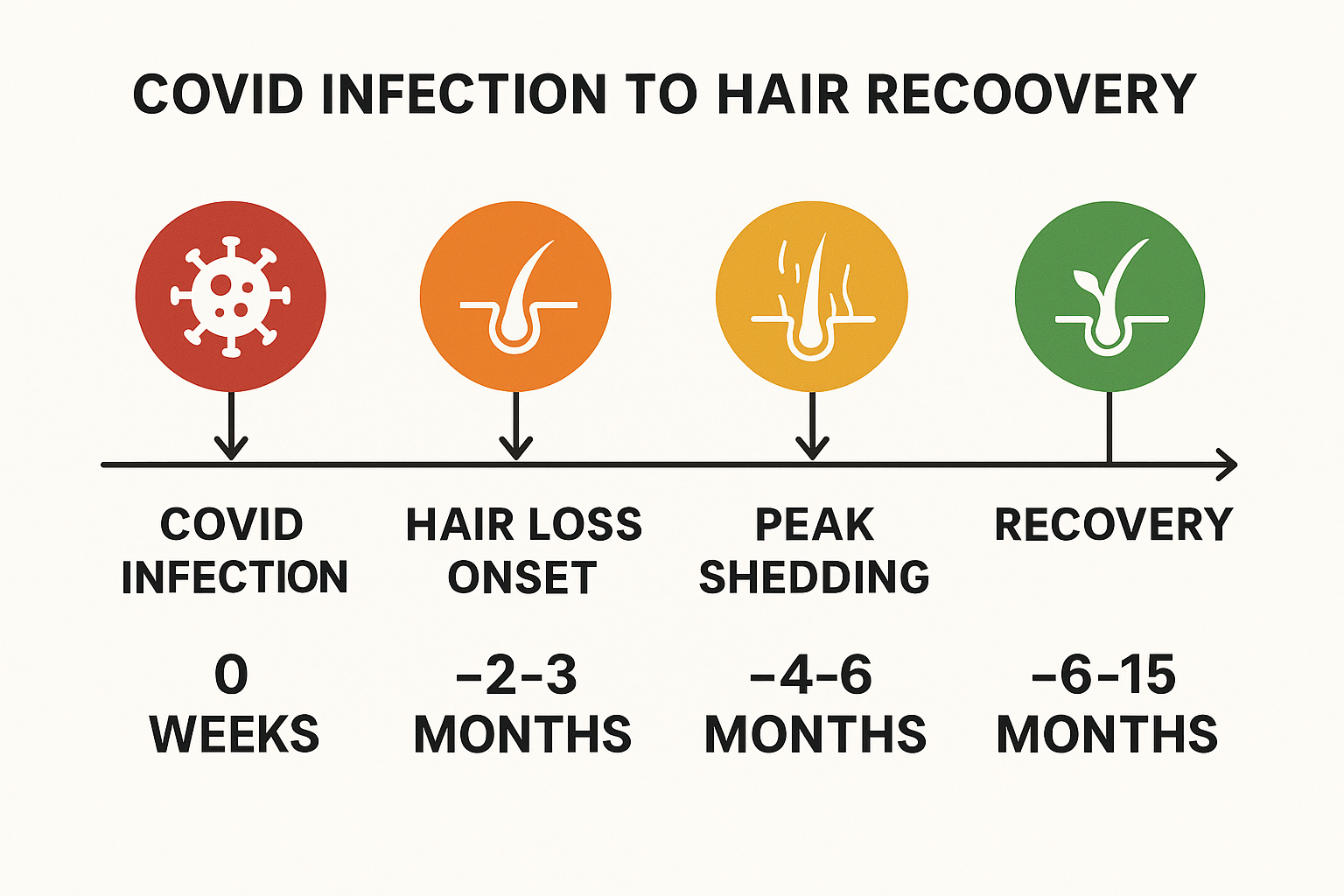
Covid-related hair loss usually begins 2 to 3 months after recovery. Some people notice it sooner, others later. The shedding can last a few weeks or continue for several months, especially in long-haul cases.
You might start seeing more hair fall just as you feel physically better. This delay is confusing and often makes people worry that something else is wrong. For some, the shedding peaks at four months and slowly improves. For others, especially those with repeated illness or ongoing stress, it continues.
Why Does Covid Cause Hair Loss?
Covid-19 is a strong stressor for the body. It causes inflammation, fever, and sometimes oxygen shortages. All these can push hair follicles into the resting phase. Some scientists also believe the virus itself may attack hair roots. In rare cases, medications used during Covid treatment can cause hair loss.
High fever and rapid weight loss during illness are common triggers. If you had a severe infection, your body used extra energy to fight it, and hair growth became less important. This means hair follicles “pause” until your health improves.
Some newer studies suggest that immune system changes—especially overactive inflammation—may target hair follicles. Medications like steroids or antivirals can also affect hair, especially if you had long hospital stays.
Symptoms And Signs Of Long-haul Shedding
Recognizing Covid-related hair loss is important for recovery. The symptoms are clear but can be confused with other conditions.
Main Symptoms
- Sudden hair shedding (more than 100 hairs per day)
- Thinning on the top of the scalp
- Wider part lines in hair
- Hair clumps in brushes or shower drains
You may notice your ponytail feels thinner, or your hair doesn’t cover your scalp as well as before. Sometimes, friends or family mention your hair looks different. The shedding is usually diffuse—not just one area, but all over the scalp.
Less Obvious Signs
- Itchiness or mild scalp discomfort
- Hair feeling dry or brittle
- Hair regrowth that is thin and weak
Some people feel their scalp is more sensitive. You may notice new “baby hairs” that are finer and shorter than your usual hair. These signs show your hair is starting to recover, but the new growth can take months to thicken.
How To Distinguish From Other Types
Covid-related hair loss is not patchy. If you see bald spots or scarring, it may be another problem like alopecia areata. Telogen effluvium causes diffuse thinning, not patches.
If your eyebrows or body hair is falling out, talk to your doctor. These signs may point to other health issues. Covid hair loss is almost always limited to scalp hair.
How Long Does Covid Hair Loss Last?
Most people see improvement within 6 months. But for some, the shedding continues for a year or more. This long-haul shedding is frustrating, but it does not mean your hair will never regrow.
Typical Timeline
| Stage | Time After Covid | What Happens |
|---|---|---|
| Initial Recovery | 0–2 months | Body recovers from illness, hair cycle shifts |
| Shedding Begins | 2–4 months | Visible hair loss starts, daily shedding increases |
| Peak Shedding | 4–6 months | Hair loss may be at its worst |
| Recovery | 6–12 months | Shedding slows, new hair starts to regrow |
| Long-Haul Cases | 12+ months | Some shedding continues, but regrowth is possible |
Factors That Affect Recovery
- Age: Younger people recover faster
- Nutrition: Poor diet slows regrowth
- Stress: Ongoing stress keeps shedding active
- Medications: Some drugs delay healing
Other factors include sleep quality and hormonal changes. If you don’t sleep well, your body can’t repair itself efficiently. Women with hormonal shifts—like menopause or birth control changes—may see slower recovery. Smoking and heavy alcohol use also slow regrowth. If you had multiple Covid infections or other illnesses, hair recovery can take longer.
Scientific Data On Covid Hair Loss
By 2026, many studies have looked at Covid-related hair loss. A large review in 2025 found that telogen effluvium was the most common hair problem after Covid. About 1 in 5 patients experienced it. Most had mild to moderate shedding, but a small group (about 3%) had severe, long-term thinning.
Recent Research
A 2026 study published in the Journal of Dermatology followed 1,200 Covid survivors. Of these, 270 reported hair loss lasting more than 12 months. Researchers found that people with severe Covid, high fever, or long hospital stays were more likely to have long-haul shedding.
The study also showed that people with low iron or vitamin D levels recovered more slowly. Another finding: those who had ongoing anxiety or depression after Covid were twice as likely to have persistent hair loss. This links mental health directly to physical recovery.
Insights Beginners Miss
Many people assume hair loss means permanent damage. But telogen effluvium is usually reversible. Another common mistake: ignoring nutrition. Hair regrowth needs protein, iron, and zinc. Without these, recovery is slower.
Some beginners also miss the importance of scalp health. Keeping the scalp clean, not oily or dry, helps new hair grow. Using harsh products can delay regrowth. Many people focus only on hair and forget the scalp needs care too.
Credit: turkeyluxuryclinics.com
Emotional Impact Of Covid Hair Loss
Hair loss affects more than your appearance. Many people feel anxious, sad, or embarrassed. Some avoid social events or feel less confident at work. In 2026, online support groups have grown, connecting people dealing with long-haul shedding.
It’s common to feel frustrated if your hair loss lasts longer than expected. You may worry others will notice or judge you. For some, hair loss leads to isolation or changes in daily routines. In severe cases, people report depression or panic attacks.
Coping Strategies
- Talk with others facing similar issues
- Consult a dermatologist for reassurance
- Practice stress-reducing activities: Meditation, exercise
- Focus on hair care, not just hair loss
Sharing your journey with family or friends can help. Some people find wearing hats or headscarves boosts confidence. Others use gentle styling tricks to hide thinning. Counseling or therapy is useful if hair loss affects your mood deeply.
Non-obvious Insight
Mental health support can speed up physical recovery. Stress slows hair regrowth. Seeking counseling or joining support groups can help both mind and body.
Some studies show that people who join support groups recover faster, as they feel less stress and isolation. Practicing mindfulness or journaling about your recovery can help calm anxiety, making your body more likely to heal.
Diagnosing Covid-related Hair Loss
If you notice shedding, it’s important to see a doctor. Not all hair loss is caused by Covid. A dermatologist can check your scalp and review your history.
Common Diagnostic Steps
- Medical history: Covid infection, symptoms, treatments
- Physical exam: Scalp and hair check
- Blood tests: Rule out iron deficiency, thyroid issues
- Hair pull test: Checks how many hairs come out
- Biopsy (rare): If other conditions are suspected
Doctors may also ask about recent diet changes, stress levels, and family history. Blood tests help find hidden causes like low iron or thyroid problems. The hair pull test is simple: the doctor gently pulls a few hairs—if many come out, it shows active shedding.
Mistakes To Avoid
Many people skip the doctor and try home remedies. This can delay proper treatment. Others use harsh chemicals, making shedding worse.
Don’t start supplements without checking blood levels first. Too much iron or biotin can cause side effects. Avoid coloring or bleaching hair during recovery, as it can worsen breakage.
Treatment Options In 2026
There is no magic cure for Covid hair loss, but many options help speed recovery. Treatments focus on supporting hair regrowth and reducing stress.
Medical Treatments
- Minoxidil: Boosts hair growth, used as foam or lotion
- Biotin supplements: Helpful if you are deficient
- Steroids: Used rarely for severe inflammation
- Platelet-rich plasma (PRP): New technique, improves regrowth
Dermatologists sometimes combine treatments for better results. For example, using minoxidil with PRP therapy. If you have inflammation or scalp redness, steroid creams may help.
Over-the-counter Products
- Gentle shampoos and conditioners
- Hair masks with protein
- Scalp massage tools
Look for shampoos with no sulfates or parabens. Protein hair masks help strengthen new hair. Scalp massage tools boost blood flow, making follicles healthier.
Comparison Table: Treatment Options
| Treatment | Effectiveness | Cost (USD) | Side Effects |
|---|---|---|---|
| Minoxidil | High | 40–60/month | Scalp irritation, dryness |
| Biotin | Medium | 15–30/month | Rare, mild acne |
| PRP | Medium-High | 500–1200/session | Pain, bruising |
| Gentle Shampoo | Low-Medium | 10–20/month | None |
Practical Tips
- Use lukewarm water, not hot
- Avoid tight hairstyles
- Let hair air dry instead of using heat
If you must use a dryer, set it to cool. Avoid ponytails or buns that pull on the scalp. Try sleeping on a silk pillowcase, which reduces friction and breakage.
Non-obvious Insight
Don’t stop using minoxidil suddenly. Withdrawal can cause more shedding. If you plan to stop, taper off slowly.
Some people think more frequent application is better, but overuse can irritate the scalp. Stick to recommended doses for best results.
Nutrition And Hair Regrowth
Diet is a key factor in hair recovery. Many people miss this step. Hair is made mostly of protein, so you need enough in your diet. Iron, zinc, and vitamins are also important.
Best Foods For Hair Recovery
- Eggs and lean meats for protein
- Leafy greens for iron
- Nuts and seeds for zinc
- Fish for omega-3 fatty acids
Add beans, lentils, and tofu for plant-based protein. Avocados and olive oil provide healthy fats. Sweet potatoes and carrots have vitamin A, which supports scalp health.
Example Meal Plan
Breakfast: Eggs, Spinach, Whole-grain Toast
Lunch: Chicken Breast, Salad, Nuts
Dinner: Salmon, Brown Rice, Broccoli
Snack ideas include yogurt with seeds, hummus with veggies, or fruit with nut butter. Drink plenty of water to keep your scalp hydrated.
Supplements
Some people benefit from multivitamins or biotin, but always check with a doctor. Too much iron or zinc can be harmful.
If you are vegetarian or vegan, consider B12 and iron supplements. Ask your doctor to check your blood before starting new supplements. Vitamin D is important for hair growth, especially if you spend little time outdoors.
Credit: www.nocohair.com
Home Remedies And Lifestyle Changes
Many people try home remedies for hair loss. Some work, others don’t. In 2026, the most popular are:
- Coconut oil scalp massage
- Aloe vera gel for soothing
- Onion juice (smell is strong!)
- Gentle brushing to stimulate blood flow
Coconut oil helps moisturize the scalp, but use a small amount. Aloe vera can reduce irritation if your scalp feels itchy. Onion juice is believed to boost circulation, but always patch test first to avoid reactions.
Lifestyle Adjustments
- Sleep at least 7 hours per night
- Exercise regularly to reduce stress
- Limit alcohol and caffeine
Good sleep helps your body rebuild. Regular exercise—like walking or yoga—reduces stress hormones that affect hair. Too much caffeine can dry your scalp, so keep it moderate.
Mistakes Beginners Make
Applying oils too often can clog pores. Use only 2–3 times per week. Avoid brushing wet hair, which increases breakage.
Many people skip scalp care, focusing only on hair. Healthy scalp means healthy hair. Avoid pulling hair back tightly, and let your hair breathe.
Long-haul Recovery: What To Expect
If you are dealing with long-haul Covid hair loss, patience is key. Regrowth takes time. Most people see improvement after 12–18 months. New hair may look thin at first, but it gets stronger.
Some people notice “baby hairs” along the hairline after six months. These are signs of new growth. Hair texture may change—sometimes softer or curlier than before. Full thickness can take up to two years.
Tracking Progress
Take Monthly Photos
Count Shed Hairs After Brushing
Check For New Baby Hairs Along The Hairline
Keep a diary of your hair routine and diet. Note changes in scalp health or hair strength. Progress is slow but steady.
When To See A Specialist
If Shedding Lasts More Than 18 Months
If You See Bald Patches Or Scarring
If Hair Regrowth Stops Completely
Specialists can check for hidden causes or offer advanced treatments. Don’t wait too long if you feel worried.
Preventing Hair Loss After Covid
Prevention is possible, but not always easy. The best steps:
- Manage stress during and after illness
- Eat a balanced diet
- Avoid harsh hair treatments
- Treat fever and inflammation quickly
Keep your scalp clean and moisturized. Use gentle products and avoid frequent coloring or chemical treatments. If you feel stressed, practice relaxation techniques.
Data Table: Prevention Tips And Success Rate
| Prevention Tip | Success Rate (%) | Notes |
|---|---|---|
| Balanced Diet | 75 | Works best with protein and iron |
| Stress Management | 60 | Meditation, exercise help |
| Gentle Hair Care | 50 | Avoid heat and chemicals |
| Rapid Treatment | 40 | Lower fever quickly |
Current Trends In Hair Loss Recovery (2026)
In 2026, new treatments and trends are helping people recover from Covid hair loss. Dermatologists are using advanced therapies, and hair care companies are launching products designed for post-Covid shedding.
New Therapies
- Laser hair growth devices: At-home tools that stimulate follicles
- Microneedling: Tiny needles boost blood flow
- Personalized hair supplements: Custom blends based on blood tests
Some clinics offer hair analysis using AI technology. This helps track progress and recommend the best treatments. New shampoos target inflammation, using plant extracts and peptides.
Online Support
Social media groups and forums are popular for sharing advice. Many people swap stories and tips, helping each other stay motivated.
Apps now help track hair health and connect you with specialists. Live webinars and Q&A sessions are common, with experts answering questions about recovery.
Non-obvious Insight
Some insurance plans now cover hair loss treatments for Covid survivors. Check your policy for new updates.
Pharmacies may offer discounts for post-Covid hair care products. Ask your doctor about coverage for PRP or laser therapy.
Covid Hair Loss Vs. Other Hair Loss Types
Covid hair loss is different from other common types. Understanding the differences helps you choose the right treatment.
Comparison Table: Covid Hair Loss Vs. Others
| Type | Pattern | Cause | Duration | Recovery |
|---|---|---|---|---|
| Covid-Related | Diffuse thinning | Stress, inflammation | 6–18 months | Usually full regrowth |
| Genetic (Androgenetic) | Patterned, receding | Family history | Years, lifelong | Partial regrowth |
| Alopecia Areata | Patchy, spots | Autoimmune | Variable | Unpredictable |
| Traction | Edges, temples | Pulled hairstyles | Months | Usually full regrowth |
Covid hair loss is not permanent, unlike genetic types. It improves with time and care.
The Role Of Genetics And Hormones
Genetics and hormones also play a role in Covid hair loss. Some people are more sensitive to stress, so their hair sheds faster. Women often notice more shedding due to hormonal changes after illness.
Key Points
- Family history of hair loss increases risk
- Hormonal shifts can trigger shedding
- Menopause or thyroid problems worsen recovery
Hormones like cortisol and estrogen affect hair cycles. If your thyroid is low, hair loss can be worse. Pregnancy, birth control, and menopause may make Covid hair loss more dramatic.
Practical Advice
If you have a family history, start gentle hair care early. Discuss hormone tests with your doctor if shedding is severe.
Doctors can check hormone levels and recommend treatments. Early action helps prevent long-haul loss.
Children And Covid Hair Loss
Children can also experience hair loss after Covid, but the pattern is different. Most kids recover fully within 3–6 months. Pediatricians recommend simple treatments and gentle care.
Signs In Children
- Sudden thinning
- Hair falling out in the shower
- Mild scalp discomfort
Children may not notice hair loss right away. Parents often see more hair in brushes or notice thinner ponytails. Kids rarely have patchy loss—most cases are diffuse.
Recovery Steps
- Use child-friendly shampoo
- Encourage balanced meals
- Limit stress and screen time
Avoid heavy styling or tight braids. Let hair air dry, and keep routines simple. Pediatricians rarely recommend strong treatments for children.
How Covid Variants Affect Hair Loss
Different Covid variants may cause different levels of hair loss. In 2026, the Omicron and Delta variants were linked to higher rates of telogen effluvium.
What The Data Shows
- Delta variant: 28% of infected people reported hair loss
- Omicron: 19% reported hair loss
- Other variants: Lower rates, but still present
People with Delta variant often had severe symptoms, leading to more shedding. Omicron was milder, but hair loss still occurred.
Practical Example
If you had Delta variant, expect more shedding. Recovery may take longer, but regrowth is possible.
Doctors may recommend extra nutrition and gentle care for Delta survivors.
Hair Care Routine For Long-haul Recovery
A smart hair care routine is essential during recovery. Here’s how to set one up:
- Wash hair 2–3 times per week with gentle shampoo
- Use conditioner on the ends, not the scalp
- Apply hair masks once a week
- Avoid heat styling and harsh chemicals
- Use a wide-tooth comb to detangle
Add a scalp massage once or twice a week. Let your hair air dry whenever possible. Try not to change products too often—stick with what works.
Weekly Example Routine
Monday: Wash, Condition, Air Dry
Wednesday: Scalp Massage, Gentle Brushing
Friday: Hair Mask, Avoid Styling Products
You can adjust the routine based on your hair type. If your scalp feels dry, add a moisturizing serum.
Professional Treatments And Clinics
Dermatology clinics now offer special programs for Covid hair loss. These include:
- Hair analysis and growth tracking
- PRP sessions for regrowth
- Custom supplement plans
- Microneedling and laser therapy
Some clinics use digital tools to measure hair density and track changes. Personalized supplement plans are based on blood tests.
Choosing A Clinic
Look for clinics with board-certified dermatologists. Ask about experience with Covid-related cases. Compare costs and treatment plans.
Read reviews and ask for before-and-after photos of other patients. Discuss your goals and timeline with the specialist.
The Importance Of Patience
Hair regrowth after Covid takes time. Many people expect fast results, but patience is key. Most cases improve slowly, but steady progress is possible.
Tracking Your Journey
Keep A Hair Diary
Take Monthly Photos
Focus On Overall Health, Not Just Hair
Set realistic goals. Celebrate small improvements, like new baby hairs or less shedding. Avoid switching treatments too often—give each method time to work.
Practical Advice
Don’t panic if regrowth is slow. Avoid switching products too often. Stick with what works.
Trust your routine and give your body time to heal. Recovery is often gradual.
Latest Research And Future Outlook
Scientists are still learning about Covid hair loss. New studies show that inflammation may be the main trigger. Researchers are testing new drugs and therapies for faster recovery.
Promising Treatments
- Anti-inflammatory creams
- Advanced growth serums
- Hair follicle stem cell therapy
Stem cell therapy is still experimental, but early results are promising. Growth serums are being tested for safety and effectiveness.
Future Insights
By 2028, experts expect better treatments and faster regrowth. Staying informed and following science-backed advice will help you recover.
New discoveries may help prevent hair loss after illness. Watch for updates in dermatology journals and trusted health sites.
Credit: hairgp.co.uk
Where To Find Support
Support groups and online forums are very helpful. Many people find comfort by sharing their experiences. You can learn practical tips and stay motivated.
Recommended Resources
- Dermatology support groups
- Hair loss forums
- Covid survivor communities
For more scientific information, visit PubMed Central.
Frequently Asked Questions
What Causes Covid-related Hair Loss?
Covid hair loss is mainly caused by telogen effluvium, which happens when stress or illness forces hair into the resting phase. Inflammation, fever, and strong medications can also play a part.
How Long Does Covid Hair Loss Last?
Most people recover within 6–12 months, but long-haul cases can last over a year. Regrowth is usually possible, though it may be slow.
Can I Prevent Hair Loss After Covid?
Some steps help reduce risk: manage stress, eat a balanced diet, and avoid harsh hair treatments. But not all cases are preventable.
What Treatments Work Best For Covid Hair Loss?
Minoxidil is the most effective medical treatment. Biotin supplements and PRP therapy also help. Gentle hair care and a healthy diet support recovery.
When Should I See A Doctor About Hair Loss?
See a dermatologist if shedding lasts more than 18 months, you notice bald patches, or hair regrowth stops completely. Early diagnosis helps prevent further loss.
Covid-related hair loss can be stressful, but understanding the science and following practical steps makes recovery easier. By 2026, many people have found ways to regrow their hair and regain confidence. With patience, support, and the right care, long-haul shedding can be managed and reversed.