

Female hair loss can feel discouraging and isolating. For many women, thinning hair brings a quiet worry that grows with each strand left on the brush. Treatments exist, but most options—like topical minoxidil—can be messy, irritating, or only partly effective. Over the past few years, a surprising new approach has gained momentum: oral minoxidil low dose. Once reserved for high blood pressure, this old medication is now making waves in dermatology, especially for women struggling with hair loss.
New research is shining a light on how low-dose oral minoxidil works, its safety, effectiveness, and what women should know before considering it. If you’re searching for answers about this promising treatment, you’ll find clear, research-backed guidance here. Let’s explore what the science says, what to expect, and how oral minoxidil fits into the complex world of female hair loss.
Understanding Female Hair Loss
Hair loss in women is more common than many think. By age 50, about 40% of women will notice some degree of thinning or shedding. Unlike men, women rarely go completely bald; instead, they often see a gradual widening part, a thinner ponytail, or increased shedding.
For many, this can lead to a loss of confidence, avoiding certain hairstyles or social situations, and sometimes even anxiety or depression.
The most common types are:
- Female pattern hair loss (FPHL): Also called androgenetic alopecia, this type is genetic and usually starts with thinning on the top of the head. It often runs in families and can begin as early as the teenage years, but more often becomes noticeable in the 30s or 40s.
- Telogen effluvium: A sudden increase in hair shedding, often after stress, illness, or pregnancy. It’s common for women to notice more hair in the shower or on their pillow during stressful times or after major life changes.
- Alopecia areata: An autoimmune condition causing round patches of hair loss. This can happen at any age and may come and go.
Less common causes include nutritional deficiencies (like iron or vitamin D), thyroid disease, medications (such as chemotherapy), and certain hairstyles that pull on the hair (traction alopecia). Many women try over-the-counter shampoos, vitamins, or oils, hoping for a simple fix.
But in most cases, these do not address the root problem, and the hair loss continues.
Hair loss can affect self-esteem, mood, and daily life. Many women try shampoos, supplements, and home remedies before seeking medical advice. Unfortunately, many of these options lack strong evidence. This leads women to look for treatments that actually work.
A non-obvious insight: Early diagnosis makes a big difference. Seeing a dermatologist as soon as you notice changes in your hair can help prevent further loss and improve the chance of regrowth, especially if treatment starts early. Another overlooked point is that hair loss often has more than one cause, so blood tests or a scalp exam may be needed to find the best treatment plan.
What Is Oral Minoxidil?
Minoxidil first appeared as a blood pressure medication in the 1970s. When patients noticed hair growth as a side effect, scientists developed a topical version for balding men. Topical minoxidil (like Rogaine) became popular, but it can cause scalp irritation, messiness, and inconsistent results.
Many women found the topical foam difficult to apply, especially if they styled their hair with heat tools, wore braids, or covered their hair for religious reasons.
Oral minoxidil is simply the pill form. At low doses, it’s now used off-label to treat various hair loss conditions. Dermatologists prescribe it in small amounts (usually 0.25–2.5 mg daily) that are much lower than the blood pressure doses, which can be as high as 10–40 mg per day.
How does it work? Scientists believe it:
- Opens potassium channels in hair follicles, encouraging growth by increasing the supply of nutrients and oxygen to the hair root.
- Extends the growth phase of hair (anagen phase), so hairs stay on the scalp longer before falling out.
- Increases blood flow to scalp and hair roots, which may help “wake up” resting follicles.
This means that oral minoxidil can help hair grow longer, thicker, and for a longer time—if it’s the right fit for the patient. The pill is absorbed into the bloodstream and reaches all hair follicles, not just the area where it’s applied, which may explain why it helps women who don’t respond to topicals.
An overlooked detail: Because oral minoxidil acts on the whole body, it may help with hair loss in less accessible areas like the temples, hairline, or even eyebrows, where topical products may not be practical.
Why Oral Minoxidil Instead Of Topical?
Many women already know about topical minoxidil. So, why are doctors turning to the oral version?
Advantages Of Oral Minoxidil
- Ease of Use: No sticky residue, stains, or need for daily scalp applications. This is a major plus for women with busy lifestyles, textured hair, or those who use styling products that don’t mix well with topical solutions.
- Better Compliance: Taking a pill is often easier than applying a solution or foam, which can feel like a chore after a busy day. Skipping topical doses is common, but taking a daily pill fits easily into most routines.
- Less Scalp Irritation: Some women develop redness, itching, or flaking from topicals, which the pill avoids. This is especially important for women with sensitive skin or scalp conditions like eczema or psoriasis.
- Consistent Dosing: Pills provide a steady dose, unlike some topical applications that can be uneven. This means more reliable results, especially for women with thick or curly hair that makes even application difficult.
Another advantage: Oral minoxidil doesn’t interfere with hair coloring, keratin treatments, or other salon services. This can be a relief for women who have had problems with topical minoxidil causing hair color to fade or making their scalp more sensitive to chemicals.
Drawbacks And Considerations
Oral minoxidil is a prescription drug with potential side effects. It’s not for everyone, especially women with heart conditions, low blood pressure, or certain medications. There’s also a risk of systemic effects (affecting the whole body), which is rare at low doses but possible.
For many women who can’t tolerate or don’t respond to topical treatments, oral minoxidil offers a valuable alternative. But is it truly effective—and safe—for female hair loss? That’s where new research comes in.
The New Research: What Science Says In 2023–2024
Interest in oral minoxidil for female hair loss has exploded recently, with studies published in top dermatology journals. Let’s look at the most important findings:
Effectiveness In Female Pattern Hair Loss
A 2020 study in the *Journal of the American Academy of Dermatology* followed 100 women with female pattern hair loss for 24 weeks. All took 1 mg oral minoxidil daily. Results showed:
- 76% of women saw significant improvement in hair density and thickness, measured by both doctor assessment and standardized scalp photos.
- Most noticed less shedding by week 8–12, often describing less hair on their pillow, shower drain, or hairbrush.
- Satisfaction scores were high, with 80% saying they’d continue treatment, and many reporting better self-confidence and willingness to wear their hair down.
Another 2021 study compared 0.25 mg and 1 mg doses. Both improved shedding, but the higher dose had more side effects. This suggests lower doses can still be effective for many women. In real life, doctors often start with the lowest possible dose and increase only if necessary.
A practical example: In some clinics, women who failed topical minoxidil tried oral minoxidil and saw new baby hairs along the hairline and fuller parts after 4–6 months, even if they had thinning for years.
Oral Minoxidil For Chronic Telogen Effluvium
Women with chronic telogen effluvium (long-term excessive shedding) often struggle to find relief. A 2022 trial included 40 women with this condition. After six months on 0.5 mg oral minoxidil:
- Hair shedding dropped by 60% according to standardized comb tests.
- Most women saw a return to normal shedding levels, which is about 100 hairs per day.
- Side effects were rare, with only mild swelling in a few cases, and no serious events.
This is important because telogen effluvium can last for years and is often triggered by events women can’t control, like surgery, emotional stress, or even dieting. Having a safe, effective option can make a huge difference for quality of life.
Use In Other Hair Loss Conditions
Small studies suggest oral minoxidil may help in alopecia areata and other rare types, but evidence is still limited. Most research and use focuses on female pattern hair loss and telogen effluvium.
A few dermatologists have used oral minoxidil for eyebrow loss or even eyelash thinning, but always under careful supervision.
How Does It Compare To Topical Minoxidil?
A direct comparison published in 2023 found that oral and topical minoxidil produced similar improvements in hair growth. However, women on the oral form were more likely to stick with treatment and reported fewer scalp problems.
Example Study Comparison
| Group | Hair Density Improvement | Side Effects | Treatment Adherence |
|---|---|---|---|
| Oral Minoxidil (1 mg) | High | Mild swelling, facial hair (rare) | 85% completed 6 months |
| Topical Minoxidil 5% Foam | High | Scalp irritation (20%) | 62% completed 6 months |
These numbers highlight a key insight: Even if topical and oral minoxidil “work” equally well, the pill’s convenience means more women actually finish the course and get results.
Safety And Tolerability
Low-dose oral minoxidil is generally well-tolerated. In studies, the most common side effects were:
- Mild facial hair growth (5–10%), usually soft, light-colored hair
- Mild ankle swelling (2–5%), especially in women who stand for long periods
- Dizziness or low blood pressure (rare), more common if starting with a higher dose
- Headaches (rare), which usually improve on their own
Serious side effects, like heart rhythm changes, are extremely rare at low doses. Most side effects, if they occur, improve by lowering the dose or stopping the medication.
Who Is A Good Candidate For Low-dose Oral Minoxidil?
Not every woman with hair loss should use oral minoxidil. It’s important to work with a dermatologist to decide if it’s right for you.
Best Candidates
- Women with female pattern hair loss who didn’t respond to or can’t tolerate topicals
- Women with chronic telogen effluvium unhelped by other treatments
- Those willing to commit to long-term daily medication (since hair loss is usually ongoing)
- Adults without serious heart, kidney, or liver problems
Oral minoxidil can be especially helpful for women with textured or curly hair, where applying topicals is difficult, or for those with scalp conditions that make topical use uncomfortable.
Who Should Avoid It
- Pregnant or breastfeeding women (minoxidil may harm the baby)
- Women with uncontrolled high blood pressure or heart disease
- Those allergic to minoxidil or its ingredients
- Anyone at risk of severe fluid retention or heart rhythm issues
A careful medical history and sometimes lab tests are needed before starting. For example, your doctor may check your blood pressure and kidney function to make sure oral minoxidil is safe for you.
A detail often missed: If you have a family history of sudden heart problems or fainting, mention this to your doctor, as rare inherited heart conditions can increase risk.
How To Start Oral Minoxidil: Dosage And Monitoring
The dose of oral minoxidil for hair loss is much lower than for blood pressure. Here’s what the latest guidelines recommend:
Typical Dosage
- Start with 0.25–1 mg daily (often 0.5 mg for most women)
- Take once daily, usually at night to reduce side effects like dizziness
- Dose may be adjusted based on response and side effects
Some doctors begin with a very low dose for the first 2 weeks to check for side effects, then increase if needed.
Example Dosage Escalation
| Week | Dosage (mg) | Notes |
|---|---|---|
| Weeks 1–2 | 0.25 mg | Monitor for side effects |
| Weeks 3–4 | 0.5 mg | Increase if tolerated |
| After 1 month | 1 mg | Only if needed |
Doctors often prescribe tiny “scored” tablets or tell patients to split pills for precise dosing. Pharmacies can also prepare minoxidil in small capsules for easier swallowing.
Monitoring
Doctors usually check:
- Blood pressure and heart rate at baseline, then after 2–4 weeks
- Signs of swelling, dizziness, or heart symptoms
- Hair growth and shedding response every 3–6 months
It’s important to report any unusual symptoms right away. Some clinics give women a blood pressure log sheet to fill out at home, which helps spot problems early.
A practical tip: Keep a “hair diary” with photos every month, parting your hair the same way and using similar lighting. Small changes are easier to see over time.

Credit: donovanmedical.com
What To Expect: Timeline And Results
One of the most common questions: how soon will I see results?
Timeline
- First 1–2 months: Shedding may increase temporarily (a “shedding phase” as old hairs are pushed out). This can be scary but is usually a good sign the medication is working.
- By 3 months: Most women notice less shedding. Hair feels less limp, and the shower drain is less full.
- By 6 months: Hair feels fuller, with improved density and thickness. Friends or hairdressers may notice before you do.
- By 12 months: Maximum benefit, with new hair growth and thicker strands. Some women see “baby hairs” along the hairline or their part closes up.
It’s important to be patient—hair grows slowly, about 1 cm per month. Stopping the medication usually leads to gradual loss of the new hair gained.
Real-world Example
A 45-year-old woman with FPHL started 0. 5 mg oral minoxidil. By month 3, her hair shedding dropped by half. At month 6, her hair part was less visible, and she could style her hair more easily. She had mild facial hair (upper lip) but managed it with simple hair removal.
Another example: A woman in her 30s who lost hair after childbirth began low-dose oral minoxidil. After six months, her hair returned to pre-pregnancy fullness, and she felt comfortable wearing ponytails again.
A non-obvious insight: If you see improvement, keep going! Stopping early often leads to disappointment as new hair falls out.
Common Side Effects And How To Manage Them
While oral minoxidil low dose is generally safe, side effects can occur. Understanding them helps women make informed choices.
Facial Hair Growth (hypertrichosis)
The most common side effect is extra hair growth on the face (especially upper lip, cheeks, or chin). This happens in about 5–10% of women.
- Usually mild and fine, not coarse or dark
- Can be managed with waxing, threading, or laser
- Often improves if the dose is lowered or if you take the pill at night
A practical note: Women with darker hair or lighter skin may notice facial hair more, but it is rarely severe enough to stop treatment.
Ankle Or Leg Swelling
Mild swelling (edema) of the ankles or legs occurs in 2–5% of women.
- More likely at higher doses or if standing a lot
- Can improve by lowering the dose or wearing compression socks
- Rarely, a mild water pill may be prescribed
If you notice sudden swelling, weight gain, or shortness of breath, contact your doctor right away, as these can be signs of a rare but serious problem.
Dizziness Or Low Blood Pressure
Because minoxidil relaxes blood vessels, it can cause dizziness—especially when standing up quickly.
- Taking the pill at night helps
- Report ongoing dizziness to your doctor
- Avoid standing up too quickly, especially in the first weeks
Rare Side Effects
- Fast or irregular heartbeat (very rare)
- Headache
- Allergic reaction (rash, swelling)
Serious side effects are rare at low doses but should be reported immediately. Women with a history of fainting or heart problems should be extra cautious.
A detail beginners miss: Even if you feel fine, check your blood pressure at home for the first few weeks.
Credit: www.regensify.com
How Oral Minoxidil Fits With Other Treatments
Oral minoxidil does not have to be used alone. In fact, many women use it with other treatments for a combined effect.
Combination Approaches
- With topical minoxidil: For difficult cases, some use both forms (one on scalp, one by mouth), especially during the first months for a “boost.”
- With spironolactone: Especially for women with polycystic ovary syndrome (PCOS) and excess androgens, as the two medications can work on different pathways.
- With hair supplements: Like biotin or iron, if a deficiency exists. Always check your levels first—too much iron can be harmful if you don’t need it.
- With PRP (platelet-rich plasma) therapy: For added hair growth stimulation. This combination is usually for women who want the most aggressive approach.
Doctors may suggest stopping topical minoxidil if oral works well, to reduce side effects.
Important Note
Always check with your doctor before combining treatments. Some combinations may not be safe for everyone.
A non-obvious tip: If you have a sensitive scalp or have had allergic reactions to hair products, oral minoxidil is less likely to cause problems compared to topicals.
Comparing Oral Minoxidil With Other Hair Loss Medications
Women have several prescription options for hair loss. How does oral minoxidil compare?
| Medication | How It Works | Main Use | Common Side Effects |
|---|---|---|---|
| Oral Minoxidil | Opens potassium channels, increases hair growth | FPHL, telogen effluvium | Facial hair, swelling |
| Topical Minoxidil | Same as oral, but local effect | FPHL, telogen effluvium | Scalp irritation |
| Spironolactone | Blocks androgens | FPHL, PCOS-related loss | Irregular periods, breast tenderness |
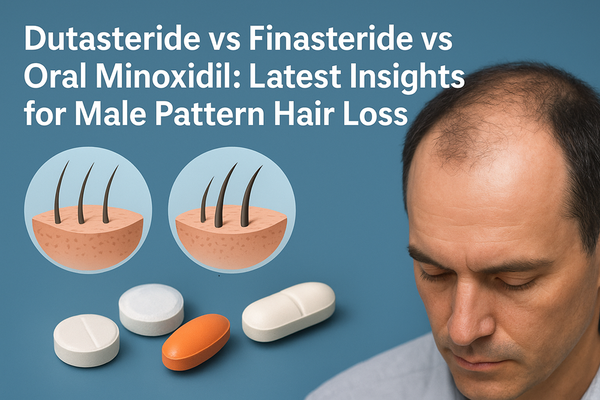
| Finasteride/Dutasteride | Blocks DHT hormone | Rarely used in women | Birth defects, sexual side effects |
Oral minoxidil is unique because it works for both genetic and shedding types of hair loss, with a generally good safety profile at low doses.
A detail worth noting: Spironolactone is often used in young women with acne, unwanted facial hair, and irregular periods, but it does not work for all types of hair loss. Finasteride and dutasteride are usually reserved for postmenopausal women due to risk of birth defects.
Practical Tips For Success With Oral Minoxidil
Getting the best results from oral minoxidil means more than just taking a pill. Here are some essential tips, including some beginners often miss:
- Stick to a schedule: Take your pill at the same time each day, ideally at night.
- Don’t stop early: Real improvements can take 3–6 months. Don’t quit if you don’t see changes right away.
- Monitor for swelling or facial hair: Track changes and discuss them with your doctor.
- Check your blood pressure: Even at low doses, it’s smart to monitor at home, especially if you feel dizzy.
- Maintain a healthy scalp: Oral minoxidil helps, but a clean, healthy scalp supports new growth. Avoid heavy oils or styling products that can block follicles.
- Tell all your doctors: Let any new healthcare provider know you’re taking oral minoxidil, in case of surgery or new medications.
- Don’t double up: If you miss a dose, just take the next one as scheduled. Don’t take extra.
- Avoid if pregnant: Minoxidil can harm a developing baby.
A non-obvious tip: If you color or chemically treat your hair, oral minoxidil is often safer than topical, as it won’t interact with scalp products.
Another insight: Take close-up photos of your part, temples, and hairline before starting. Results are easier to see with visual evidence.
What Are The Limitations Of Oral Minoxidil?
No treatment is perfect. Oral minoxidil, while promising, has some limitations:
- Not a cure for all types: Works best for FPHL and chronic telogen effluvium, less so for scarring hair loss or alopecia areata.
- Results are gradual: No instant fixes—patience is needed.
- Can’t stop genetics: It slows or improves loss, but doesn’t change your genes.
- Long-term use is required: Stopping the pill usually causes hair to thin again.
- Requires ongoing medical check-ups: For safety and best results.
Another important point: Oral minoxidil is not approved by the FDA for hair loss, so insurance may not cover it, and you may need to pay out of pocket. Also, while most side effects are mild, rare serious events can occur, so regular follow-up is essential.
Understanding these limits helps set realistic expectations.
What’s Next? The Future Of Oral Minoxidil
Research into oral minoxidil low dose is growing quickly. Future studies are exploring:
- The best dose for different ages and hair loss types
- Combining with other medications for better results
- Long-term safety over 5+ years
- More data in non-white and older women
- Understanding genetic differences that affect who responds best
Experts believe oral minoxidil will play an even bigger role as evidence grows and new guidelines are developed.
For more in-depth scientific reviews, see the National Institutes of Health.
Frequently Asked Questions
What Is The Lowest Effective Dose Of Oral Minoxidil For Female Hair Loss?
Most studies show that 0.25–1 mg per day works well for many women. Some doctors start as low as 0.25 mg to check for side effects, then adjust as needed. Higher doses are not always better and may increase side effects. Always follow your doctor’s instructions.
How Long Does It Take To See Results With Oral Minoxidil?
Most women start to notice less shedding in 3 months and fuller, thicker hair in 6–12 months. Remember, hair grows slowly, so patience is key. Taking photos every month can help you see small improvements.
Is Facial Hair Growth Permanent With Oral Minoxidil?
No, facial hair growth is usually mild and reversible. If you lower the dose or stop the medication, the extra facial hair usually goes away over time. Simple hair removal methods can help manage it.
Can Oral Minoxidil Be Combined With Other Hair Loss Treatments?
Yes, oral minoxidil is often combined with other treatments like spironolactone, hair supplements, or even topical minoxidil for better results. Always check with your doctor before combining medications, especially if you take medicines for blood pressure or heart conditions.
Is Oral Minoxidil Safe For Women Trying To Get Pregnant?
No. Minoxidil should not be used if you are pregnant, breastfeeding, or planning to become pregnant. It may harm the baby, so talk to your doctor about safe alternatives.
Female hair loss is complex, but oral minoxidil low dose is bringing new hope and options. With the right information, support, and medical guidance, many women can find a solution that fits their needs and lifestyle. The future for women’s hair health is brighter than ever.
Credit: nextstepsinderm.com