

Hair loss can affect self-confidence and emotional well-being. Many people search for effective ways to stop or reverse hair loss. Two popular options are rosemary oil and minoxidil. One is a natural essential oil, and the other is a clinically tested medicine. But what does science really say about these two treatments? Can rosemary oil compete with minoxidil, or is it just another internet trend? Let’s explore what research and real-world experience show, so you can make an informed choice for your hair.
Understanding Hair Loss: Why Does It Happen?
Before comparing rosemary oil and minoxidil, it’s important to know why hair loss happens. Most cases of hair loss are due to androgenetic alopecia, also called pattern baldness. This type of hair loss is common in both men and women. It is influenced by genetics and hormones, especially a hormone called DHT (dihydrotestosterone).
Other causes include:
- Stress
- Poor nutrition
- Thyroid problems
- Medications
- Skin conditions
Hair grows in cycles: growth (anagen), rest (telogen), and shedding (catagen). Disruptions in these cycles can lead to more shedding and slower regrowth.
What Is Minoxidil?
Minoxidil is a topical medication approved by the FDA for hair loss. It first appeared as a blood pressure medicine, but patients noticed more hair growth as a side effect. Scientists developed a topical form for the scalp.
Minoxidil is sold under brand names like Rogaine and available in 2% or 5% solutions or foam. It is one of the most researched hair growth treatments in the world.
How Does Minoxidil Work?
Minoxidil widens blood vessels in the scalp, improving blood flow to hair follicles. More nutrients and oxygen reach the follicles, which can help them grow thicker and stronger hair.
Researchers believe minoxidil also shortens the resting phase (telogen) and extends the growth phase (anagen). This means hair spends more time growing and less time shedding.
Who Should Use Minoxidil?
Minoxidil is used for:
- Men with male pattern baldness (receding hairline, thinning crown)
- Women with female pattern hair loss (diffuse thinning, usually on top of the head)
It is not effective for complete baldness or hair loss from scarring or medical conditions.
What Is Rosemary Oil?
Rosemary oil is an essential oil extracted from the leaves of the rosemary plant (Rosmarinus officinalis). It has a strong, herbal scent and has been used for centuries in cooking and natural medicine.
Traditionally, rosemary oil was believed to improve memory, boost circulation, and help with skin and scalp conditions. In recent years, it has become a popular natural remedy for hair loss.
How Does Rosemary Oil Work?
Rosemary oil contains active compounds like carnosic acid and rosmarinic acid. These compounds have antioxidant and anti-inflammatory effects. Some studies suggest rosemary oil may improve blood circulation in the scalp and block DHT, the hormone that causes hair loss.
It is usually mixed with a carrier oil (like coconut or jojoba oil) and massaged into the scalp.
Who Should Use Rosemary Oil?
Rosemary oil is often used by people who:
- Prefer natural or plant-based treatments
- Have mild hair thinning
- Want to avoid the side effects of chemical treatments
It may also help with dandruff and scalp irritation.
Scientific Evidence: What Do Studies Actually Show?
Let’s look at what clinical studies, lab research, and real-world data reveal about rosemary oil and minoxidil.
Studies On Minoxidil
Minoxidil has been studied for over 30 years. Hundreds of clinical trials show it is effective for many people with pattern hair loss.
- A review in the Journal of the American Academy of Dermatology found that 40–60% of men with androgenetic alopecia saw noticeable improvement after 3–6 months of 5% minoxidil use.
- Studies on women show similar results, with 2% minoxidil helping 30–40% of users regrow hair.
- In a 48-week trial, people using 5% minoxidil grew an average of 13.4 hairs per square centimeter more than those using a placebo.
The key point: minoxidil works for many people, but not all. Results take time—usually at least 3–6 months.
Studies On Rosemary Oil
There are fewer studies on rosemary oil, but one key trial stands out.
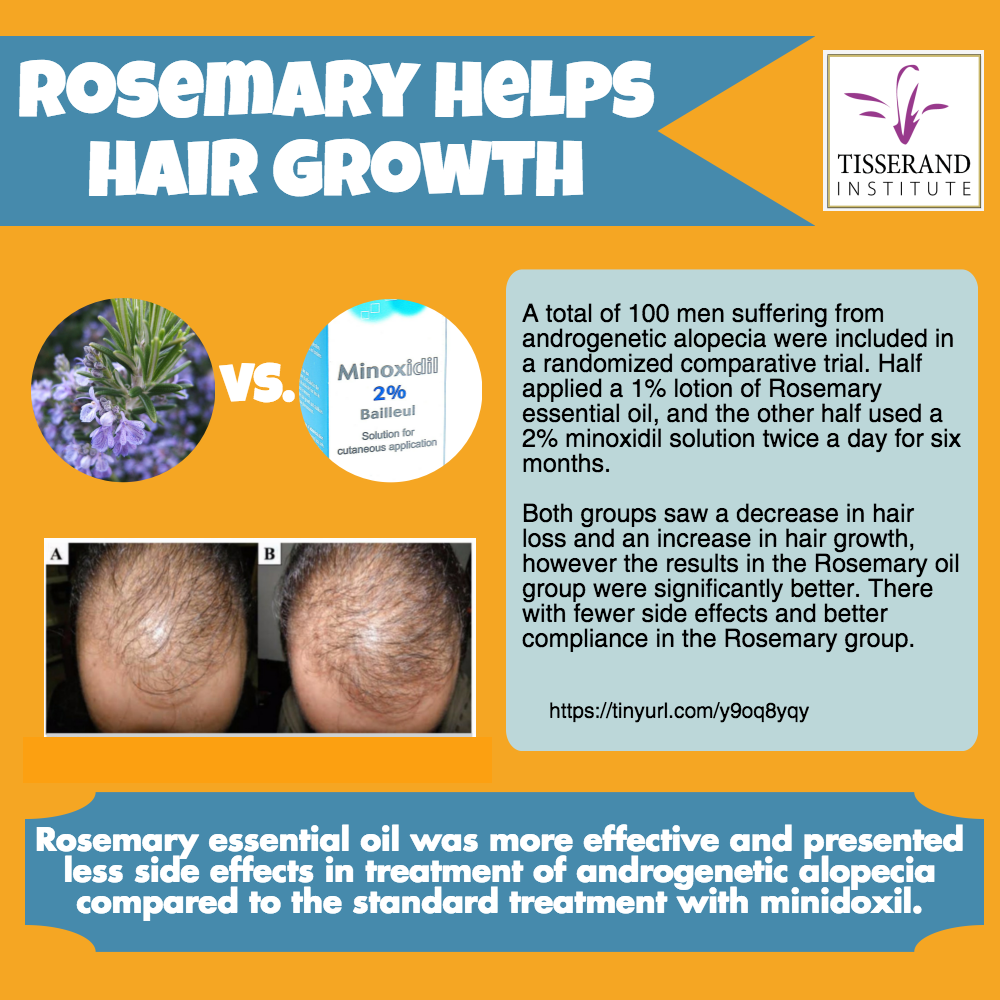
- In a 2015 study published in Skinmed, 100 men with androgenetic alopecia used either 2% minoxidil or rosemary oil on their scalps twice daily for 6 months.
- Both groups had a similar increase in hair count after 6 months.
- The rosemary oil group reported less scalp itching compared to the minoxidil group.
Other lab studies have shown that rosemary oil and its compounds can block DHT in test tubes and improve circulation.
However, most studies on rosemary oil are small or short-term. More research is needed to confirm how well it works in larger groups.
Head-to-head Comparison: What’s The Evidence?
To make things clear, here’s a summary of the most important clinical trial comparing rosemary oil and minoxidil:
- 100 men with pattern hair loss
- Group 1: Used 2% minoxidil twice daily
- Group 2: Used rosemary oil twice daily
- Duration: 6 months
- Results: Both groups had similar hair growth after 6 months
- Extra finding: Less itching in the rosemary oil group
This study suggests rosemary oil may be as effective as 2% minoxidil for some people. However, minoxidil is more proven overall, especially in higher strengths (5%).

Credit: keyomahealth.com
How Do Rosemary Oil And Minoxidil Compare? (side-by-side)
To help you see the differences, here’s a direct comparison of rosemary oil and minoxidil:
| Factor | Rosemary Oil | Minoxidil |
|---|---|---|
| Type | Natural essential oil | Medical drug |
| FDA Approved | No | Yes |
| Main Use | Mild to moderate hair loss, scalp health | Pattern baldness (men & women) |
| Application | Mixed with carrier oil, massaged in | Solution or foam, applied directly |
| Scientific Proof | Limited, but promising | Strong, many studies |
| Time to Results | 3–6 months (in studies) | 3–6 months |
| Main Side Effects | Rare; possible irritation, allergy | Itching, dryness, shedding, rare heart effects |
| Pregnancy Safety | Not enough data; avoid | Not recommended |
| Cost | Low to moderate | Moderate to high |
How To Use Rosemary Oil For Hair Growth
If you’re interested in trying rosemary oil, here’s how to use it safely and effectively.
- Choose pure rosemary essential oil – Look for 100% pure oil, not fragrance or diluted versions.
- Mix with a carrier oil – Essential oils are strong and can irritate the skin. Mix a few drops with a carrier oil (like coconut, jojoba, or almond oil). A common ratio is 5 drops of rosemary oil per 1 tablespoon of carrier oil.
- Massage into the scalp – Gently massage the mixture into your scalp for 2–5 minutes. This boosts blood flow.
- Leave on for at least 30 minutes – You can leave it for longer, or even overnight. Wash out with shampoo.
- Repeat 2–3 times a week – Consistency is important. Results take months.
Safety Tips
- Do a patch test before using on your scalp. Apply a small amount to your skin and wait 24 hours.
- Avoid getting oil in your eyes.
- Not recommended for pregnant or breastfeeding women.
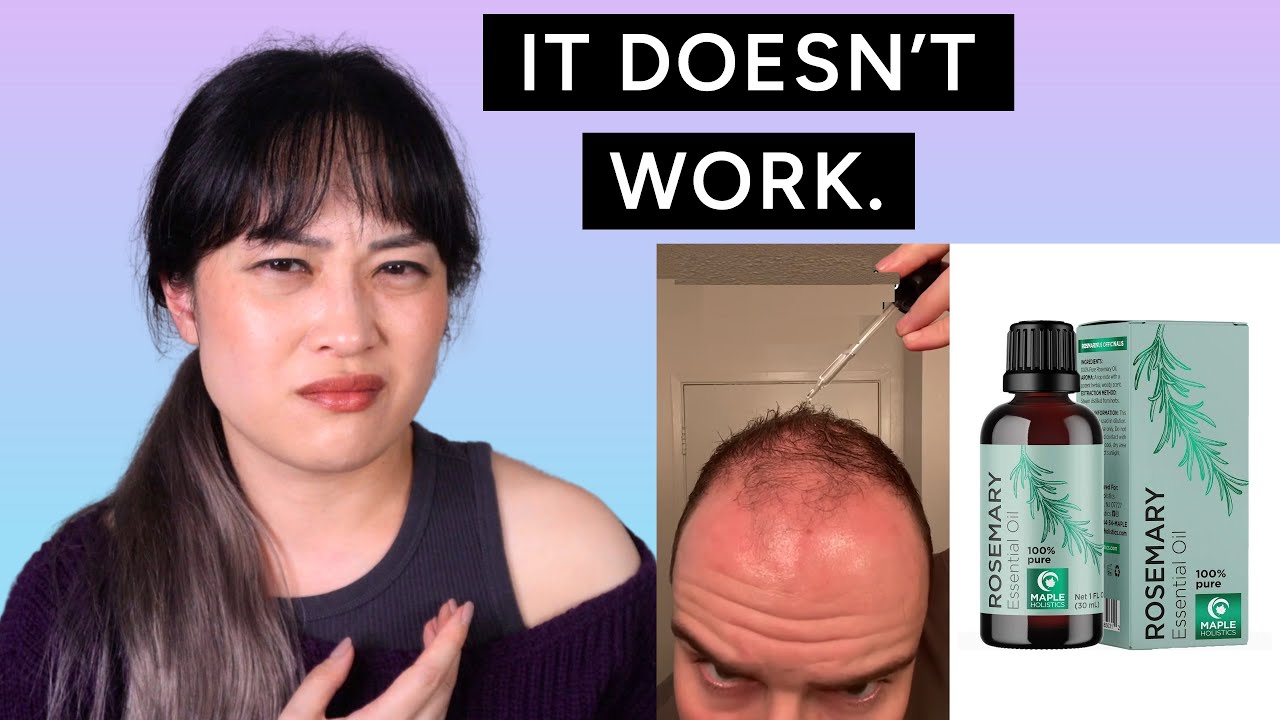
Non-obvious Insight
Most people use too much essential oil. Using more than a few drops can increase the risk of irritation but does not improve results. Consistency matters more than quantity.
Credit: www.reddit.com
How To Use Minoxidil For Hair Growth
If you choose minoxidil, here’s how to use it for best results.
- Choose the right strength – 2% for women, 5% for men (some women may use 5% under doctor advice).
- Apply to dry scalp – Use the dropper or foam and cover the thinning area. Do not use more than directed.
- Let it dry completely – Wait at least 4 hours before washing hair or getting it wet.
- Wash hands after use – Minoxidil can cause unwanted hair if it touches other body parts.
- Be consistent – Apply twice daily, every day, at the same times.
Safety Tips
- Do not use on broken or sunburned skin.
- Some shedding is normal in the first few weeks—this means old hairs are making way for new growth.
- If you stop using minoxidil, new hair will usually fall out within months.
Non-obvious Insight
The foam version often causes less irritation than the liquid. If you experience redness or itching with the solution, try the foam.
Side Effects: What Should You Know?
Both rosemary oil and minoxidil are generally safe, but side effects can occur.
Minoxidil Side Effects
- Scalp irritation: Redness, itching, and flaking are common, especially with the liquid.
- Shedding phase: Some users see more hair fall in the first 2–8 weeks. This usually stops.
- Unwanted hair: If minoxidil drips onto the face or neck, hair may grow there.
- Rare effects: Rapid heartbeat, dizziness, or swelling. Stop use and see a doctor if these happen.
Rosemary Oil Side Effects
- Skin irritation: Rare, but possible. Patch test before full use.
- Allergic reaction: Uncommon, but can happen in people sensitive to essential oils.
- Not for internal use: Do not swallow rosemary oil.
Comparing Side Effects
Here is a quick overview:
| Side Effect | Rosemary Oil | Minoxidil |
|---|---|---|
| Scalp irritation | Rare | Common |
| Shedding phase | No | Yes (temporary) |
| Unwanted facial hair | No | Possible |
| Serious side effects | Very rare | Rare (heart, swelling) |
| Allergic reaction | Possible | Possible |
Cost And Availability: Which Is Easier To Get?
Minoxidil is widely available in pharmacies and online, but prices can add up over time. A month’s supply may cost $20–$40, depending on brand, strength, and country.
Rosemary oil is inexpensive and sold in health stores, supermarkets, and online. A small bottle can last for months, especially when diluted with a carrier oil. However, you must buy both the essential oil and the carrier oil.
Non-obvious Insight
Counterfeit minoxidil products are a growing problem online. Always buy from trusted stores or pharmacies. For rosemary oil, make sure it is labeled as 100% pure essential oil.
Who Should Choose Rosemary Oil? Who Should Choose Minoxidil?
Choosing between rosemary oil and minoxidil depends on your needs, preferences, and hair loss type.
Rosemary Oil Might Be Better If:
- You prefer natural treatments
- Your hair loss is mild or just starting
- You have a sensitive scalp or dislike chemicals
- You want to improve scalp health as well as hair growth
Minoxidil Might Be Better If:
- You want a clinically proven treatment
- Your hair loss is moderate to severe
- You are comfortable with using medicine long-term
- You need faster, more predictable results
Practical Example
Sarah, age 27, noticed thinning hair around her temples. She tried rosemary oil for 6 months and saw some improvement, but results were slow. When she switched to 5% minoxidil, she noticed more regrowth in another 4 months.
Michael, age 35, wanted to avoid chemicals due to allergies. He used rosemary oil and found his scalp was less itchy, and new baby hairs appeared after 5 months.
Common Mistakes When Using Rosemary Oil Or Minoxidil
Many people fail to see results because of mistakes in how they use these products.
With Minoxidil
- Stopping too soon – Results take at least 3–6 months.
- Applying to wet hair – This dilutes the product.
- Using less or more than needed – Follow the instructions exactly.
- Skipping days – Missed doses reduce effectiveness.
- Not addressing other causes – Diet, stress, or hormones can affect results.
With Rosemary Oil
- Using too much oil – This can cause irritation.
- Not diluting – Always mix with a carrier oil.
- Expecting overnight results – Like minoxidil, it takes months.
- Inconsistent use – Apply regularly for best results.
- Not checking for allergies – Patch test first.
Non-obvious Insight
If you have scalp buildup (from products, oil, or dandruff), both rosemary oil and minoxidil may not absorb well. Deep clean your scalp once a week for best results.
Can You Combine Rosemary Oil And Minoxidil?
Some users wonder if they can use both together. There is no research proving extra benefit, but many people apply minoxidil in the morning and use diluted rosemary oil at night (or vice versa).
If you try both:
- Do not mix them in the same bottle.
- Wait at least 4 hours between applications.
- Watch for irritation; if it occurs, reduce or stop one product.
Other Natural Alternatives: How Do They Compare?
Rosemary oil is not the only essential oil studied for hair growth. Here are a few others, and how they compare:
- Peppermint oil: Shown to improve hair growth in mice, possibly even more than minoxidil, but less human data.
- Lavender oil: May help with scalp inflammation, but hair growth effects are weaker.
- Cedarwood oil: Used in some small studies with mixed results.
However, rosemary oil has the best human data so far among essential oils.
Myths And Misunderstandings
There are many myths about rosemary oil and minoxidil.
- “Natural means no side effects”: False—natural products can still irritate or cause allergic reactions.
- “Minoxidil makes hair loss worse”: Not true. The early shedding phase is temporary and signals new growth.
- “Results are permanent”: Both treatments only work while you use them. If you stop, gains are usually lost.
- “More product means faster results”: Using more than the recommended amount can irritate your scalp but won’t improve effectiveness.
Long-term Use: What To Expect
Minoxidil and rosemary oil must be used continuously to maintain hair growth. If you stop, the new hair will likely fall out within months. Long-term safety is well established for minoxidil; studies up to 5 years show no major risks for most people.
Rosemary oil is likely safe for long-term use if you do not develop irritation or allergies, but less research exists.
Non-obvious Insight
Minoxidil sometimes stops working after several years (“minoxidil resistance”). This is not well understood. Some doctors suggest taking breaks, switching to foam, or adding other treatments if this happens.
Summary Table: Rosemary Oil Vs. Minoxidil
Here’s a clear summary of the key facts:
| Question | Rosemary Oil | Minoxidil |
|---|---|---|
| Best for | Mild hair thinning, natural approach | Pattern baldness, proven results |
| How long to see results? | 3–6 months | 3–6 months |
| Side effects | Rare, mild | Common, mostly mild |
| Cost | Low | Moderate |
| Proof from studies | Limited, but some support | Strong, many studies |
| Need to use forever? | Yes | Yes |
| Works for everyone? | No | No |
| Available over the counter? | Yes | Yes |
Credit: tisserandinstitute.org
What Do Doctors And Experts Say?
Dermatologists recommend minoxidil as a first-line treatment for pattern hair loss. It is backed by decades of research and is proven to work for many people.
Most experts see rosemary oil as a safe option for mild cases, or for those who cannot use minoxidil. However, they caution that results may be less predictable, and more research is needed.
If you have sudden or severe hair loss, or if you are unsure about the cause, see a doctor before starting any treatment.
For more on the science of hair loss, the American Academy of Dermatology offers reliable guidance: American Academy of Dermatology.
Frequently Asked Questions
Can I Use Rosemary Oil And Minoxidil Together?
Yes, you can use both, but apply them at different times of day. Wait at least 4 hours between applications. Watch for irritation. Do not mix them in the same bottle.
How Long Does It Take To See Results?
Both treatments usually require 3 to 6 months of regular use before you see noticeable hair growth. Early shedding is normal with minoxidil.
Is Rosemary Oil Safer Than Minoxidil?
Rosemary oil is less likely to cause side effects like itching or dryness, but allergic reactions are still possible. Minoxidil has a longer safety record from studies.
Will My Hair Loss Return If I Stop Using These Treatments?
Yes. Both rosemary oil and minoxidil only work while you use them. If you stop, new hair growth is usually lost within months.
Which Is Better For Women: Rosemary Oil Or Minoxidil?
Minoxidil 2% solution is FDA-approved for women and is more proven in studies. Rosemary oil is a safe natural option, but results are less predictable.
Hair loss can be frustrating, but both rosemary oil and minoxidil offer hope. The right choice depends on your needs, values, and how your body responds. Test, be patient, and consult with a professional if you’re unsure. Consistency matters most—whichever path you choose, stick with it for at least 6 months to give your hair the best chance to grow.