

Alopecia Areata: Understanding Autoimmune Hair Loss
Hair is often tied to identity, confidence, and personal style. Imagine waking up one day and noticing a sudden bald patch on your scalp. No pain, no warning—just hair missing. For millions around the world, this is a reality caused by alopecia areata, an autoimmune condition that targets hair follicles. But what exactly is autoimmune hair loss, and why does it happen? In this article, you’ll find clear answers, reliable facts, and practical advice for living with and managing alopecia areata. Whether you’re newly diagnosed, supporting someone, or simply curious, this guide will help you understand every aspect of this unique condition.
What Is Autoimmune Hair Loss?
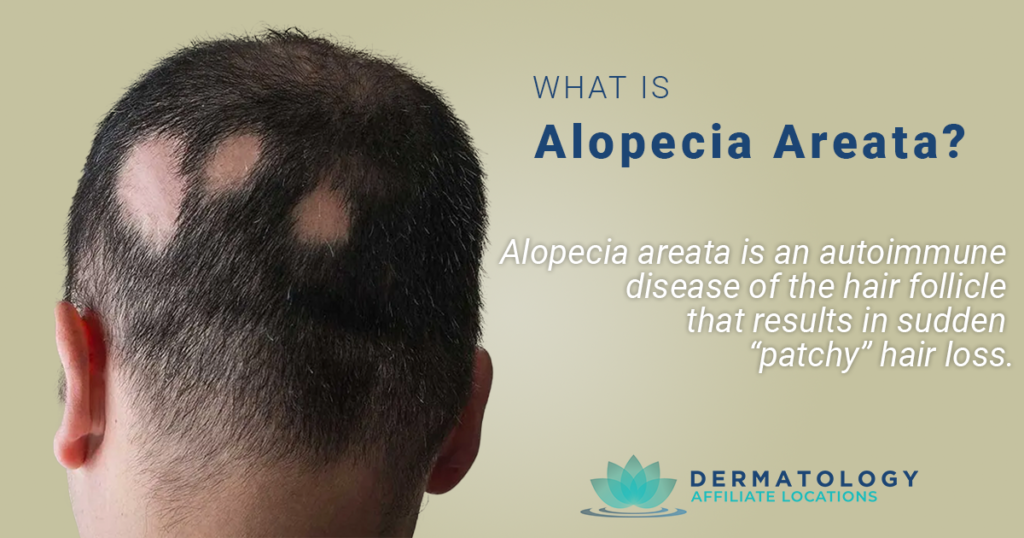
Autoimmune hair loss happens when your body’s immune system attacks its own hair follicles. Normally, the immune system protects you from viruses and bacteria. In autoimmune conditions, it gets confused and sees healthy cells as enemies. When this happens to hair follicles, hair falls out, often in small, round patches.
The most common autoimmune hair loss condition is alopecia areata. There are other types too, like alopecia totalis (loss of all scalp hair) and alopecia universalis (loss of all body hair), but alopecia areata is the main focus here.
How Alopecia Areata Differs From Other Hair Loss
Most hair loss is not autoimmune. For example, androgenetic alopecia (male or female pattern baldness) is caused by hormones and genetics, not the immune system. Telogen effluvium is caused by stress or illness. Only in autoimmune hair loss does the body’s defense system attack hair directly.
Alopecia areata stands out because it can happen suddenly. Unlike slow, steady thinning seen in other types, autoimmune hair loss can appear overnight or within days. Sometimes, people wake up to find hair on their pillow or notice small bald spots when styling their hair.
This sudden onset can be confusing and frightening, especially if there’s no family history of hair loss.
Another key difference is that alopecia areata rarely causes itching, burning, or redness. The skin under the bald patch usually looks normal—smooth, and healthy. Other hair loss types, like scarring alopecia, may show visible inflammation or scarring.
How Common Is Alopecia Areata?
Alopecia areata affects about 2% of people at some point in their lives. This means about 1 in 50 people will experience it. Men, women, and children can get it. It often starts before age 30, but it can happen at any age. The condition does not discriminate by race or gender.
- In the United States, over 6.8 million people are affected.
- Globally, the number may be as high as 147 million.
It’s important to note that alopecia areata is not a rare disease. In many countries, support groups and awareness campaigns exist because so many people are impacted. You may see celebrities or athletes talking openly about their experience with alopecia areata.
This helps reduce stigma and brings the condition into public conversation.
Some regions may have slightly higher rates, possibly due to genetic factors, but alopecia areata is seen everywhere. Even in families with no history, the condition can appear unexpectedly.
What Causes Alopecia Areata?
The exact cause is not fully known, but several factors play a role:
- Genetics: If a close relative has alopecia areata, your risk is higher.
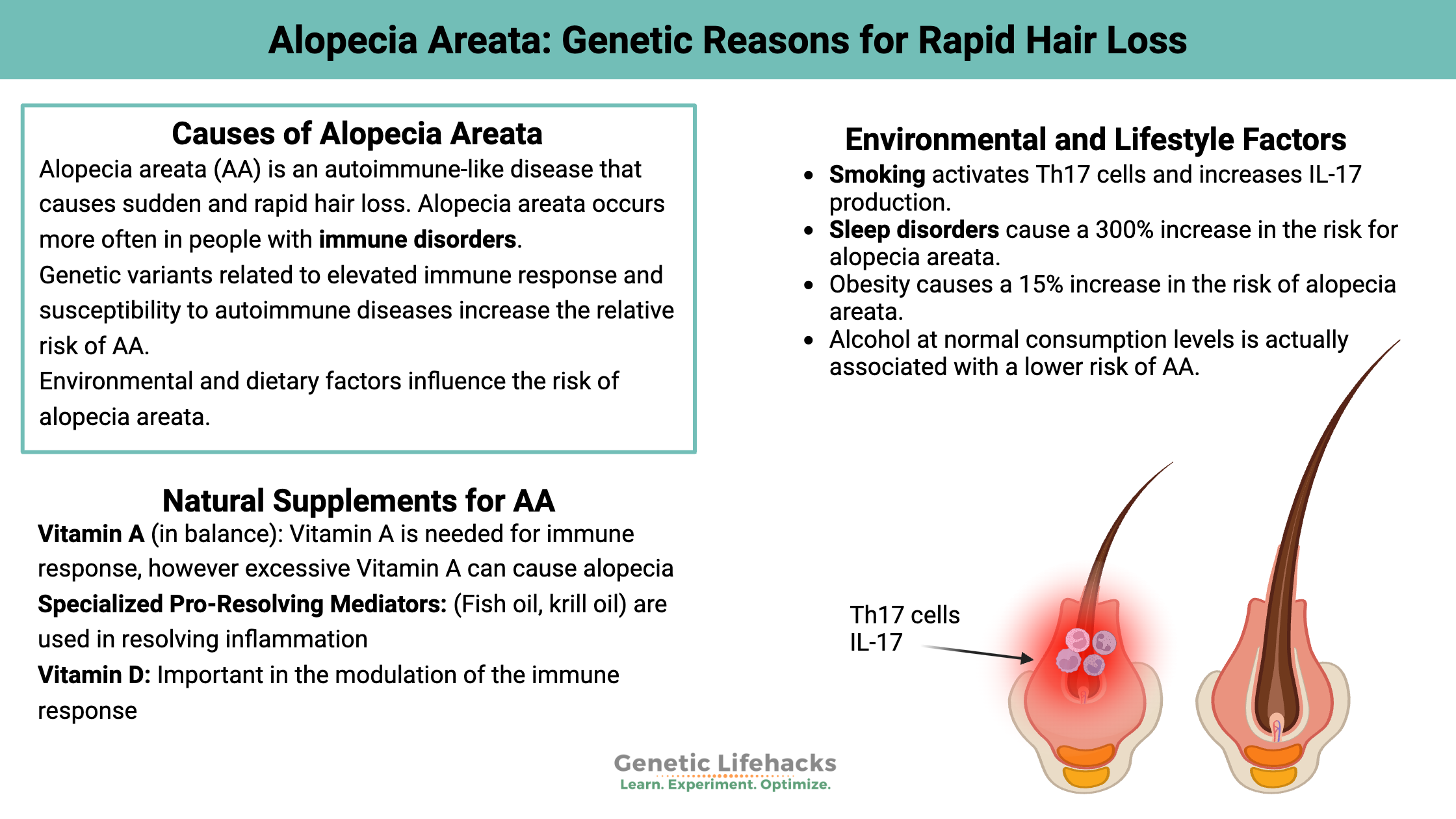
- Immune system: The body’s T-cells attack hair follicles by mistake.
- Triggers: Sometimes, stress, illness, or environmental factors can trigger the first episode.
Alopecia areata is not contagious. You cannot catch it from someone else or give it to others.
Research shows that certain genes are linked to a higher risk. These genes are involved in controlling the immune system. If you have these genes, your immune system may be more likely to make mistakes and attack healthy cells.
Stress is often mentioned as a trigger. For example, some people notice their first patch after a big life event—moving, exams, family loss, or illness. While stress doesn’t cause alopecia areata directly, it may “wake up” the immune system and start the process.
Environmental factors might include viral infections or exposure to chemicals, but no clear link has been proven. Sometimes, the condition appears after a flu or fever, but this is not always the case.
How Does Alopecia Areata Develop?
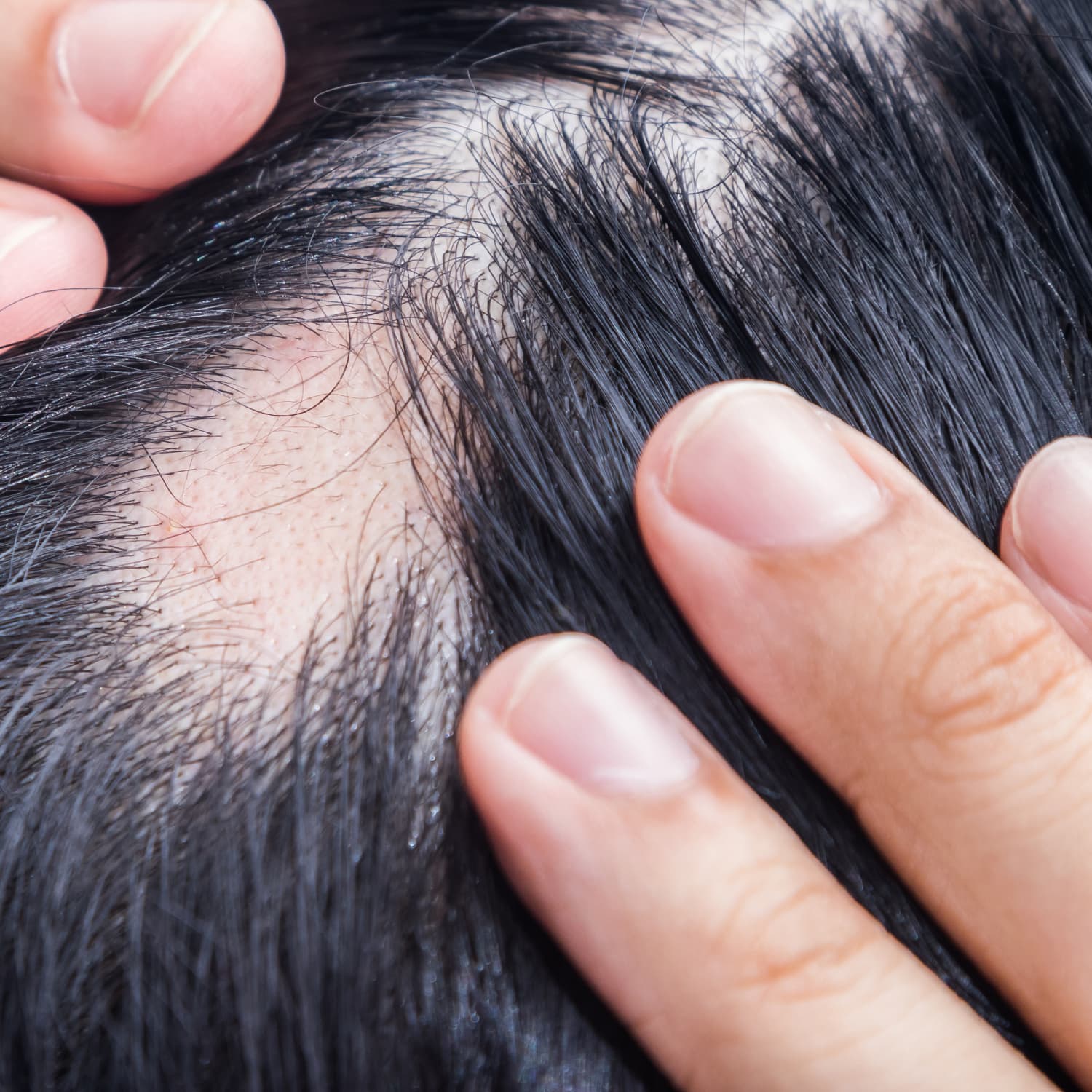
The condition usually starts suddenly. You may notice a small round patch on your scalp or beard. The skin looks smooth and normal, without redness or scars. Sometimes, more patches appear. Hair can regrow in one area and fall out in another.
Some people only have one patch, while others have several. In rare cases, all scalp hair or all body hair is lost.
Stages Of Hair Loss
Alopecia areata does not always follow the same pattern, but it usually goes through these stages:
- Sudden hair loss in one or more round patches.
- Expansion: Patches may get larger or join together.
- Regrowth: Hair may grow back, sometimes white or fine at first.
- Recurrence: Hair loss can return, sometimes years later.
A unique feature is that hair follicles stay alive. This means regrowth is always possible, even after years.
Sometimes, regrowth occurs in the same patch, and hair returns thicker and darker. Other times, new patches appear while old ones recover. This unpredictable cycle can be emotionally exhausting. Some people experience only one episode in their lifetime, while others may face many cycles of loss and regrowth.
Children and young adults are more likely to have recurring episodes. In some cases, the patches appear in areas other than the scalp, like the beard, eyebrows, or eyelashes.
Types Of Alopecia Areata
There are several forms of alopecia areata. Here’s a clear breakdown:
| Type | Main Feature | Who Gets It? |
|---|---|---|
| Alopecia Areata | Patchy hair loss on scalp or body | Anyone |
| Alopecia Totalis | Total loss of scalp hair | Rare, can affect adults/children |
| Alopecia Universalis | Loss of all body and scalp hair | Very rare |
| Ophiasis | Band-like hair loss around sides/back of scalp | Often adults |
| Sisaipho | Reverse ophiasis (front/top of scalp) | Uncommon |
Each type is still autoimmune, but the pattern and severity differ.
Alopecia totalis and universalis are more difficult to treat and can be emotionally challenging. Ophiasis and sisaipho are named for their unique patterns. Ophiasis looks like a band around the lower scalp, while sisaipho is the reverse, affecting the front and top.
These patterns can make covering up with hairpieces or hats more complicated.
Symptoms Of Alopecia Areata
The main symptom is hair loss in round or oval patches. But there are other signs too:
- Tingling or mild pain before hair falls out (in some people)
- Nail changes (ridges, dents, or roughness in fingernails or toenails)
- Short, broken hairs at the edges of bald patches (“exclamation mark” hairs)
Most people have no other symptoms. The skin under the lost hair is usually healthy.
Nail changes are more common in children and those with severe disease. If you notice changes in your nails, it may be a sign the condition will be more persistent or widespread. “Exclamation mark” hairs are a useful clue for doctors—they are short, tapered hairs that break easily and are often seen at the edge of a bald patch.
Some people feel itching or tingling before hair falls out, but this is not always present. Occasionally, people have mild discomfort or sensitivity in the affected area.
Credit: www.yalemedicine.org
How Alopecia Areata Is Diagnosed
Alopecia areata can be shocking, but diagnosis is usually straightforward. Doctors look for classic round patches and may ask about family history or recent stress.
Steps In Diagnosis
- Physical exam: Doctor checks your scalp and body for patches and nail changes.
- Medical history: Questions about family, stress, or illness.
- Pull test: Gently pulling hairs near patches to see if more come out easily.
- Scalp biopsy (rare): Taking a tiny skin sample to rule out other diseases.
- Blood tests: Sometimes done to check for thyroid, vitamin D, or other autoimmune issues.
Alopecia areata is usually diagnosed in the clinic, without special tests.
Most cases are easy to recognize, but sometimes, doctors use a dermatoscope—a special magnifying lens—to look for “exclamation mark” hairs or other signs. Blood tests may be ordered if the doctor suspects another autoimmune disease, or if you have symptoms like tiredness, weight changes, or joint pain.
A scalp biopsy is only done if the diagnosis is uncertain or if scarring alopecia is suspected. The biopsy shows immune cells around hair follicles, which confirms the diagnosis.
How Does Alopecia Areata Affect Life?
Hair loss can be more than a cosmetic issue. For many, it affects self-esteem, work, school, and social life. Children may face teasing. Adults may feel anxious or depressed.
An important insight: Alopecia areata does not affect physical health. It does not hurt, itch, or harm your body. The main impact is emotional and psychological.
Emotional Challenges
- Anxiety about appearance
- Depression or loss of confidence
- Social withdrawal or avoiding public places
- Worry about the future (Will it spread? Will hair come back?)
Support from family, friends, and healthcare providers makes a big difference.
In school, children with alopecia areata may be teased or bullied. Teachers can help by explaining the condition and offering support. Adults may feel uncomfortable in job interviews or social events. Some people avoid swimming or sports to hide their hair loss.
Counseling, therapy, and peer support are helpful. Talking to others who have alopecia areata can reduce feelings of isolation. Many people find confidence again through support groups or sharing their story.
Treatment Options For Alopecia Areata
There is no cure for alopecia areata. But many treatments can help hair regrow or reduce the impact. Not all treatments work for everyone. Hair may regrow on its own, even without treatment.
Common Treatments
- Corticosteroids: These reduce immune system activity.
- Creams or ointments for mild cases
- Injections into bald patches for faster results
- Pills for widespread hair loss (short-term use)
- Topical immunotherapy: Chemicals like diphencyprone (DPCP) are applied to the scalp to trigger mild irritation and restart hair growth.
- Minoxidil (Rogaine): Over-the-counter foam or liquid that can help regrow hair.
- Anthralin: A tar-like cream that changes immune activity in the skin.
- JAK inhibitors: Newer drugs (like tofacitinib and ruxolitinib) that block the immune response. These can be very effective but may have side effects.
Supportive Therapies
- Wigs, hats, or scarves: Useful for covering bald spots and boosting confidence.
- Eyebrow and eyelash makeup: For those who lose facial hair.
- Counseling or support groups: To manage stress and emotions.
How Effective Are Treatments?
Results vary. Some people see hair regrow in weeks. Others do not respond. Hair may fall out again, even after it returns. The only guarantee is that hair follicles remain alive, so regrowth is always possible.
Here’s a look at how common treatments compare:
| Treatment | How It Works | Success Rate | Side Effects |
|---|---|---|---|
| Corticosteroid Injections | Suppresses local immune attack | Up to 80% regrow hair in small patches | Pain, thinning skin |
| Topical Immunotherapy | Triggers new immune response | Up to 60% with large area loss | Redness, itching, swollen nodes |
| Minoxidil | Stimulates hair follicles | 30-40% see some regrowth | Scalp irritation |
| JAK Inhibitors | Blocks immune pathway | 50-70% regrowth in trials | Infections, liver changes |
When choosing a treatment, consider the size and location of patches, age, and personal preference. For example, corticosteroid injections work well for small patches, but may be painful for children. Topical immunotherapy requires weekly visits and can cause strong skin reactions.
JAK inhibitors are promising, but are expensive and require close monitoring.
Some people prefer not to use medication and instead focus on coping and acceptance. Wigs and makeup can help restore confidence without side effects.
Who Gets Alopecia Areata?
Anyone can get alopecia areata. But some people are at higher risk:
- Family history: If a parent or sibling has it, risk is higher.
- Other autoimmune diseases: Thyroid disease, type 1 diabetes, vitiligo.
- Young age: About half of cases start before age 20.
It’s not caused by poor diet, bad hygiene, or hair products.
People with other autoimmune conditions have a higher chance of developing alopecia areata. For example, if you have thyroid disease or vitiligo, your immune system is already more active and may target hair follicles as well.
Children often develop alopecia areata after a viral infection or stressful event. Adults may notice patches during periods of emotional stress. But sometimes, the cause is unknown.
Prognosis: What Can You Expect?
Alopecia areata is unpredictable. Some people regrow all hair within months. Others have cycles of loss and regrowth for years. About 80% regrow hair within a year, but relapses are common.
- Mild cases (less than 50% hair loss): Best chance of regrowth.
- Severe cases (more than 50% hair loss): Higher chance of permanent loss.
Children who develop the condition before age 5, or those with nail changes, are more likely to have widespread hair loss.
Non-obvious Insight 1
Many people with alopecia areata develop other autoimmune conditions later in life. It’s smart to have regular health checks for thyroid, blood sugar, and vitamin D.
Non-obvious Insight 2
Sunburn risk increases on bald areas. Use sunscreen or cover up, even on cloudy days, to protect your scalp and skin.
Some people find that their hair regrows completely and never falls out again. Others experience unpredictable cycles. The emotional impact can be harder than the physical symptoms, so regular mental health support is important.
Tips For Living With Alopecia Areata
Coping with hair loss can be tough, but many people live full, happy lives with alopecia areata. Here are some practical tips:
- Protect your scalp: Use sunscreen, hats, or scarves to prevent sunburn.
- Be gentle with hair: Avoid harsh chemicals, tight hairstyles, or excessive brushing.
- Connect with others: Join support groups, online forums, or local meetups.
- Consider a wig or hairpiece: These can look natural and boost confidence.
- Talk to a counselor: If you feel anxious or depressed, professional help can make a big difference.
- Educate your circle: Explain your condition to friends, family, and coworkers to reduce awkwardness.
- Stay hopeful: Remember, hair can regrow even after years of loss.
Here are a few extra tips from people living with alopecia areata:
- Experiment with headwear: Try different hats, scarves, or beanies until you find what feels comfortable. Some people use headbands or bandanas for style.
- Use gentle, sulfate-free shampoos to avoid irritation.
- Moisturize your scalp to prevent dryness, especially if you use wigs or hats often.
- Practice self-compassion. It’s normal to feel sad or frustrated, but remind yourself that alopecia areata does not define you.
- If you lose eyebrow or eyelash hair, try temporary tattoos, makeup, or false lashes. Many brands now offer products for sensitive skin.
Myths And Facts About Alopecia Areata
Alopecia areata is often misunderstood. Here are some common myths—and the facts behind them:
- Myth: “It’s caused by stress alone.”
Fact: Stress can trigger it, but the main cause is autoimmune.
- Myth: “It’s contagious.”
Fact: You cannot catch alopecia areata from others.
- Myth: “Only adults get it.”
Fact: Children, teens, and adults can all develop alopecia areata.
- Myth: “Diet cures alopecia areata.”
Fact: No diet can cure it, though healthy eating supports overall health.
- Myth: “Hair loss is permanent.”
Fact: Hair follicles are alive and can regrow hair, even after years of loss.
Some people believe that using special shampoos or herbal remedies can cure alopecia areata. While these products may improve scalp health, they do not change the immune system’s behavior.
Research And Future Treatments
Research is moving fast. Scientists are studying new drugs, stem cell therapy, and ways to “turn off” the immune attack. JAK inhibitors are the most exciting recent development. More options are likely in the next decade.
If you’re interested in research studies or clinical trials, ask your dermatologist or check the National Alopecia Areata Foundation.
Stem cell therapy and gene editing are promising areas for future treatment. Researchers hope to develop treatments that reset the immune system and prevent attacks on hair follicles. Early studies show that certain immune-blocking drugs can help regrow hair in people with severe alopecia areata.
Another area of research is the microbiome—tiny organisms living on your skin and in your gut. Some scientists believe changing the microbiome could reduce autoimmune activity.
Credit: sjhdermatology.com
How Alopecia Areata Differs From Other Hair Loss Conditions
To better understand alopecia areata, see how it compares with other common forms of hair loss:
| Condition | Main Cause | Pattern | Is Regrowth Possible? |
|---|---|---|---|
| Alopecia Areata | Autoimmune | Round/oval patches | Yes |
| Androgenetic Alopecia | Genetic/hormonal | Gradual thinning, receding hairline | Rarely |
| Telogen Effluvium | Stress, illness, medication | Diffuse shedding | Usually |
| Scarring Alopecia | Inflammation, infection | Patchy with scarring | No |
Alopecia areata is unique because the hair follicles remain alive, so regrowth is always possible.
For example, androgenetic alopecia usually causes a slow, steady loss on the crown or hairline, with little chance of regrowth. Telogen effluvium can happen after illness or childbirth and usually reverses in a few months. Scarring alopecia destroys hair follicles, so regrowth is not possible.
Supporting Children And Teens With Alopecia Areata
Children and teens may face extra challenges—bullying, isolation, or low self-esteem. Parents and teachers can help by:
- Listening and offering emotional support
- Talking openly about the condition
- Encouraging connections with others who have alopecia areata
- Working with schools to prevent bullying
Some children feel more confident with wigs, hats, or headbands. Others prefer to go without. The most important thing is to let them decide what feels right.
It’s helpful for parents to educate their child’s classmates and teachers. Some schools invite healthcare professionals to explain alopecia areata, which helps reduce teasing and misunderstandings.
Encourage your child to join online forums or youth support groups. Meeting others who understand their experience can boost confidence and help them feel less alone.
Consider therapy or counseling if your child feels sad, anxious, or withdrawn. Early emotional support can prevent long-term stress.
The Role Of Diet And Lifestyle
Diet does not cause or cure alopecia areata, but a balanced diet supports overall health. Key points:
- Vitamin D: Low levels are common in people with autoimmune diseases.
- Iron: Deficiency can make hair loss worse.
- Zinc and biotin: Sometimes helpful, but only if you are low.
A healthy lifestyle—regular exercise, good sleep, and stress management—may lower the risk of autoimmune flares.
Some people try supplements, but it’s best to check with your doctor before starting anything new. Too much zinc or biotin can cause side effects. Eating a variety of fruits, vegetables, lean protein, and whole grains supports your immune system.
Regular exercise reduces stress and supports mental health. Meditation, yoga, or deep breathing can help manage anxiety. Good sleep is important for immune balance and overall well-being.
When To See A Doctor
See a doctor if you notice:
- Sudden, patchy hair loss
- Changes in fingernails or toenails
- Signs of other autoimmune diseases (tiredness, joint pain, skin changes)
- Emotional distress or trouble coping
Early diagnosis and support can make a big difference in quality of life.
If you have a family history of autoimmune conditions, mention this to your doctor. They may check for thyroid disease or other related problems. If you feel sad, anxious, or isolated, ask for a referral to counseling or a support group.
Credit: www.geneticlifehacks.com
Frequently Asked Questions
What Is The Main Cause Of Alopecia Areata?
The main cause is an autoimmune reaction where the body’s immune system attacks healthy hair follicles by mistake. Genetics and environmental triggers may play a role, but the exact cause is still being studied.
Can Hair Grow Back After Alopecia Areata?
Yes. In most cases, hair can regrow even after complete loss, because the hair follicles are not destroyed. Regrowth may be white or fine at first, and there is always a chance of losing hair again.
Is Alopecia Areata A Permanent Condition?
Not always. Some people have only one episode and never lose hair again. Others have cycles of hair loss and regrowth. In severe cases, hair loss can be long-lasting or permanent, but the follicles remain alive.
Does Alopecia Areata Affect Physical Health?
No. Alopecia areata only affects hair and sometimes nails. It does not cause pain, itching, or harm other organs. The biggest impact is on self-esteem and emotional health.
Are There Any New Treatments For Alopecia Areata?
Yes. JAK inhibitors are a new class of drugs that block part of the immune system and have shown good results in clinical trials. Other treatments are being researched, including stem cell therapy and better topical medications. For more, visit the National Alopecia Areata Foundation.
Alopecia areata is a challenging, unpredictable condition—but it is not the end of your story. With the right information, support, and care, people with alopecia areata lead happy, fulfilling lives. Remember, you are not alone, and new treatments are on the horizon.