

Hair thinning and loss can feel overwhelming for many women. There are products that promise quick results, but only a few have real science behind them. One of the most trusted treatments is topical minoxidil 5%. While effective, many women worry about side effects. Is it possible to use minoxidil 5% and keep your hair—and your peace of mind? This article is your complete guide. You’ll learn what minoxidil 5% is, how it works, how to use it properly, and how to avoid common problems. Plus, you’ll get expert tips and answers to the questions most women have before starting. Let’s get started on a path to healthier, fuller hair with confidence.
What Is Topical Minoxidil 5%?
Topical minoxidil is a medication applied to the scalp to help stimulate hair growth and slow down hair loss. It was first used as an oral medicine for high blood pressure, but researchers noticed that patients grew more hair as a side effect. This led to the development of minoxidil as a topical product for hair loss.
The 5% solution is a stronger version, often recommended for men but increasingly used by women with stubborn or advanced hair thinning. It is available as a liquid or foam. In many countries, you can buy it without a prescription.
Minoxidil is the only FDA-approved over-the-counter treatment for female pattern hair loss. It works for women of different ages, though results can vary from person to person.
The formula is designed to be used directly on the scalp, not on the hair itself. Some brands include extra ingredients like propylene glycol or alcohol to help the medicine penetrate the scalp. This can influence how well it works and how likely you are to experience irritation.
How Does Minoxidil 5% Work?
Minoxidil helps hair growth by widening blood vessels in the scalp. This improves blood flow and brings more oxygen and nutrients to hair follicles. It can help reactivate shrunken hair follicles, making them produce thicker, longer hairs again.
Here’s what happens after you start using minoxidil 5%:
- The medicine shortens the resting phase of hair follicles.
- More hairs enter the growth phase.
- You may see increased shedding at first—this is usually temporary and means new hair is pushing out older, weaker hairs.
This process takes time. Most women see visible results after 3-6 months of regular use.
A key detail many miss: minoxidil does not change the underlying causes of hair loss, such as hormones or genetics. Its main function is to keep hair follicles active for longer. If you stop using it, the improvement will gradually fade away.
Another practical point: minoxidil works on the scalp, not on areas like eyebrows or eyelashes. Using it elsewhere is not advised unless prescribed by a doctor.
Who Should Use Minoxidil 5%?
Minoxidil 5% is mainly for women with female pattern hair loss (androgenetic alopecia). This type of hair loss causes thinning at the crown and along the part line, but usually not complete baldness. It can also help women with other types of hair thinning, such as chronic telogen effluvium.
Women who might benefit include:
- Those with a family history of hair thinning
- Women noticing gradual thinning over time
- Post-menopausal women with increased hair loss
You might also consider minoxidil if other treatments, like hair supplements or special shampoos, have not worked. Some women start minoxidil after seeing a dermatologist for a scalp exam and blood tests, which can rule out other causes like thyroid problems or low iron.
Minoxidil 5% is not suitable for sudden, patchy hair loss or hair loss from scarring, infection, or medical treatments like chemotherapy.
Who Should Avoid Minoxidil 5%?
Some women should avoid or be cautious with minoxidil 5%. This includes:
- Pregnant or breastfeeding women
- Women with scalp conditions (eczema, psoriasis, open wounds)
- Those allergic to minoxidil or its ingredients
- Women with heart conditions (consult your doctor first)
Children and teenagers should not use minoxidil unless told by a doctor. Also, women with unexplained or rapidly worsening hair loss should see a doctor before starting treatment, since some medical conditions need different care.
Always check with a healthcare provider if you have doubts or other health problems.
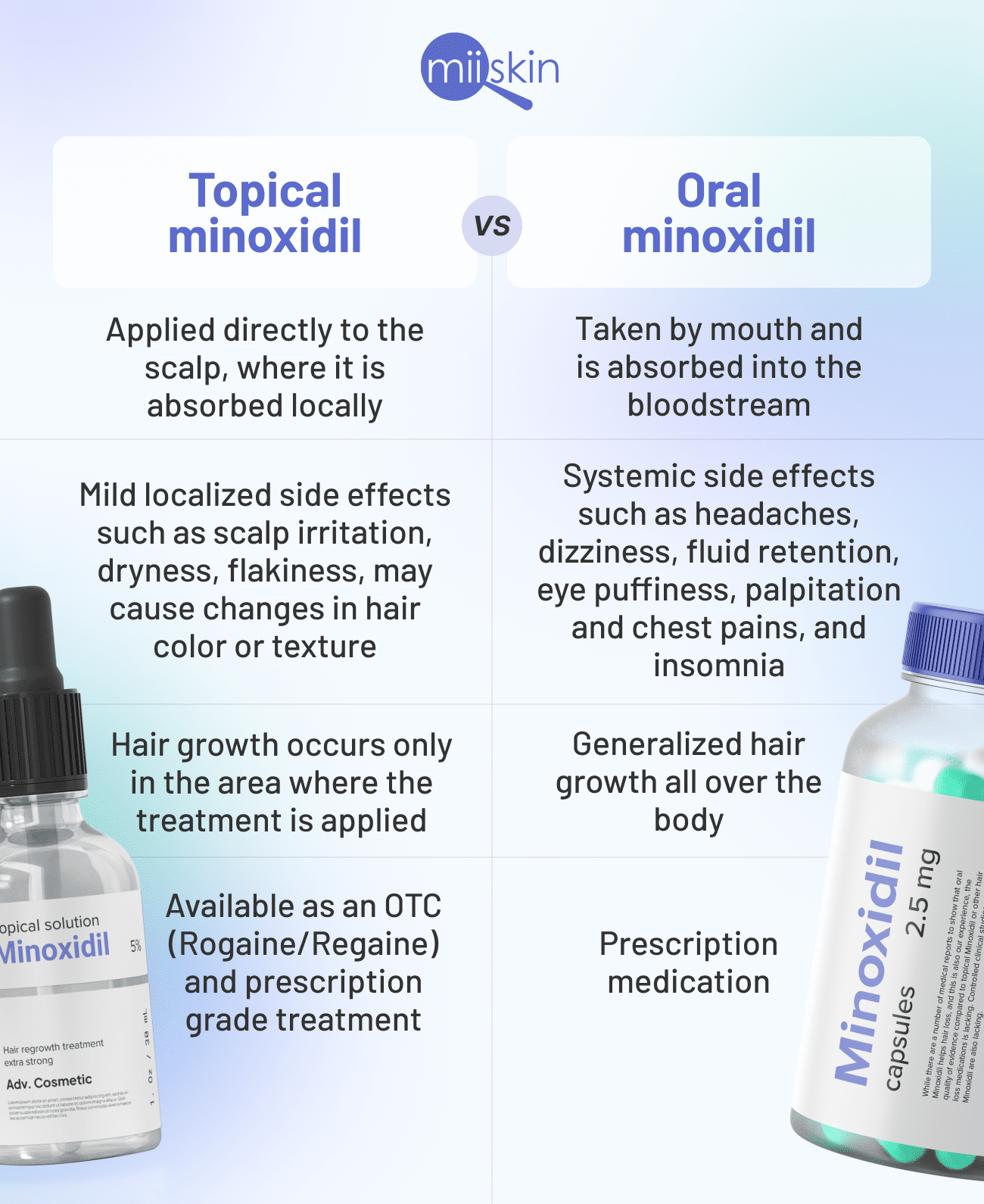
Credit: miiskin.com
How To Use Minoxidil 5% Properly
Correct use is the key to getting results and avoiding side effects. Here’s a step-by-step guide for women:
- Choose the Right Form: Minoxidil 5% comes as a liquid or foam. The foam is often better for sensitive scalps or if you want less mess. Liquid can be helpful for applying to small, specific areas, but it may feel sticky.
- Wash and Dry Your Scalp: Apply minoxidil to a clean, dry scalp. Oily hair can block absorption. Wait until your hair and scalp are fully dry after washing before applying.
- Apply the Recommended Amount: For most women, this means 1 ml (liquid) or half a capful (foam) once a day. Some doctors may suggest twice daily for severe cases, but this can increase side effects.
- Target the Thinning Areas: Use your fingers or the dropper to spread the medicine over the thinning parts. Do not use more than directed.
- Massage Gently: Use fingertips to gently massage the minoxidil into your scalp. Wash your hands afterward.
- Let It Dry: Wait at least 2-4 hours before washing your hair, swimming, or using other hair products.
- Be Consistent: Use minoxidil every day, at the same time if possible.
If you color your hair, apply minoxidil after coloring, not before. This can prevent irritation and reduce the risk of chemical reactions.
How Long Does It Take To See Results?
Patience is important. Most women notice less shedding after 2-3 months and new growth by 4-6 months. Full results may take up to 12 months. If you stop using minoxidil, new hair may fall out, and the process will reverse.
You may notice soft, fine hairs first—these are called “vellus hairs. ” Over time, with regular use, these can become thicker and more like your original hair.
What If You Miss A Dose?
If you forget a dose, just apply the next one at your usual time. Do not double up to make up for missed doses.
Missing an occasional dose is not likely to affect your results much. It is better to skip than to overapply, which can increase side effects.
Practical Tips For Best Results
- Use a gentle shampoo and avoid harsh styling products.
- Avoid applying minoxidil right before bed to prevent it rubbing off on pillows.
- Store the bottle at room temperature, away from sunlight.
- Set a reminder on your phone to stay consistent.
- If you use styling products, wait until the minoxidil is completely dry before applying them.
- For long hair, use clips or hairbands to expose the scalp before applying minoxidil. This ensures the medicine reaches the skin and not just the hair.
Common Side Effects And How To Prevent Them
While minoxidil is generally safe, some women experience side effects. The good news: most can be avoided or managed with the right steps.
Most Common Side Effects
- Scalp irritation (redness, itching, dryness)
- Unwanted facial hair growth (if the solution drips down)
- Temporary increased hair shedding (first 2-8 weeks)
Less common but more serious side effects include:
- Dizziness or rapid heartbeat
- Swelling in hands or feet
- Severe allergic reactions
If you notice these, stop using the product and see a doctor.
Some users may also notice a mild burning or tingling at first. This usually fades with time. If it does not, try switching to the foam version, which is less likely to cause irritation.
How To Avoid And Manage Side Effects
- Use Only as Directed: Applying more than recommended won’t speed up growth but will increase risks.
- Limit Spread: Keep minoxidil away from your forehead, face, and neck. Wash hands well after application.
- Try the Foam: The foam version contains less alcohol and may cause less irritation.
- Moisturize Your Scalp: Use a mild, fragrance-free moisturizer if you notice dryness.
- Monitor for Allergies: If you develop a rash or swelling, stop use immediately and seek help.
- Avoid Mixing with Other Products: Do not combine minoxidil with scalp dyes, relaxers, or harsh treatments.
Non-obvious Insights:
- Applying minoxidil to wet hair increases irritation risk and reduces effectiveness. Always wait until your scalp is dry.
- Using a cotton swab for small areas can help control application and prevent unwanted spread, especially near the hairline.
- If you have colored or treated hair, minoxidil might make your scalp extra sensitive for a few days. Wait until your scalp feels normal before starting or resuming treatment.
Comparing Minoxidil 2% Vs. 5% For Women
Many women wonder if the 5% solution is worth it. Here’s a simple comparison:
| Feature | Minoxidil 2% (Women) | Minoxidil 5% (Women) |
|---|---|---|
| Strength | 2% solution | 5% solution/foam |
| FDA Approval | Yes, for women | Yes, foam (since 2014) |
| Effectiveness | Moderate | Higher regrowth rates |
| Side Effects | Fewer | Slightly higher risk |
| Application | Twice daily | Once daily (foam) |
Research shows minoxidil 5% foam used once daily can be as effective as 2% liquid used twice daily, but with slightly more irritation for some women. If you have a sensitive scalp, starting with 2% may be a better option, but for faster or better results, 5% is usually preferred.
Also, some women who do not see good results with 2% may benefit from switching to 5%. However, if you develop side effects with 5%, you can reduce frequency or go back to 2%.
Myths And Misunderstandings About Minoxidil 5%
Many women hesitate to try minoxidil because of what they’ve heard. Let’s clear up some common myths:
- Myth: “Minoxidil will make all my hair fall out if I stop.”
- Fact: Only the new hairs grown from minoxidil will fall out if you stop, not your original hair.
- Myth: “You must be completely bald to use minoxidil.”
- Fact: Minoxidil works best for early or moderate thinning, not total baldness.
- Myth: “5% is not safe for women.”
- Fact: Studies show that 5% foam is safe for women when used as directed.
- Myth: “You’ll see results immediately.”
- Fact: Hair growth is slow. Most women see changes after 3-6 months.
A less obvious myth is that minoxidil can “cure” all types of hair loss. In reality, it mainly works for pattern hair loss. Hair loss from stress, illness, or medications may need other treatments.
Understanding these facts can help you start treatment with realistic expectations.
How To Reduce The Risk Of Unwanted Facial Hair
Some women worry about minoxidil causing fine hair growth on the face. This happens when the solution spreads beyond the scalp or transfers from hands or pillows.
Steps To Prevent Unwanted Hair Growth
- Apply Carefully: Use the dropper or foam only on thinning areas.
- Wipe Drips Immediately: If the medicine runs down your face, clean it off right away.
- Wash Hands Thoroughly: Don’t touch your face or pillow before washing your hands.
- Wait Until Dry Before Bed: Make sure your scalp is dry to prevent transfer onto bedding.
- Tie Back Long Hair: Prevents dripping or accidental spreading.
A non-obvious insight: Using a makeup sponge for application can help control where the product goes, especially near the hairline.
Another tip: If you sweat a lot at night or use a silk pillowcase, check in the morning for any signs of medicine transfer.
Combining Minoxidil 5% With Other Hair Loss Treatments
Some women want to boost results by using other treatments with minoxidil. Is this safe? Here’s what research and experts say:
Safe Combinations
- Low-level laser therapy (LLLT): Can be used with minoxidil for added benefit.
- Biotin and vitamin supplements: Safe if you have deficiencies, but only help if you’re low on these vitamins.
- Gentle scalp massage: Encourages blood flow and absorption.
You can also use gentle, non-medicated shampoos and conditioners. Products with caffeine or saw palmetto are often marketed for hair loss, but evidence is limited.
Use With Caution
- Prescription anti-androgens (like spironolactone): Always consult your doctor.
- Platelet-rich plasma (PRP) therapy: Can be combined, but only under medical guidance.
- Hair transplants: Many surgeons recommend minoxidil before and after surgery.
Avoid Mixing With
- Other topical treatments (steroids, retinoids): May cause irritation or reduce effectiveness.
- Essential oils: Some (like peppermint or rosemary) can irritate the scalp when used with minoxidil.
A practical tip: Always try new treatments one at a time so you can spot and manage side effects easily. If you have sensitive skin, patch test new products on a small area first.

Credit: www.youtube.com
How To Choose A Minoxidil 5% Product
There are many brands and forms of minoxidil 5%. Here’s how to pick the best one for you:
| Brand | Form | Alcohol Content | Ease of Use | Price Range |
|---|---|---|---|---|
| Rogaine | Foam/Liquid | Low (foam) | Easy | $$$ |
| Kirkland | Liquid | High | Moderate | $ |
| Generic | Foam/Liquid | Varies | Varies | $$ |
What To Look For
- Foam vs. Liquid: Foam is less messy and dries faster, with less irritation risk.
- Alcohol-Free: If you have a sensitive scalp, pick a low-alcohol or alcohol-free foam.
- Applicator Type: Dropper, spray, or pump—choose what is easiest for you to control.
- Price and Size: Larger bottles may be cheaper in the long run.
Also, check the expiration date on the product. Expired minoxidil may lose effectiveness or cause irritation.
Where To Buy
Minoxidil 5% is sold at pharmacies, online retailers, and sometimes by prescription. Only buy from reputable sources to avoid counterfeit products.
If you are unsure which brand to choose, talk to your pharmacist or dermatologist for recommendations.
Step-by-step Routine For Safe, Effective Use
A regular routine helps you get the best results and avoid side effects.
- Wash your hands and scalp before application.
- Measure the dose (1 ml liquid or half a capful of foam).
- Part your hair in thinning areas for better access.
- Apply minoxidil to the scalp, not the hair.
- Massage gently with your fingertips.
- Wash your hands again to avoid spreading the medicine.
- Let it dry for at least 2 hours before styling or sleeping.
- Continue daily without missing doses.
Example Morning Routine
- 7: 00 AM: Shower and dry hair
- 7: 15 AM: Apply minoxidil to scalp, massage in
- 7: 30 AM: Eat breakfast while minoxidil dries
- 9: 00 AM: Style hair as usual
Consistency is more important than the exact time of day.
Some women prefer using minoxidil at night to avoid rushing in the morning. Choose a time that fits your schedule and helps you remember.
When To Stop Using Minoxidil 5%
Minoxidil is a long-term treatment. If you stop, any new hair gained will usually fall out in 3-4 months. However, you should stop right away and see a doctor if you experience:
- Severe scalp irritation
- Swelling of face or hands
- Chest pain or rapid heartbeat
- Signs of allergy (rash, hives, difficulty breathing)
If you become pregnant or start breastfeeding, discontinue use and talk to your doctor.
If you plan to have a medical procedure on your scalp, ask your doctor if you should pause minoxidil before and after.
What Results To Expect: Realistic Outcomes
Not every woman will see the same results. Here’s what studies and user experiences show:
- Around 60% of women see noticeable regrowth or thickening.
- Most see slower hair loss even if regrowth is limited.
- Results are best for women with mild to moderate thinning.
- Thicker, fuller hair is possible, but not total reversal of baldness.
A non-obvious insight: Hair regrowth often starts as soft, fine hairs (“peach fuzz”). Over time, these can become thicker and darker with continued use.
Some women find their hair texture changes slightly, becoming softer or more manageable. This is normal and a sign of new growth.
If you have not seen any improvement after 6 months, talk to a dermatologist. There could be other causes for your hair loss that need different treatment.

Credit: ishrs.org
Lifestyle Factors That Help (or Hurt) Your Results
Minoxidil works best when supported by healthy habits. Here’s what matters:
Positive Factors
- Balanced diet rich in protein, iron, and vitamins
- Gentle hair care (no harsh brushing or tight styles)
- Managing stress (chronic stress can worsen hair loss)
- Treating underlying health issues (thyroid, anemia, PCOS)
Small changes, like switching to a silk pillowcase or using a wide-tooth comb, can reduce breakage and help new hair grow longer.
Negative Factors
- Smoking (reduces blood flow to hair follicles)
- Crash diets or poor nutrition
- Over-processing hair (bleach, perm, heat)
- Ignoring medical causes (hormone imbalances, medication side effects)
Practical advice: If you’re not seeing results, ask your doctor for blood tests to rule out other causes.
One overlooked factor is sleep. Poor sleep can affect hormones that influence hair growth. Aim for 7-8 hours of good sleep per night for overall health.
Psychological Impact And How To Stay Motivated
Hair loss can affect self-esteem and mood. Using minoxidil requires patience, and many women feel discouraged if they don’t see instant results. Here are ways to stay positive:
- Take regular photos every month to track progress. Growth is slow and easy to miss day-to-day.
- Join support groups online or locally for motivation.
- Talk to a counselor if hair loss is affecting your mental health.
- Focus on overall wellness, not just hair.
Remember, you are not alone. Millions of women use minoxidil and find support from others on the same journey.
It’s normal to feel frustrated at times. Celebrate small victories, like less shedding in the shower or being able to style your hair differently.
When To See A Doctor
If you’re unsure if minoxidil is right for you, or if you’re not seeing results after 6 months, see a dermatologist. A doctor can:
- Check for underlying causes of hair loss
- Suggest other treatments (prescription medications, PRP, etc.)
- Help manage side effects
A dermatologist visit can save time and money in the long run, and give you peace of mind.
Also, see a doctor if you have sudden or patchy hair loss, or if you notice other symptoms like weight changes, fatigue, or skin problems. These may signal a medical condition needing different treatment.
Scientific Evidence Supporting Minoxidil 5% For Women
Research supports the use of minoxidil 5% for women with pattern hair loss. For example, a 2014 study found that 5% foam once daily was more effective than 2% solution twice daily, with similar safety. Most women in studies had at least some improvement in hair count and coverage.
Other studies show that women using 5% foam often report better satisfaction and confidence compared to lower strengths. The most common side effects are mild and temporary.
For more details on the science, see this resource from the American Academy of Dermatology.
Frequently Asked Questions
What Happens If I Stop Using Minoxidil 5%?
When you stop minoxidil, any new hair growth will gradually fall out. Your hair will return to the pattern and rate of loss you had before treatment, usually within 3-4 months.
Can Minoxidil 5% Cause Permanent Side Effects?
Most side effects, like scalp irritation or unwanted hair, go away after stopping the product. Serious reactions are rare and usually reversible. If you have a severe allergy, see a doctor immediately.
Is It Safe To Color Or Style My Hair While Using Minoxidil?
Yes, you can color or style your hair. Always apply minoxidil to a clean, dry scalp and wait at least 24 hours after coloring before using it again. Avoid harsh chemical treatments if you’re experiencing scalp irritation.
How Do I Know If Minoxidil Is Working?
Signs of progress include reduced shedding, soft new hairs, or thicker coverage in thinning areas. Take photos monthly to track changes, as growth is gradual and easy to miss day-to-day.
Can I Use Minoxidil 5% With Other Hair Loss Products?
Some products, like gentle supplements or laser devices, can be used with minoxidil. Avoid using other topical treatments on the same area unless your doctor says it’s safe. Always introduce one new product at a time to spot side effects.
Women who use topical minoxidil 5% have a valuable tool for fighting hair loss. By following the right steps, being patient, and caring for your scalp, you can boost your chances of fuller, healthier hair—with fewer side effects. Confidence starts with knowledge and smart action.