

The way you care for your skin and hair shows in the mirror, but some habits work against you faster than you think. Smoking is one of the most harmful choices for your appearance. It not only affects your lungs and heart, but also damages your hair follicles and speeds up skin aging. Many people do not realize the full impact until the signs become visible. In this article, we’ll explore how smoking hurts your hair and skin, what happens inside your body, and what you can do to slow or reverse some of the damage. If you want to protect your youthful look and maintain healthy hair, understanding this connection is vital.
How Smoking Affects Hair Follicles
The Role Of Hair Follicles
Hair follicles are tiny organs in your skin where each hair grows. They need a good supply of nutrients and oxygen from your blood to make strong, healthy hair. If the blood supply is weak or blocked, the follicles suffer, and your hair may become thin, weak, or fall out.
What Happens When You Smoke
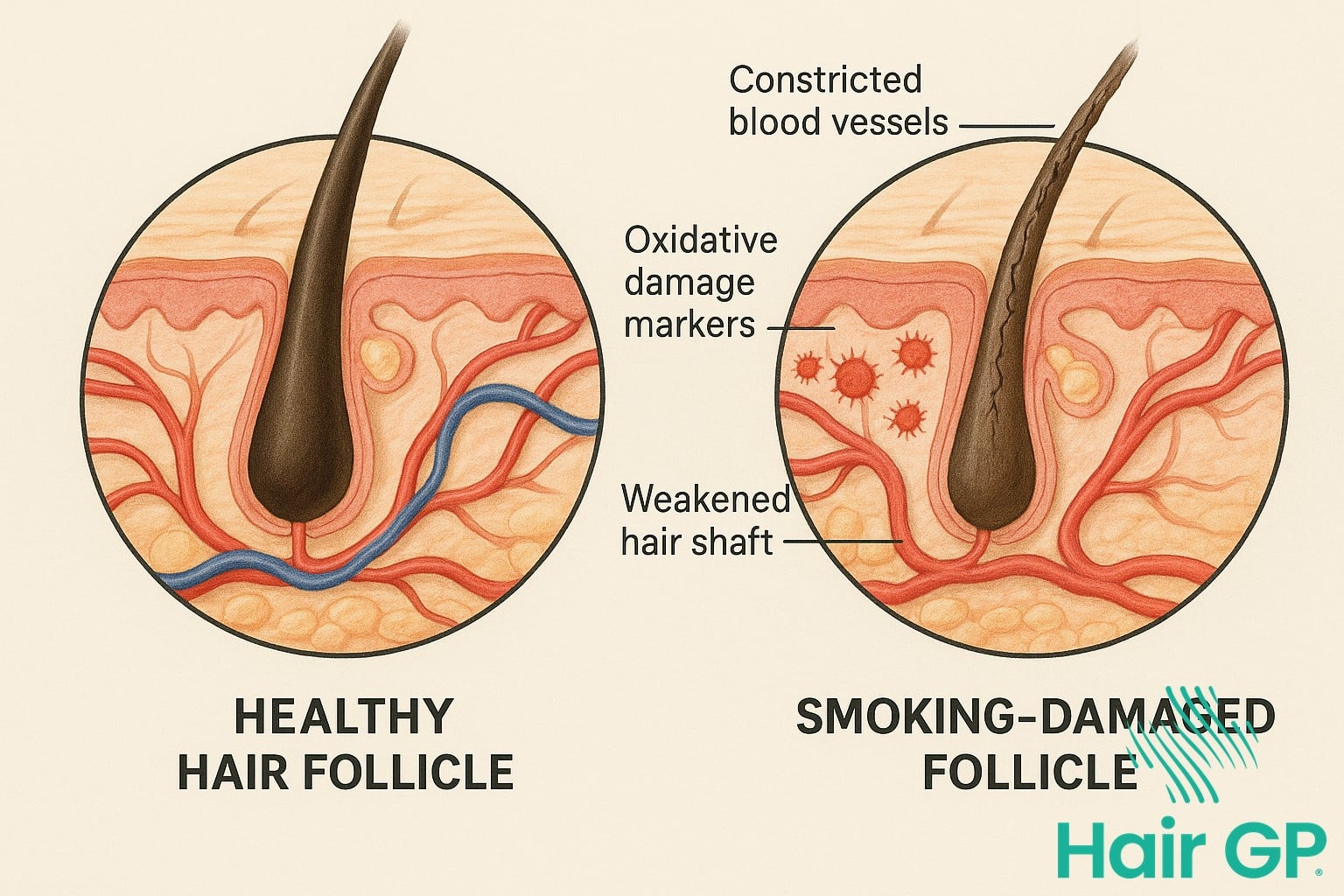
Cigarette smoke contains over 7,000 chemicals, including nicotine, carbon monoxide, and heavy metals. These substances travel through your bloodstream after each puff. Here’s how they harm your hair follicles:
- Reduces Blood Flow: Smoking narrows your blood vessels, making it harder for blood to reach your scalp. Less blood means less oxygen and nutrients for the follicles.
- Inflammation: The chemicals in smoke cause inflammation in your scalp, which can damage the follicles over time.
- Increases Free Radicals: Smoking increases the number of free radicals in your body. These are unstable molecules that damage cells, including those in your hair follicles.
- Hormonal Changes: Nicotine can change your hormone levels, which may lead to hair loss, especially in people who are already sensitive to these changes.
Scientific Evidence
Several studies have shown a clear link between smoking and hair loss:
- A study from the British Journal of Dermatology found that male smokers were twice as likely to have moderate or severe hair loss compared to non-smokers.
- Another study in Taiwan observed that smokers had a higher risk of androgenetic alopecia (male pattern baldness) than non-smokers, even after adjusting for age and genetics.
Types Of Hair Problems Linked To Smoking
- Telogen Effluvium: Sudden hair shedding caused by stress or toxins.
- Androgenetic Alopecia: Common hair thinning in men and women.
- Premature Greying: Smoking can cause hair to turn grey earlier due to oxidative stress.
Non-obvious Insight
Many people think washing hair more or using special shampoos will prevent hair loss from smoking. In reality, no shampoo can repair follicles harmed by nicotine—the damage happens deep inside your scalp, not just on the surface.
How Smoking Accelerates Skin Aging
The Science Of Skin Aging
Your skin is made up of collagen and elastin fibers. Collagen gives your skin strength, while elastin keeps it firm and flexible. As you get older, these fibers naturally break down, causing wrinkles and sagging. Smoking speeds up this process.
What Smoking Does To Your Skin
- Reduces Collagen Production: Smoking slows down the cells that make collagen, leading to thin, weak skin.
- Breaks Down Existing Collagen: The chemicals in smoke create enzymes that destroy collagen and elastin faster.
- Narrowed Blood Vessels: Less blood flow means your skin gets less oxygen and nutrients.
- Increases Free Radicals: These attack skin cells, causing faster aging and poor healing.
Visible Signs Of Smoking On Skin
- Wrinkles: Smokers often get deep lines around the mouth (smoker’s lines) and eyes.
- Dryness: Skin feels rough and loses its glow.
- Uneven Skin Tone: Smoking causes blotchy or dull skin color, sometimes called “smoker’s face.”
- Slow Wound Healing: Even small cuts or pimples take longer to heal.
Data: Skin Aging In Smokers Vs. Non-smokers
Here’s how skin aging can look different between smokers and non-smokers:
| Skin Feature | Smokers | Non-Smokers |
|---|---|---|
| Wrinkle Depth | Deeper, more visible | Shallower, less visible |
| Skin Elasticity | Reduced by up to 40% | Normal for age |
| Skin Color | Pale, grayish, uneven | Healthy, even |
| Healing Time | 2x slower | Normal |
Non-obvious Insight
Many smokers think using creams or anti-aging products can hide or reverse the damage. But if you keep smoking, these products cannot stop the breakdown of collagen and elastin happening inside your skin.

Credit: www.sciencedirect.com
The Chemical Attack: What’s In Cigarette Smoke?
Key Chemicals That Harm Hair And Skin
- Nicotine: Causes blood vessels to narrow, cutting off hair and skin from nutrients.
- Carbon Monoxide: Replaces oxygen in your blood, starving your cells.
- Free Radicals: Attack and damage cell structures.
- Cyanide, Formaldehyde, and Lead: Poisonous chemicals that add to the damage.
How These Chemicals Work Together
These chemicals don’t just act alone. When combined, they create a toxic environment in your body:
- The reduced oxygen from carbon monoxide means your skin and hair grow more slowly.
- Nicotine makes it harder for your body to repair damage.
- Free radicals break down DNA, protein, and lipids, affecting everything from hair color to skin firmness.
Example
Imagine your skin and hair are like a garden. Oxygen and nutrients are the water and fertilizer. Smoking is like pouring chemicals into the soil and blocking the water. Over time, nothing can grow well, and everything looks unhealthy.
Hormonal Changes Caused By Smoking
The Hormone Connection
Hormones control hair growth and skin health. Smoking changes the levels of important hormones:
- Testosterone: Can increase hair loss in men and women.
- Estrogen: Lower levels can make skin thin and fragile, especially in women.
- Cortisol: Stress hormone that rises with smoking, which can cause hair to shed.
Data: Hormonal Effects
A study found that women who smoke reach menopause 1-2 years earlier than non-smokers. This means less estrogen, which leads to faster skin aging and possible hair loss.
Common Mistake
Many people blame only genetics for hair loss or aging skin. In truth, smoking can trigger these changes much earlier even if you have no family history.
Credit: hairgp.co.uk
Secondhand Smoke: The Hidden Danger
How Secondhand Smoke Affects Non-smokers
You don’t have to smoke yourself to suffer the effects. Secondhand smoke contains the same toxic chemicals and can harm children, partners, and even pets.
Effects On Hair And Skin
- Increased risk of hair loss in people living with smokers.
- Premature skin aging in children exposed to smoke at home.
Practical Example
A study showed that children exposed to secondhand smoke had more skin problems and slower wound healing compared to children in smoke-free homes.
Non-obvious Insight
Sitting in a ventilated area or using air purifiers does not fully protect you from the skin and hair damage caused by secondhand smoke. The toxins linger on surfaces and in dust.
Smoking And Hair Loss Patterns
Types Of Hair Loss Related To Smoking
- Diffuse Thinning: Hair becomes thin all over, not just in patches.
- Receding Hairline: The front of the scalp loses hair faster.
- Patchy Baldness: Small bald spots can appear, sometimes linked to autoimmune issues made worse by smoking.
Gender Differences
| Pattern | Men | Women |
|---|---|---|
| Receding Hairline | Common | Rare |
| Diffuse Thinning | Possible | Very Common |
| Patchy Baldness | Uncommon | Uncommon |
| Premature Greying | Frequent | Frequent |
Practical Example
A man who smokes a pack a day may start to see a receding hairline in his 20s, while a non-smoking man might not notice similar changes until much later. For women, hair may become thinner all over, making the scalp more visible.
Common Mistake
Some believe only men are affected by smoking-related hair loss. In reality, women are equally at risk, though the pattern of hair loss is different.
Smoking And Scalp Health
Effects On The Scalp
The scalp is skin, too. Smoking harms the scalp by:
- Reducing moisture: Makes the scalp dry and flaky.
- Increasing dandruff: The skin tries to protect itself by shedding more.
- Delaying healing: Small cuts or sores take longer to recover.
Infections And Other Problems
A damaged scalp is more likely to get fungal or bacterial infections, which make hair loss worse. Smokers are also more likely to have seborrheic dermatitis, a scalp condition linked to inflammation.
Non-obvious Insight
Many people treat dandruff with shampoo, but if the real cause is smoking, the problem will come back until smoking stops.
Smoking And Skin: More Than Just Wrinkles
Other Skin Problems Linked To Smoking
- Psoriasis: Smokers are more likely to get this red, scaly skin disease.
- Acne: Smoking can make acne worse and slow healing.
- Warts and Infections: Smokers have a higher risk of skin infections.
Skin Cancer Risk
Smoking increases your chance of getting certain types of skin cancer, especially squamous cell carcinoma. The chemicals weaken your skin’s natural defenses against UV rays and other toxins.
Common Mistake
Some smokers believe only sun damage causes skin cancer. However, smoking adds to the risk, especially if you also spend a lot of time in the sun.
Can Quitting Smoking Reverse The Damage?
What Happens After You Quit
The good news is that stopping smoking can help your skin and hair begin to recover:
- Better blood flow: Within weeks, more oxygen and nutrients reach your hair follicles and skin.
- Lower inflammation: Your body repairs itself, and swelling in your scalp and skin goes down.
- New hair growth: Some people notice less hair loss and even new hair, especially if they quit early.
- Fewer wrinkles form: While deep lines may not go away, new ones form more slowly.
Data: Recovery Timeline
| Time After Quitting | Skin Improvement | Hair Improvement |
|---|---|---|
| 2 Weeks | Brighter skin | Less hair shedding |
| 3 Months | Better skin tone | Thicker hair in some cases |
| 1 Year | More elastic, younger-looking skin | Noticeable regrowth for some |
Non-obvious Insight
Even if you have smoked for many years, quitting always brings some benefits. Your body is designed to heal, and improvements can happen at any age.
Tips To Repair Hair And Skin After Smoking
Steps You Can Take
- Quit Smoking: This is the single most important step.
- Eat a Balanced Diet: Foods high in vitamin C, E, and zinc help repair skin and hair.
- Stay Hydrated: Drink plenty of water to keep your skin and scalp moist.
- Exercise Regularly: Helps improve blood flow to your skin and scalp.
- Use Gentle Skin and Hair Products: Avoid harsh chemicals that can make damage worse.
- Protect From Sun: Wear sunscreen and hats to stop further damage.
- Consider Medical Treatments: Talk to a dermatologist about treatments like minoxidil for hair or retinoids for skin.
Example: Nutrition For Recovery
Foods like oranges, strawberries, nuts, and green leafy vegetables provide vitamins and antioxidants that your body needs to repair itself after quitting smoking.
Common Mistake
Some people try expensive beauty treatments while still smoking. These rarely work because the root cause—smoke damage—remains.
Credit: hairgp.co.uk
The Psychological Impact Of Smoking On Appearance
How Smoking Affects Confidence
Visible hair loss and skin aging can lower your self-esteem. Many smokers feel less attractive and may avoid social situations.
Vicious Cycle
Sometimes, people smoke more to deal with these negative feelings, which only makes the problem worse.
Breaking The Cycle
Understanding how smoking affects your appearance can be a powerful reason to quit. Many people say their confidence and social life improve as their hair and skin recover.
Non-obvious Insight
Improvement in your appearance can be one of the first signs your body is healing after quitting smoking. This positive change can help you stay motivated.
Myths About Smoking, Hair, And Skin
Myth 1: Only Old People Get Smoking-related Damage
Young smokers often believe they are safe. In fact, damage starts early and can be seen in people as young as 20.
Myth 2: Vaping Is Safe For Hair And Skin
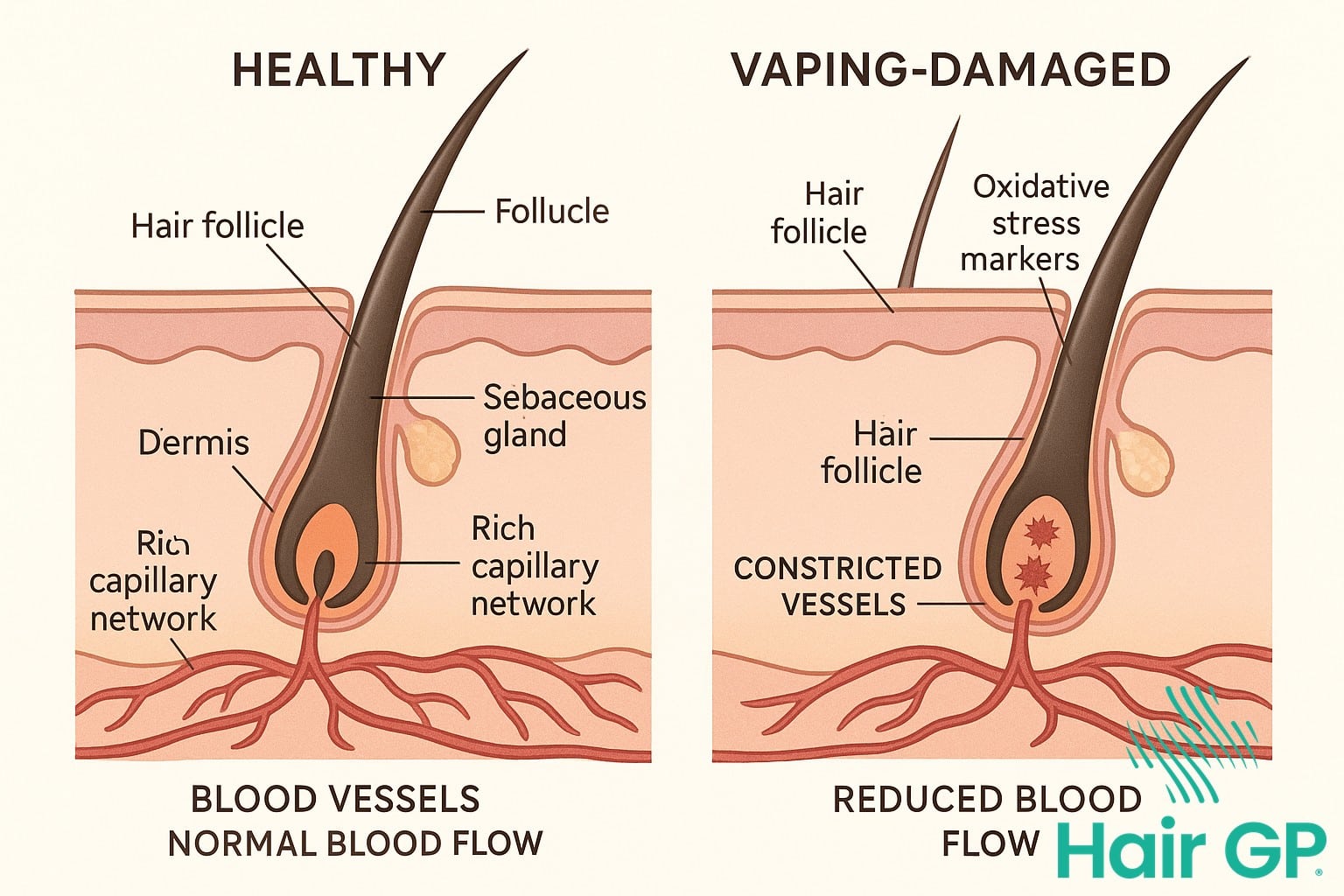
Many think e-cigarettes or vaping do not cause damage. But studies show that vaping still reduces blood flow and can harm your hair and skin, though possibly less than traditional cigarettes.
Myth 3: Genetics Is All That Matters
While genes do play a role, lifestyle choices like smoking often have a bigger effect on your appearance, especially after age 30.
Myth 4: Only Heavy Smokers Are At Risk
Even light or social smokers show more skin aging and hair loss compared to non-smokers.
Myth 5: Good Skincare Can Undo The Damage
Skincare can help, but it cannot fully fix the deep changes caused by smoking.
Unique Risks For Certain Groups
Women
Women may notice thinning hair and early wrinkles faster than men because of hormonal changes and thinner skin.
People With Existing Skin Conditions
If you have eczema, psoriasis, or acne, smoking can make these problems worse and harder to treat.
People With Poor Diets
If you smoke and eat poorly, your risk of hair and skin damage is even higher. Your body needs good nutrition to repair itself.
Non-obvious Insight
If you combine smoking with other risks (like sun exposure or stress), the effects on your hair and skin are not just added—they multiply.
What Doctors And Dermatologists Recommend
Medical Opinion
Most doctors agree: Quitting smoking is the best step for your appearance and health. Dermatologists often see clear improvements in their patients who quit.
Treatments That May Help
- Topical Minoxidil: Can help with hair regrowth after quitting.
- Retinoid Creams: Improve skin cell turnover and can reduce fine lines.
- Antioxidant Serums: May help repair some damage but only if you stop smoking.
When To See A Doctor
If you notice rapid hair loss, new skin growths, or wounds that won’t heal, see a doctor right away. These can be signs of serious health issues.
The Importance Of Early Action
Why Act Now?
The earlier you stop smoking, the more you can protect your hair and skin. Waiting until damage is severe makes recovery slower and less complete.
Example
A person who quits smoking at age 30 can often prevent most visible damage. Someone who waits until age 60 may not reverse deep wrinkles or bald spots.
Small Changes Add Up
Even cutting back on cigarettes can help, but quitting completely brings the best results.
Frequently Asked Questions
How Long Does It Take For Hair And Skin To Improve After Quitting Smoking?
Most people see some improvements within a few weeks. Skin looks brighter and feels smoother. Hair shedding slows down. Significant changes, like reduced wrinkles or new hair growth, can take several months to a year.
Can Secondhand Smoke Cause Hair Loss And Skin Aging?
Yes, regular exposure to secondhand smoke can damage your hair follicles and skin, especially for children and people with sensitive skin. The chemicals in the smoke are harmful even if you are not the one smoking.
Is Vaping Safer For Hair And Skin Than Smoking?
Vaping may produce fewer harmful chemicals than traditional cigarettes but still reduces blood flow and can cause some damage to your hair and skin. The best choice is to avoid all forms of smoking.
Are There Any Treatments To Reverse The Damage Caused By Smoking?
Some treatments, like minoxidil for hair and retinoids for skin, can help. However, the most important step is quitting smoking. No treatment can fully repair the damage if you continue to smoke.
Does Diet Play A Role In Repairing Hair And Skin After Smoking?
Yes, eating foods rich in vitamins, antioxidants, and healthy fats helps your body heal. A good diet supports new hair growth and improves skin texture after quitting smoking.
For more scientific details on the harmful effects of smoking, you can visit the CDC’s official site.
Taking action today can protect your hair, your skin, and your confidence for years to come. The journey to better health and appearance starts with one important choice—saying no to smoking.