

Finasteride For Women: Risks And Benefits And Off-label Use
Hair loss can feel overwhelming, especially for women. If you are searching for solutions, you might have heard about finasteride. Most people know finasteride as a medication for male pattern baldness, but some doctors also use it for women. The idea of using a drug “off-label” can sound confusing or even risky. That is why it is important to look closely at the facts: what finasteride does, how it works, its possible benefits, and the risks it might bring for women. This article gives you a full, clear view of finasteride for women — including research, experiences, and expert opinion — so you can make informed decisions about your health.
What Is Finasteride?
Finasteride is a medication designed to help with hair loss and some prostate conditions. It is best known under brand names like Propecia (for hair loss) and Proscar (for enlarged prostate). The main purpose of finasteride is to block an enzyme in the body called 5-alpha-reductase. This enzyme changes testosterone into another hormone called dihydrotestosterone (DHT). DHT is the main cause of hair thinning in men, and it also plays a role in some types of hair loss in women.
Finasteride is most often taken as a small tablet once a day. The usual dose for men with hair loss is 1 mg per day. For prostate issues, the dose is usually 5 mg per day. For women, there is no official approved dose, so doctors may use different amounts depending on the case.
Why Consider Finasteride For Women?
Many women experience hair loss, especially as they get older. The most common type is female pattern hair loss (FPHL). This condition leads to thinning on the top and crown of the head. Unlike men, women rarely go fully bald, but hair loss can still feel very stressful.
The standard treatments for women are topical minoxidil, sometimes hormone therapy, and specific shampoos. However, these do not always work well. For some women, especially those who do not improve with minoxidil, doctors may consider trying finasteride — even though it is not officially approved for women.
The idea is simple: if DHT causes hair loss, and finasteride blocks DHT, maybe it can slow or stop hair thinning in women too. But the situation is more complex than it sounds. Female biology is different, and the long-term safety of finasteride for women is not fully known.
Credit: nextstepsinderm.com
How Finasteride Works: The Science
To understand why finasteride might help, it is good to know how it works in the body.
- Blocks DHT Production: The main job of finasteride is to block the enzyme 5-alpha-reductase. This lowers the amount of DHT in the body.
- Protects Hair Follicles: DHT can shrink hair follicles, making hair thinner and shorter. By lowering DHT, finasteride may protect hair follicles and help keep hair growing longer and thicker.
- Slows Progression: By reducing DHT, the hope is to slow down or even stop the progression of hair loss.
However, DHT is not the only cause of hair loss in women. Hormones, genetics, stress, and even diet can play a role. This is why finasteride works well for some women but not for others.
Approved And Off-label Uses Of Finasteride
Approved Uses
- Male Pattern Baldness (Androgenetic Alopecia): Finasteride 1 mg daily is approved for men only.
- Benign Prostatic Hyperplasia (BPH): Finasteride 5 mg daily is approved for men with enlarged prostate.
Off-label Uses
Doctors sometimes use finasteride for conditions that are not officially approved, based on their own experience or research. This is called “off-label use. ”
For women, off-label uses include:
- Female Pattern Hair Loss (FPHL): Especially after menopause or when other treatments fail.
- Hirsutism: A condition where women grow excess facial or body hair due to high androgens.
- Polycystic Ovary Syndrome (PCOS): Sometimes used to help with hair and skin symptoms.
Off-label use is legal and common in medicine, but it means there is less official safety data. This is why a careful discussion with a doctor is necessary before starting finasteride as a woman.
The Evidence: Does Finasteride Work For Women?
Research on finasteride for women is less extensive than for men, but there are some clinical studies and reports. The results are mixed, but some patterns stand out.
Studies On Female Pattern Hair Loss
A 2017 review in the journal *Dermatologic Therapy* looked at several studies on women and finasteride. Here is what they found:
- Premenopausal Women: Most studies show little or no benefit when using 1 mg daily. Higher doses (2.5–5 mg) may work better, but there are more side effects.
- Postmenopausal Women: Some studies found good results with 1.25 mg to 5 mg daily. Up to 81% of women had improved hair density after one year.
- PCOS or High Androgens: Women with high male hormones seem to respond better.
Real-world Experiences
Many dermatologists report that some female patients, especially those with early or mild hair loss, see good results with finasteride. Others see little change. It seems to work best for women who have:
- A family history of hair loss
- Higher levels of androgens (male hormones)
- Hair loss starting at the crown or top of the head
Key Data: Success Rates
Here is a comparison of results from published studies on women using finasteride for hair loss:
| Study | Participants | Finasteride Dose | Duration | Improvement Rate |
|---|---|---|---|---|
| Sinclair et al. (2005) | 83 women | 1 mg daily | 12 months | ~20% |
| Yeon et al. (2011) | 87 women | 2.5 mg daily | 12 months | ~62% |
| Shum et al. (2002) | 37 women (postmenopausal) | 5 mg daily | 12 months | ~81% |
As you can see, higher doses may give better results in women, but also raise the risk of side effects.
Non-obvious Insights
- Response time is slow: It can take 6–12 months to see any improvement with finasteride. Many women quit too soon, thinking it does not work.
- Stopping the drug reverses gains: If you stop taking finasteride, any hair gained is usually lost within 6–12 months.
Benefits Of Finasteride For Women
For women who respond to finasteride, the benefits can be real and life-changing.
Thicker, Fuller Hair
The main benefit is reduced hair thinning and sometimes new hair growth. Women report hair feeling thicker, with less scalp visible. In successful cases, the hair loss process slows or even stops.
Improved Confidence
Hair loss can hurt self-esteem. When hair improves, many women feel more confident, less anxious, and happier in social situations.
Potential Benefits For Other Androgen-related Conditions
Finasteride may help women with hirsutism (excess facial or body hair) and those with PCOS (polycystic ovary syndrome), especially if other treatments do not work.
Non-obvious Benefit: Maintenance
Even if finasteride does not regrow hair, it may help maintain current hair and prevent further loss. This “maintenance effect” is often overlooked but can be valuable.
Risks And Side Effects For Women
Every medication has risks. For women, finasteride brings some unique concerns.
Pregnancy Risks: The Most Important Warning
Finasteride can cause birth defects in male babies. This means:
- Never use in pregnancy: Women who are or could become pregnant must not take finasteride.
- Avoid handling crushed tablets: Even touching broken pills can be risky for pregnant women.
Doctors usually prescribe finasteride only for postmenopausal women or those who use strict birth control.
Common Side Effects
Women taking finasteride may experience:
- Decreased libido (sex drive)
- Breast tenderness or enlargement
- Irregular periods (rare)
- Mood changes (such as depression or anxiety)
- Headaches or dizziness
Most side effects are mild and go away if the drug is stopped.
Rare And Serious Side Effects
- Depression and Anxiety: Some women report mood changes. This risk is not well understood.
- Breast Cancer Risk: There is no clear evidence that finasteride increases breast cancer risk, but a few case reports exist. Doctors monitor closely.
- Post-Finasteride Syndrome: Some people (mainly men, but a few women) report ongoing sexual and mental side effects after stopping. This is rare and controversial.
Side Effect Frequency: Data Table
Here is a summary of how common some side effects are, based on studies of women using finasteride:
| Side Effect | Estimated Frequency | Comments |
|---|---|---|
| Decreased libido | 5-10% | Usually mild and reversible |
| Breast tenderness | 2-5% | May go away with time |
| Menstrual changes | <2% | Rare, not well studied |
| Mood changes | 1-3% | Monitor for depression |
| Birth defects | Unknown | Do not use in pregnancy |
Non-obvious Risk: Drug Interactions
Finasteride may interact with other medications, especially those that affect hormones. Always tell your doctor about all medicines and supplements you take.
Who Should Consider Finasteride?
Finasteride is not for every woman. It is most likely to help women who:
- Have female pattern hair loss with early or moderate thinning
- Tried minoxidil or other treatments without success
- Are postmenopausal (to avoid pregnancy risks)
- Have high levels of androgens (confirmed by blood tests)
- Are willing to wait at least 6–12 months for results
It is not recommended for:
- Women who are pregnant or may become pregnant
- Women with certain liver problems
- Those with a history of severe depression (unless closely monitored)
How To Use Finasteride Safely
If your doctor suggests finasteride, here are steps to use it safely:
- Start with a low dose: Many doctors begin with 1 mg daily and increase only if needed.
- Use birth control: If you are of childbearing age, use reliable contraception.
- Do not crush tablets: Swallow whole to avoid skin contact.
- Regular check-ups: Have regular doctor visits to monitor side effects and progress.
- Blood tests: Your doctor may check hormone levels, liver function, and other health markers.
- Be patient: Results can take 6–12 months.
Practical Tips
- Set reminders to take your pill at the same time every day.
- Take photos of your hair every 2–3 months to track progress.
- Report any side effects to your doctor right away.
Alternatives To Finasteride For Women
Finasteride is not the only option for hair loss in women. Some other treatments include:
- Minoxidil (Rogaine): A topical foam or solution you apply to the scalp. It is safe for most women and often used as the first treatment.
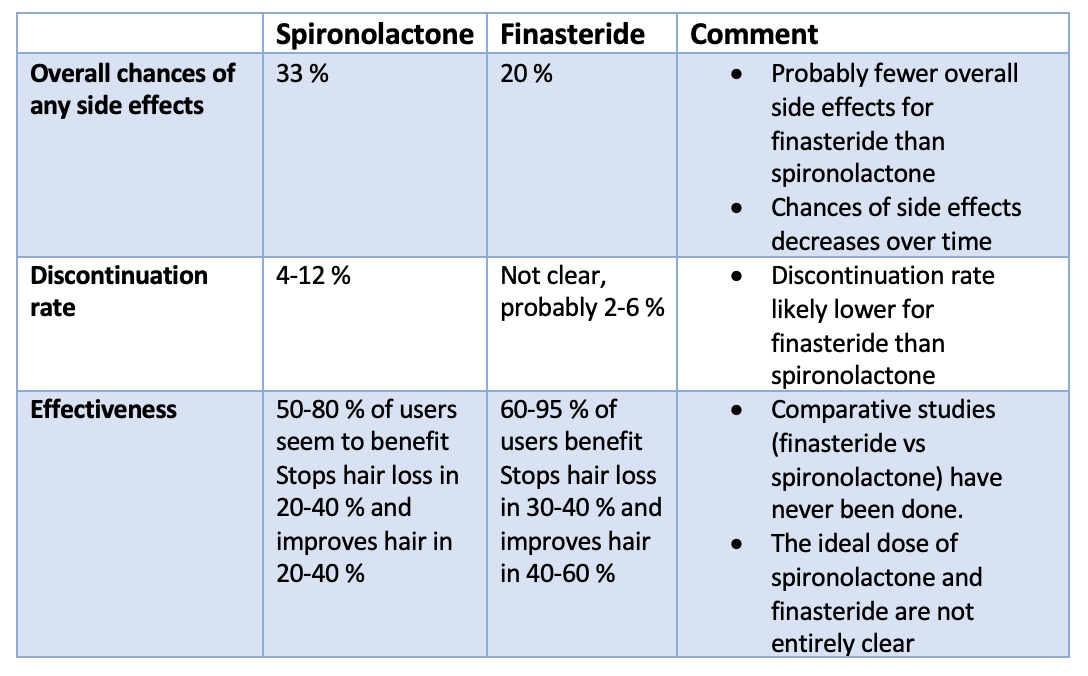
- Spironolactone: An oral medicine that blocks androgens. Used for hair loss and hirsutism, especially in women with PCOS.
- Oral contraceptives: Some birth control pills help balance hormones and reduce hair loss in women with high androgens.
- Low-level laser therapy: Devices like laser combs or helmets can stimulate hair growth.
- Hair transplantation: For women with stable hair loss who do not respond to medication.
- Platelet-rich plasma (PRP): Injections of your own blood platelets to stimulate hair follicles.
Data Table: Hair Loss Treatments For Women
Here is a quick comparison of some common options:
| Treatment | How it works | Success Rate | Main Side Effects |
|---|---|---|---|
| Minoxidil | Widens blood vessels, increases scalp blood flow | ~40–60% | Scalp irritation, unwanted facial hair |
| Finasteride | Blocks DHT production | ~20–80% (higher in postmenopausal women) | Hormonal side effects, birth defects |
| Spironolactone | Blocks androgen receptors | ~50–70% | Irregular periods, breast tenderness |
| PRP injections | Stimulates follicles with growth factors | ~50–70% | Pain at injection site, rare infection |
| Laser therapy | Light energy stimulates hair growth | ~30–50% | None known |

Credit: www.estenove.com
Off-label Use: What Does It Really Mean?
When doctors use a drug for a reason not officially approved by the FDA or other agencies, it is called off-label use. This is common in many areas of medicine, especially for rare conditions or new research findings.
Why Off-label Use Happens
- Lack of approved options: For female hair loss, there are few approved medications.
- New research: Sometimes, studies show a drug helps in other ways, before companies officially update the label.
- Patient needs: If standard treatments do not work, doctors may try other options to help the patient.
Is Off-label Use Safe?
Off-label use is legal and sometimes very helpful, but it comes with more uncertainty. It is important to:
- Choose a doctor experienced with the drug and the condition
- Understand that safety data may be limited
- Monitor side effects and results closely
Ethical And Legal Aspects
Doctors must always put patient safety first. They need to explain the benefits, risks, and unknowns before starting off-label treatment. You have the right to ask questions and to say no if you are not comfortable.
Special Considerations: Age, Hormones, And Genetics
Age And Menopause
Finasteride is generally safer and more effective for postmenopausal women, since there is no risk of pregnancy. In younger women, strict birth control is needed.
Hormone Levels
Women with high androgen levels (measured by blood tests) tend to respond better to finasteride. Those with normal hormones may not see much benefit.
Genetics
If you have a strong family history of female pattern hair loss, you may be more likely to benefit from DHT blockers like finasteride. However, not all genes are known, and response is still unpredictable.
Credit: donovanmedical.com
How To Talk To Your Doctor About Finasteride
If you are interested in trying finasteride for hair loss, here are some tips:
- Prepare your questions: Ask about benefits, risks, dose, and monitoring.
- Share your history: Tell your doctor about all medications, supplements, and health issues.
- Discuss family plans: If you plan to become pregnant, finasteride is not safe.
- Ask about alternatives: See if other treatments might be safer or more effective for you.
- Request regular follow-ups: Agree on check-ups to track results and side effects.
Example Questions To Ask
- How likely am I to benefit from finasteride, based on my age and hormone levels?
- What dose will you start with, and why?
- What are the most important side effects to watch for?
- How long should I try it before deciding if it works?
- What happens if I stop the medication?
Real Stories: Experiences From Women
Reading about real experiences can be helpful. Here are a few examples (names changed for privacy):
- Anna, 52, postmenopausal: “After 8 months on 2.5 mg finasteride, my hair stopped falling out. It is not thick like before, but I feel much better. No side effects for me.”
- Maria, 36, with PCOS: “I tried finasteride after minoxidil failed. I saw some improvement, but also had breast tenderness and lost my sex drive. I stopped after a year.”
- Lisa, 44, early hair loss: “It was slow, but after a year on 1 mg, my hair looks fuller. I wish I started sooner, but you need patience.”
Non-obvious Experience: Disappointment
Some women feel discouraged if they do not see results quickly. Support groups and frequent check-ins with your doctor can help you stay motivated during the slow process.
Costs And Access
Finasteride is available as a generic drug, so it is usually affordable. Prices vary by country and pharmacy. Insurance may not cover it for hair loss in women, since it is an off-label use.
- Generic finasteride: Often much cheaper than brand names
- Compounded formulas: Some pharmacies make special doses for women, but these may cost more
- Doctor visits and tests: Regular check-ups can add to costs
Practical Tip
Ask your doctor to prescribe the lowest effective dose to save money and reduce side effects.
Future Research And Developments
Scientists are still learning about female pattern hair loss and how best to treat it. New drugs that block DHT or work in other ways are being studied. There is hope that more options will become available for women, with better results and fewer risks.
Some ongoing research areas:
- Topical finasteride: Creams or foams with finasteride may reduce side effects. Early studies are promising.
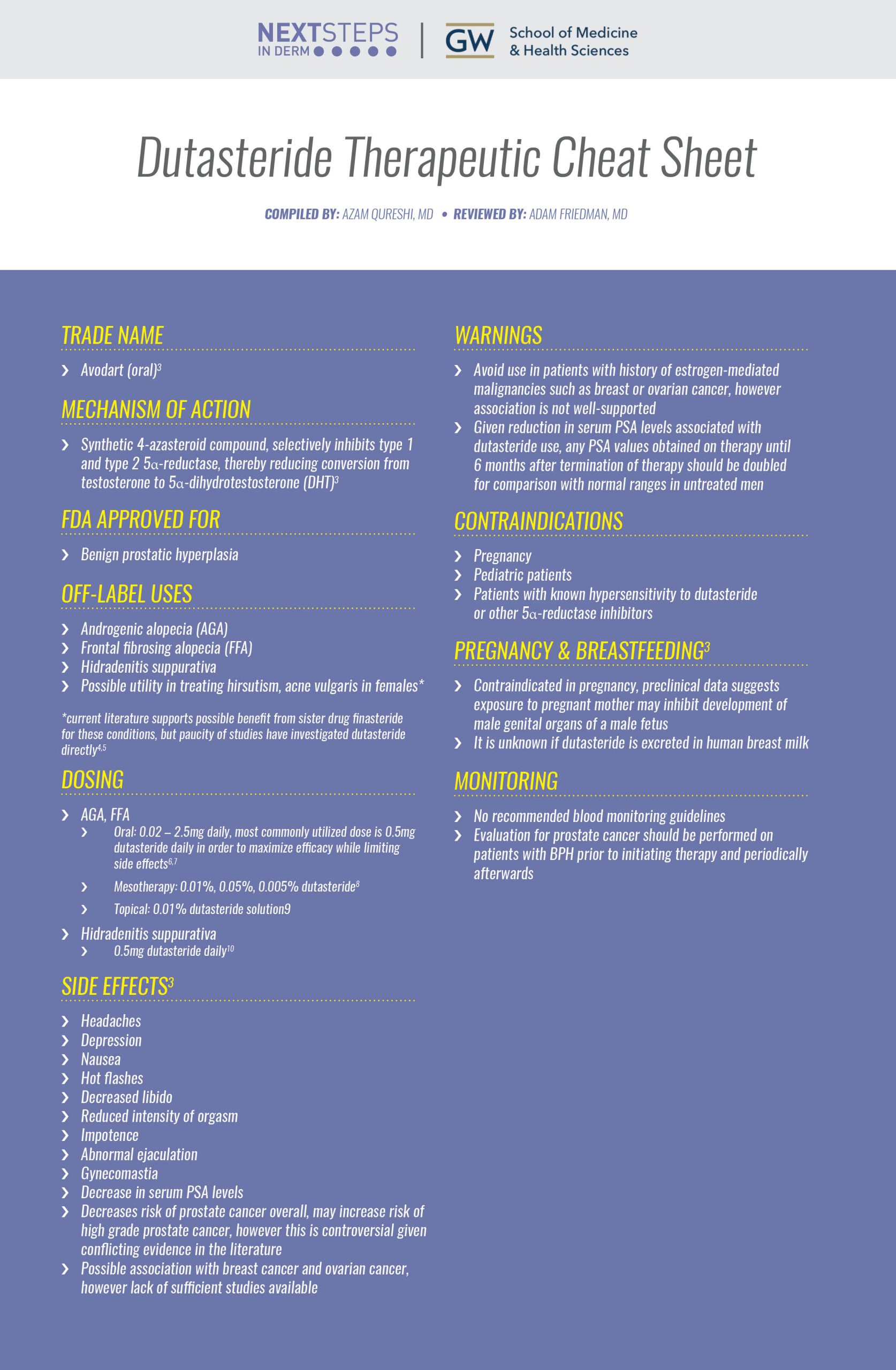
- Other 5-alpha-reductase inhibitors: Drugs like dutasteride may work even better, but have more side effects.
- Genetic testing: In the future, tests may predict who will respond best to each treatment.
If you want to follow updates, check medical sites like the National Institutes of Health.
Frequently Asked Questions
What Is The Safest Dose Of Finasteride For Women?
Most doctors start with 1 mg per day for women, but some studies use up to 2.5–5 mg, especially in postmenopausal women. The safest dose is the lowest amount that works for you. Always follow your doctor’s advice and never increase the dose on your own.
Can Women Of Childbearing Age Take Finasteride?
It is not recommended for women who are pregnant or could become pregnant, because it can cause birth defects in male babies. If you are of childbearing age and want to try finasteride, you must use reliable birth control and have regular pregnancy tests.
How Long Does It Take To See Results With Finasteride?
Most women need to take finasteride for 6–12 months before seeing any improvement in hair thickness. It is important to be patient and continue the medication unless your doctor says to stop. If there is no change after one year, your doctor may suggest trying another treatment.
Are The Side Effects Of Finasteride Permanent?
Most side effects, like low libido or breast tenderness, go away after stopping the drug. Rarely, a small number of people report long-lasting side effects. If you notice any problems, talk to your doctor right away.
Is It Safe To Use Finasteride With Other Hair Loss Treatments?
Yes, many doctors combine finasteride with minoxidil or other treatments for better results. However, always check with your doctor before using new products, as some combinations may increase the risk of side effects.
Taking care of your hair is about more than just medicine — it is about feeling confident, healthy, and informed. If you are considering finasteride for hair loss or another off-label use, understanding the facts will help you work with your doctor and make the choice that is right for you.