

Many people wonder why their hair behaves differently from others. Some hair absorbs moisture quickly and dries fast, while other hair takes forever to soak up water and seems to stay wet for hours. This quality is called hair porosity. It affects how you care for your hair, which products work best, and even how your hair reacts to the weather. The big question is: what actually controls your hair porosity—genetics or environment? Understanding the answer can help you care for your hair in a smarter way and avoid common mistakes.
This article dives deep into the science of hair porosity. We’ll explore how your genes shape your hair, what the environment does to it, and why both are important. You’ll learn how porosity works, how to test your own hair, and what you can do to improve your hair health.
We’ll also bust some common myths that confuse people. Get ready for a complete, practical guide to what determines your hair porosity.
What Is Hair Porosity?
Hair porosity is a measure of how easily your hair absorbs and holds moisture. Imagine your hair as a road with many tiny doors—these doors are called cuticles. When the cuticles are open or lifted, your hair takes in moisture quickly. When they are closed or flat, moisture stays out or gets trapped inside.
There are three main types of hair porosity:
- Low porosity: Cuticles are tightly packed. Hair repels water and products may sit on top.
- Medium (normal) porosity: Cuticles are slightly raised. Hair absorbs and retains moisture well.
- High porosity: Cuticles are wide open or damaged. Hair soaks up water quickly but loses it just as fast.
This is not just a beauty term—porosity affects everything from how your hair looks to how it responds to dye or heat styling.
How Hair Porosity Is Measured
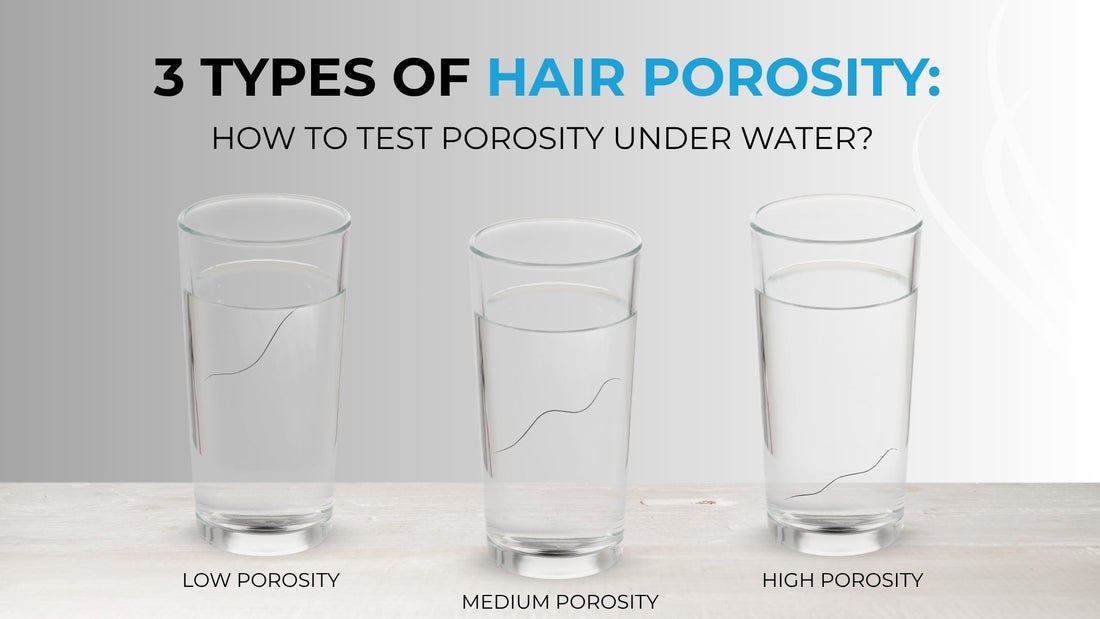
Several tests help you understand your hair’s porosity. The most popular is the float test. Place a few clean hair strands in a glass of water and watch what happens:
- Hair that floats for a long time: Low porosity
- Hair that sinks slowly: Medium porosity
- Hair that sinks quickly: High porosity
Another method is the spray test. Spray water onto dry hair and see how fast it is absorbed. Water beads on low porosity hair and soaks in fast on high porosity hair.
These tests are simple, but they give useful clues about your hair’s unique structure.
The Science Behind Hair Structure
Before understanding what affects porosity, it helps to know the structure of a hair strand. Each hair is made of three main layers:
- Cuticle: The outer layer, made of overlapping cells, like roof shingles.
- Cortex: The middle layer, which holds most of the hair’s strength, color, and moisture.
- Medulla: The inner core, often missing in fine or light-colored hair.
The cuticle layer is most important for porosity. If the cuticles are smooth and flat, less water gets in or out. If they are raised or damaged, moisture moves freely.
Why Does Porosity Matter?
Porosity decides how your hair responds to:
- Shampoos and conditioners
- Oils and styling products
- Humidity and weather
- Chemical treatments (like coloring or relaxing)
People with high porosity hair may struggle with dryness and frizz, while those with low porosity hair often have product buildup and slow drying.
Genetics: How Your Dna Shapes Hair Porosity
Your genetics play a huge role in your hair’s basic structure, including porosity. The shape, thickness, and arrangement of your hair’s cuticle layers are all set by your genes.
Genes That Influence Hair Structure
Scientists have found many genes that affect hair type. For example:
- KRT genes: Control the production of keratin, the main protein in hair.
- TRPS1 gene: Linked to hair growth and shape.
- FGF5 gene: Affects how long hair grows.
These and other genes decide if your hair is straight, wavy, or curly, fine or coarse. They also influence how tightly the cuticle cells sit on the hair shaft.
Hereditary Porosity Patterns
Some families tend to have similar hair porosity. For example:
- Children often inherit low, medium, or high porosity from their parents.
- People of African, Asian, or European descent can show different porosity patterns due to ancestral gene differences.
A 2020 study published in the *International Journal of Trichology* found that African hair often has more lifted cuticles, leading to higher porosity compared to Asian hair, which tends to have smoother cuticles and lower porosity.
Genetic Disorders And Porosity
Rare genetic conditions can also affect hair porosity, such as:
- Monilethrix: Leads to fragile, porous hair.
- Uncombable Hair Syndrome: Alters cuticle structure, making hair unruly and porous.
These cases are uncommon, but they show how deeply genes can control hair properties.
Limits Of Genetic Influence
Genes set the base, but they are not the whole story. Two people with the same hair type may have different porosity due to lifestyle or care habits.
Environment: How Life Affects Your Hair Porosity
While genes give you a starting point, your environment can change your hair’s porosity over time. This includes everything from the weather to the way you treat your hair.
Chemical Treatments
Products like hair dye, bleach, relaxers, and perms all open the cuticle layer. This helps chemicals get inside the hair and do their job. But overuse can damage the cuticle and raise porosity. For example:
- Bleaching can break cuticle layers, causing high porosity and dryness.
- Frequent coloring may make hair brittle and frizzy.
A study by the *Journal of Cosmetic Science* found that hair dye increases porosity by up to 25%, making hair more likely to lose moisture.
Heat Styling
Using flat irons, curling wands, or blow dryers at high temperatures can lift or even break the cuticle. Over time, this increases porosity and leads to split ends.
Tip: Always use a heat protectant spray to reduce damage.
Weather And Climate
Sun, wind, humidity, and pollution all affect your cuticle layer.
- UV rays from sunlight break down keratin, causing roughness and higher porosity.
- Humidity makes high porosity hair frizz, as water moves in and out quickly.
- Cold weather can make hair brittle, raising porosity over time.
Living in a city with high pollution can also damage hair, as tiny particles stick to the cuticle and make it rough.
Water Quality
Hard water, which contains high levels of calcium and magnesium, can change your hair’s porosity. Minerals build up on the cuticle, making it harder for moisture to get in.
- Soft water is gentler, but not always available.
Hair Care Habits
How you wash, style, and brush your hair also makes a difference.
- Over-shampooing strips natural oils and lifts the cuticle.
- Aggressive brushing can break cuticle cells.
- Using harsh towels to dry hair can cause friction, raising porosity.
Diet And Health
While less obvious, your diet can affect hair porosity. Deficiencies in protein, iron, zinc, or vitamins A and E can weaken hair and change cuticle structure.
Example: People with iron-deficiency anemia often have brittle, porous hair.

Credit: binibeauty.com
Genetics Vs Environment: Which Matters More?
Now comes the key question: Is hair porosity mostly genetic, or does your environment have the final say? The answer is: both matter—a lot.
What Research Says
Most scientists agree that genetics set your starting porosity. If you are born with low porosity hair, you are less likely to develop high porosity unless you damage your hair. However, the environment can strongly influence your porosity over time.
In a 2018 study published in the *Journal of Investigative Dermatology*, researchers found that about 60% of hair porosity can be traced to genetic factors, while 40% is due to environment and lifestyle.
Real-life Examples
- Two sisters may have similar genetics, but the one who uses bleach and heat styling will have higher porosity than the one who avoids these treatments.
- Someone who moves from a humid climate to a dry one may see changes in hair porosity over months.
A Balancing Act
Think of genetics as building the house and environment as deciding how well that house holds up over time. You can’t change your genetic blueprint, but you can protect your hair from environmental damage.
How To Test Your Own Hair Porosity
Knowing your porosity helps you pick the right products and routines. Here’s how to test:
The Float Test
- Wash and dry your hair to remove oils and products.
- Drop a few clean strands into a glass of water.
- Wait 2-4 minutes.
- Watch what happens:
- Floats on top: Low porosity
- Sinks slowly: Medium porosity
- Sinks quickly: High porosity
Tip: Use hair from a brush or comb, not from the drain, for cleaner results.
The Spray Test
- Spray water on a small section of dry hair.
- Observe:
- Water beads up: Low porosity
- Water absorbs slowly: Medium porosity
- Water soaks in instantly: High porosity
The Slide Test
- Take a single hair strand.
- Slide your fingers up from the tip to the root.
- If it feels smooth, you likely have low or medium porosity. If it feels bumpy, porosity may be high.
What If Your Results Are Mixed?
Some people have different porosity in different areas (roots vs. ends). This is called porosity variation. It’s common, especially if you color or style only part of your hair.

Credit: ethique.com
Common Myths About Hair Porosity
Many ideas about hair porosity are repeated online, but not all are true. Let’s clear up some of the biggest myths.
Myth 1: Porosity Never Changes
Fact: Porosity can change due to heat, chemicals, weather, and age. Genetics give you a starting point, but your actions matter.
Myth 2: Porosity Is The Same For All Hair Types
Fact: Curly, straight, wavy, and coily hair can all have different porosity levels. Porosity is about cuticle structure, not curl pattern.
Myth 3: Products Can “fix” Porosity Permanently
Fact: No shampoo or treatment can permanently close or open your cuticles. You can improve hair health, but you can’t change your genetic base.
Myth 4: Only Damaged Hair Is High Porosity
Fact: Some people naturally have high porosity due to their genes, even if their hair is healthy.
Myth 5: Porosity Doesn’t Matter
Fact: Porosity shapes how your hair reacts to products, treatments, and weather. Ignoring it often leads to frustration and wasted money.
How To Care For Each Porosity Type
Once you know your porosity, you can make better choices for your hair.
Low Porosity Hair
Characteristics:
- Repels water
- Slow to dry
- Product buildup is common
Best Practices:
- Use lightweight, water-based products.
- Apply conditioner with heat (like a warm towel) to help absorption.
- Avoid heavy oils that sit on top of hair.
Medium Porosity Hair
Characteristics:
- Easy to style and color
- Holds moisture well
- Less prone to frizz
Best Practices:
- Use balanced shampoos and conditioners.
- Deep condition once a week.
- Limit harsh treatments.
High Porosity Hair
Characteristics:
- Absorbs water instantly
- Dries quickly
- Tangles and frizzes easily
Best Practices:
- Use leave-in conditioners and sealants (like shea butter or oils).
- Avoid frequent heat and chemical treatments.
- Rinse hair with cool water to help close cuticles.
Genetics And Environment: How They Work Together
To see how genes and environment mix, let’s look at some real-world examples.
Case 1: Naturally Low Porosity, High Heat Usage
Maria has always had low porosity hair. She starts using a flat iron daily. After six months, she notices her hair dries faster, feels rough, and absorbs products more easily. Her porosity has increased due to heat damage.
Case 2: High Porosity Runs In The Family
James and his mother both have high porosity hair, even though neither has ever colored or heat-styled their hair. Their family history shows a genetic trait for raised cuticles.
Case 3: Environmental Recovery
Leah moves from a polluted city to a rural area and switches to gentle hair products. Her hair feels smoother and holds moisture better after a few months, even though her genetics stay the same.
These stories show that you can’t control your DNA, but you can shape your hair’s future with smart choices.
Comparing Genetic And Environmental Factors
Let’s summarize how genetics and environment compare in shaping hair porosity.
| Factor | Influence on Porosity | Can You Change It? | Examples |
|---|---|---|---|
| Genetics | Sets hair’s basic structure (cuticle shape, thickness, type) | No | Inherited low/high porosity, family hair type patterns |
| Environment | Can raise or lower porosity over time | Yes | Chemical treatments, heat styling, weather, diet |
How Porosity Affects Hair Products And Styling
Understanding your porosity can save you time and money. Here’s how:
Low Porosity
- Light, liquid products work best.
- Heavy creams may sit on the hair.
- Clarifying shampoos help remove buildup.
Medium Porosity
- Most products work well.
- Can handle occasional chemical or heat styling.
High Porosity
- Needs rich moisturizers and oils.
- Protein treatments can help strengthen hair.
- Avoid alcohol-based products which dry out hair.
A 2021 market survey found that 70% of women buy hair products based on hair type, not porosity, which often leads to disappointing results.
Data: Genetics Vs Environment In Hair Porosity
To make the comparison clearer, here’s a table of key research findings.
| Study | Year | Genetics Influence (%) | Environment Influence (%) |
|---|---|---|---|
| Journal of Investigative Dermatology | 2018 | 60 | 40 |
| International Journal of Trichology | 2020 | 65 | 35 |
| Cosmetic Science Survey | 2021 | 58 | 42 |
Insight: While genetics has a bigger share, environment still plays a major role—especially as you age or change habits.
Practical Tips To Manage Hair Porosity
No matter your porosity type, you can improve your hair’s health with smart steps.
- Protect from Heat: Use heat tools sparingly and always with protectant sprays.
- Limit Chemicals: Space out coloring, relaxing, or perming sessions.
- Check Water Quality: Use a shower filter if you have hard water.
- Adjust to Weather: Wear hats in sun, use leave-in conditioners in humidity, and deep condition in winter.
- Eat a Balanced Diet: Include enough protein, iron, zinc, and vitamins.
- Gentle Handling: Use soft towels, wide-tooth combs, and avoid rough brushing.
- Regular Trims: Cut split ends to prevent damage from spreading.
Non-obvious Insights Most Beginners Miss
- Porosity Can Vary on One Head: Your roots, mid-lengths, and ends may each have different porosity. This is common if you color or heat style only part of your hair.
- “Protein Sensitivity” Is Often a Porosity Issue: Many believe their hair is “protein sensitive,” but often, high porosity hair just needs the right balance of moisture and protein—not one or the other.
Credit: theradome.com
How To Choose Products For Your Porosity
With so many products in stores, it’s easy to get lost. Here’s a quick guide:
For Low Porosity
- Look for water-based leave-in conditioners.
- Avoid heavy oils like castor oil; try lighter ones like argan oil.
- Use clarifying shampoos once a month.
For Medium Porosity
- Enjoy a wide range of products.
- Alternate between moisture and protein treatments.
For High Porosity
- Use creamy, thick conditioners.
- Seal ends with natural oils or butters.
- Try protein-rich masks to strengthen hair.
The Role Of Age In Hair Porosity
As you get older, your hair porosity can change. Hormones, health, and years of styling all affect your hair.
- Children: Usually have lower porosity (unless genetic conditions exist).
- Teens and Adults: Hair porosity can rise due to increased styling, coloring, or environmental exposure.
- Seniors: Hair often becomes more porous, brittle, and dry.
Gender Differences In Hair Porosity
While genes decide the basics, men and women often treat their hair differently.
- Women are more likely to color, perm, or style hair, raising porosity.
- Men’s hair is usually shorter, so cuticles see less damage over time.
However, both genders can have any porosity type.
Cultural Practices And Hair Porosity
Hair care customs matter, too. For example:
- African hair traditions: Braiding and protective styles help keep cuticles safe.
- Asian hair routines: Use gentle shampoos and oils, preserving low porosity.
- Western habits: Frequent blow drying and coloring can raise porosity.
Culture shapes how we treat our hair—and therefore, its porosity.
The Future: Can Science Change Hair Porosity?
Researchers are studying ways to repair damaged cuticles and lower porosity. New treatments, like keratin smoothing and bond-building masks, claim to help seal cuticles. Early results are promising, but no product can permanently change your genetic porosity.
Still, advances in biotechnology may lead to better solutions in the future. For now, prevention and smart care are your best tools.
To read more about the latest science on hair structure and genetics, see this research paper.
Frequently Asked Questions
What Is The Main Difference Between Low, Medium, And High Hair Porosity?
Low porosity hair repels water and dries slowly because the cuticle layers are tightly packed. Medium porosity hair absorbs and retains moisture well, making it easy to style. High porosity hair soaks up water quickly but loses moisture fast, often leading to dryness and frizz.
Can I Permanently Change My Hair Porosity?
You cannot permanently change your genetically set porosity. However, you can temporarily raise porosity with chemicals or heat, or lower it a little with good care and conditioning. Genetics sets the base, but environment can cause lasting changes if damage is severe.
How Do I Know If My Hair Porosity Has Changed?
Signs include your hair drying faster or slower than before, reacting differently to products, or feeling rougher or smoother. Testing your hair every few months with the float or spray test can help you notice changes.
Is High Porosity Hair Always Unhealthy?
No. Some people naturally have high porosity hair that is still strong and shiny. High porosity only becomes a problem if it leads to dryness, breakage, or frizz. The key is to care for your hair with the right products and habits.
Can Diet Really Affect Hair Porosity?
Yes. Deficiencies in protein, iron, zinc, or vitamins can weaken the cuticle structure and raise porosity over time. Eating a balanced diet supports healthy hair at the genetic and cellular level.
Hair porosity is a mix of nature and nurture. Your genes set the stage, but how you treat your hair decides much of the story. With knowledge and smart habits, you can manage your hair’s porosity and enjoy healthy, beautiful locks—no matter your starting point.