
Hair loss can feel frightening. You may notice more hairs in your brush, see thinning patches, or feel your scalp changing. These signs can make you anxious, especially if you don’t know what’s causing it or how to fix it.
Talking to a dermatologist is often the best first step, but many people feel nervous or confused about what to ask, what to share, or how to prepare.
This article is your practical checklist for preparing to speak with a dermatologist about hair loss. You’ll discover exactly what information and questions to bring, how to track your symptoms, and what mistakes to avoid. With this guidance, your appointment will be more useful, less stressful, and much more likely to lead to a clear plan.
You’ll also learn what happens during a hair loss consultation, how to make sense of your diagnosis, and what next steps you can expect. By the end, you’ll be confident and ready to take control of your hair health.
Why Preparation Matters For Hair Loss Consultations
Hair loss isn’t always simple. It can be caused by stress, genetics, illness, medication, or even styling habits. Dermatologists see many patients with hair problems, but every case is different. If you come prepared, your doctor gets a clearer picture, and you get better answers.
Many people arrive at their appointment without details. They may forget how long the hair loss has lasted, what treatments they tried, or even family history. This slows down the process and sometimes leads to missed diagnoses. Preparation speeds up finding the cause and helps your dermatologist choose the right treatment.
Being prepared also means you’ll remember important questions. You can avoid confusion later and feel more satisfied with your care. It’s like preparing for an exam—you wouldn’t show up without studying, and you shouldn’t go to a dermatologist without a plan.
Understanding Hair Loss: Basic Facts
Before you talk to your dermatologist, it helps to know some basics. Hair loss is common—according to the American Academy of Dermatology, over 80 million Americans experience hair loss. It can affect anyone, regardless of age or gender.
There are several types:
- Androgenetic alopecia (pattern hair loss) is the most common. It usually runs in families.
- Telogen effluvium happens after stress, illness, or sudden changes.
- Alopecia areata is an autoimmune condition that can cause patches.
- Traction alopecia comes from tight hairstyles.
- Scarring alopecia is rarer, but can cause permanent loss.
Knowing which type you may have is important, but only a dermatologist can confirm this. Symptoms, timing, and your medical history give clues. You don’t need to diagnose yourself—just collect the facts for your doctor.
Your Preparation Checklist For Hair Loss Appointments
Getting ready for your appointment means more than just showing up. Here’s what you should do before you see your dermatologist.
1. Track Your Hair Loss Symptoms
Start by writing down what you notice. Include:
- When did you first see hair loss?
- How quickly is it happening?
- Is it all over, in patches, or just thinning?
- Any itching, burning, or pain?
- Are there visible changes on your scalp (redness, bumps, scaling)?
A simple diary, even on your phone, helps your doctor see the pattern. Take photos if possible, especially if the loss is patchy or changes over time.
2. Review Your Medical History
Your health history is key. Some conditions cause hair loss, and certain medicines or treatments may play a role. Write down:
- Any past illnesses (thyroid, anemia, diabetes, autoimmune disease)
- Current medications, including supplements
- Recent surgeries or hospital stays
- Family history of hair loss (parents, siblings, grandparents)
- Stressful events, infections, or weight changes
Many people forget to mention over-the-counter supplements, but these can matter. Even herbal remedies or vitamins may affect hair.
3. Gather Details About Your Hair Care Routine
Your daily habits can impact your scalp. Tell your dermatologist:
- How often you wash your hair
- What products you use (shampoo, conditioner, styling gels)
- Recent changes in routine
- Heat styling, coloring, or chemical treatments
- Hair accessories (tight ponytails, clips, hats)
If possible, bring photos of the products or a list. This helps your doctor check for any harmful ingredients.
4. List All Treatments Tried
Have you already tried something for your hair loss? Make a list, including:
- Prescription and over-the-counter treatments (minoxidil, finasteride)
- Natural remedies (oils, herbal extracts)
- Lifestyle changes (diet, supplements)
- Any previous visits to doctors or clinics
Note how long you used each treatment and any results or side effects. This prevents repeating failed treatments and helps your doctor pick new options.
5. Prepare Questions To Ask
Don’t wait until you’re in the office to think of questions. Write them down in advance. Some useful examples:
- What is causing my hair loss?
- Is it temporary or permanent?
- What tests will you do?
- What treatments are available?
- Are there risks or side effects?
- How long will treatment take?
- Will my hair grow back?
- What should I avoid?
You can add your own concerns or worries. Bringing a list helps you remember, especially if you’re nervous.
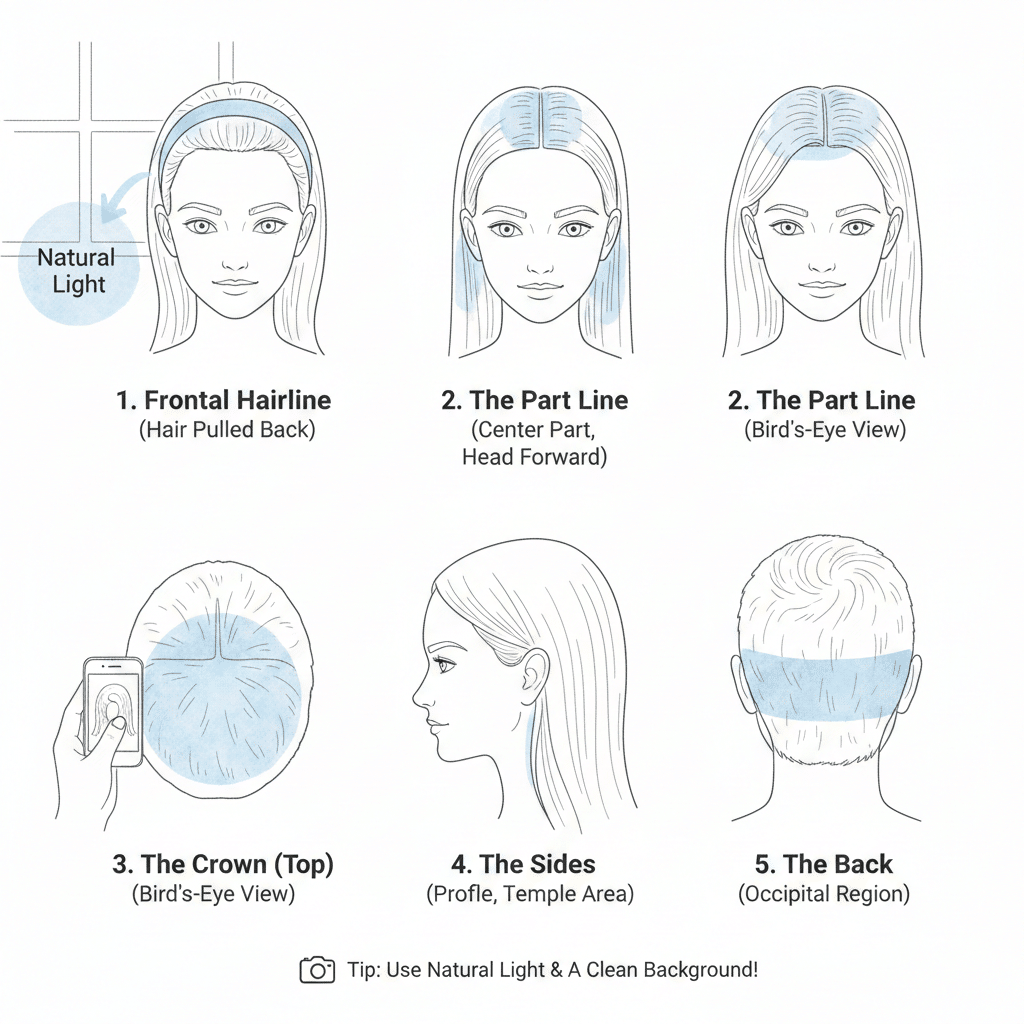
6. Bring Photos For Comparison
Photos help your dermatologist see the change. Bring:
- Recent photos showing your hair before loss
- Current photos showing affected areas
- Photos showing any scalp changes (redness, scaling)
These visual aids are valuable, especially if you’re unsure how much your hair has changed. Some clinics even ask for photos before your appointment.
7. Prepare For Possible Tests
Dermatologists may do tests like:
- Scalp examination (with magnification)
- Hair pull test
- Blood tests (thyroid, iron, hormone levels)
- Scalp biopsy (rare, but sometimes needed)
Knowing these in advance reduces surprises. If you’re nervous about needles or procedures, let your doctor know.
8. Check Insurance Coverage
Some hair loss treatments, tests, or medicines may not be covered by insurance. Before your appointment, check:
- What your insurance covers for dermatology
- Co-payments or fees for tests
- Coverage for prescription medicines
This avoids confusion and unexpected bills later.
9. Prepare Emotional Support
Hair loss can affect your confidence and mood. If you feel anxious, consider bringing a friend or family member. They can help you remember information and offer support.
If you’re struggling emotionally, mention this to your dermatologist. Some patients benefit from counseling or support groups.
10. Set Realistic Expectations
Some hair loss can be reversed, but not all. Treatments take time, and results may be slow. Prepare yourself for honest answers, and be ready for a process, not instant results.
Dermatologists appreciate when patients are realistic. It’s better to ask about timelines and possible outcomes than expect miracles.
What Happens During A Hair Loss Appointment
You may wonder what your dermatologist will do. Here’s a typical process:
- Discussion: Your doctor will ask about your symptoms, history, and routines.
- Physical exam: A scalp and hair check, sometimes with magnification.
- Tests: If needed, blood tests or a hair pull test.
- Diagnosis: Your doctor will explain what they think is causing the hair loss.
- Treatment plan: You’ll discuss options, timelines, and next steps.
Some doctors may use special cameras, or do a scalp biopsy if the cause isn’t clear. This is painless and quick. Afterward, you’ll get instructions for care, follow-up, and what to expect.
Credit: www.dinastrachanmd.com
Common Mistakes People Make Before Dermatology Visits
Even smart patients miss some details. Here are mistakes to avoid:
- Not tracking symptoms: Without notes, it’s easy to forget key details.
- Leaving out family history: Genetics matter more than you may think.
- Ignoring stress and emotional health: These can trigger hair loss.
- Bringing wrong or incomplete product lists: Details help your doctor spot problems.
- Not mentioning supplements or over-the-counter medicines: These are often forgotten.
- Expecting instant results: Hair takes time to regrow, if it can.
- Not asking about side effects: Some treatments have risks.
- Missing insurance details: Unexpected costs can frustrate your care.
You can avoid these mistakes by following the checklist above. Preparation makes a big difference.
Key Information You Should Share With Your Dermatologist
What you share is as important as what you ask. Here’s what your doctor needs to know:
- Pattern of loss: Is hair falling out all over, or just in spots?
- Changes in texture: Is your hair brittle, dry, or breaking?
- Scalp symptoms: Any itching, burning, bumps, or redness?
- Other symptoms: Weight change, fatigue, skin changes?
- Stress or recent illness: Even mild stress can trigger loss.
- Diet and lifestyle: Are you eating well, exercising, or dieting?
- Hormonal changes: Pregnancy, menopause, puberty, or hormone therapy.
Your honesty helps your dermatologist make a better diagnosis. No detail is too small.
Hair Loss Consultation: Comparing Expectations Vs. Reality
Many people expect quick answers or instant solutions. Here’s a comparison to help you prepare:
| Expectation | Reality |
|---|---|
| Diagnosis in one visit | May take several visits or tests |
| Instant treatment success | Treatments take weeks or months |
| All hair loss is reversible | Some types are permanent |
| Only medications help | Lifestyle and habits are important |
| Dermatologist will do everything | Patient participation is needed |
Understanding these differences will help you feel less frustrated and more in control.
Types Of Hair Loss And Their Treatments
Not all hair loss is the same. Here are common types and how dermatologists treat them:
| Type | Symptoms | Treatments | Expected Outcome |
|---|---|---|---|
| Androgenetic alopecia | Gradual thinning, usually top of scalp | Minoxidil, finasteride, hair transplant | Slows loss, may regrow some hair |
| Telogen effluvium | Sudden shedding, often after stress | Address underlying cause, time | Usually reversible |
| Alopecia areata | Patches, sudden onset | Steroid injections, topical treatments | May regrow, often cycles |
| Traction alopecia | Hair loss at edges, scalp tenderness | Change styling, avoid tight hair | Can regrow if caught early |
| Scarring alopecia | Redness, scaling, permanent loss | Anti-inflammatory meds, biopsy | Often permanent |
Your dermatologist will explain which type you have and what treatment fits best.
Essential Questions To Ask During Your Appointment
Asking good questions helps you understand your condition and options. Here are some to consider:
- What is the most likely cause of my hair loss?
- Are there any tests I need?
- What treatment do you recommend and why?
- What are the risks and benefits?
- How soon will I see results?
- Are there lifestyle changes I should make?
- Will hair loss get worse without treatment?
- Can I use my usual hair products?
- Should I avoid certain hairstyles?
- How often should I follow up?
Bringing your list makes sure you don’t forget anything important.
How To Handle Your Dermatologist’s Answers
Sometimes, the answers aren’t what you hoped. Maybe the treatment takes longer, or the cause isn’t clear. Here’s how to handle it:
- Stay calm and open-minded. It’s normal to feel disappointed, but your doctor wants to help.
- Ask for clarification if you don’t understand. Don’t leave confused—ask for simple explanations.
- Take notes or ask for written instructions. This helps you remember what to do.
- If you’re unsure, ask for a second opinion or more information.
- Discuss emotional impact. If you feel upset or anxious, tell your doctor.
Remember, dermatologists are used to these questions and appreciate honest conversations.
Practical Tips For Your Dermatology Appointment
Here are some extra tips to make your visit smoother:
- Arrive early to fill out forms.
- Bring your preparation checklist and photos.
- Wear your hair loose—avoid styling or products on appointment day.
- Ask about follow-up appointments.
- If English is not your first language, bring someone to help or ask for translation.
Some clinics have translators or multi-lingual staff. Don’t be shy about asking for help—clear communication is important.
What To Expect After Your Appointment
You may leave with a diagnosis, treatment plan, or instructions for tests. Here’s what usually happens next:
- Follow-up visit: Most dermatologists want to see you again in 2–6 weeks.
- Treatment: You may start medication, topical treatments, or lifestyle changes.
- Monitoring: Track your progress and any side effects.
- Tests: Blood work or biopsy results may take days or weeks.
- Adjustments: If treatment isn’t working, your doctor may change your plan.
Stay in touch with your doctor. Hair loss can change over time, and new treatments may help.
Real-life Example: Preparing For A Hair Loss Consultation
Let’s look at a practical example. Sarah, age 32, noticed thinning hair after a stressful job change. She prepared by:
- Tracking her symptoms for 3 months
- Listing medications, including birth control pills
- Noting family history of hair loss
- Bringing photos from last year and today
- Writing questions about treatment risks and results
At her appointment, her dermatologist asked about stress, checked her scalp, and ordered blood tests. Sarah felt confident because she had her checklist. She started a new treatment, and after 6 months, saw improvement.
This shows that preparation leads to better care and less anxiety.
Data: How Often Is Hair Loss Reversible?
It’s helpful to know what to expect. Here’s a data comparison:
| Type | Reversible (%) | Time to Improvement |
|---|---|---|
| Telogen Effluvium | 85% | 3–6 months |
| Androgenetic Alopecia | 30% | 6–12 months |
| Alopecia Areata | 60% | 6–12 months |
| Traction Alopecia | 70% | 2–4 months |
| Scarring Alopecia | 10% | Variable |
These are average numbers. Your dermatologist will explain your personal chances.
Non-obvious Insights Most Beginners Miss
Here are a few points that many people overlook:
- Hair loss isn’t always permanent: Many types recover with time and care.
- Scalp health matters: Redness, bumps, or scaling can signal deeper issues.
- Diet affects hair: Deficiencies in iron, vitamin D, or protein can cause loss.
- Stress is a big trigger: Chronic stress can shift hair into shedding phase.
- Timing is key: The sooner you see a dermatologist, the better your chances.
Many people wait too long, hoping hair loss will stop on its own. Early action leads to better results.
How To Build Trust With Your Dermatologist
A good relationship helps your care. Here’s how to build trust:
- Be honest about your habits and worries.
- Share your expectations, but be open to advice.
- Ask questions and listen to answers.
- Follow instructions and give feedback.
- Respect your doctor’s time—arrive prepared.
Dermatologists appreciate patients who are engaged and honest.
When To Seek Urgent Care For Hair Loss
Most hair loss is slow and not dangerous. But you should get urgent help if you notice:
- Sudden, severe shedding
- Painful scalp or sores
- Loss with fever or illness
- Rapid hair loss after starting a new medicine
- Hair loss with other symptoms (rashes, joint pain)
These can signal serious conditions. In rare cases, hair loss is linked to autoimmune disease or infection. Fast action can prevent complications.
Mistakes To Avoid After Your Appointment
Some people make errors after seeing their doctor. Avoid:
- Stopping treatment early: Most medicines take time.
- Ignoring follow-up: Progress needs monitoring.
- Using unapproved products: Stick to your dermatologist’s advice.
- Not tracking changes: Photos and notes help with follow-up.
- Losing hope: Even slow progress is progress.
Hair loss treatment is a journey, not a sprint. Patience is important.
Credit: assureclinic.com
How To Support Your Hair Recovery
Your dermatologist will give you a plan, but you can help by:
- Eating a balanced diet with enough protein and iron
- Managing stress with exercise, sleep, and relaxation
- Avoiding harsh styling or chemicals
- Protecting your scalp from sun and heat
- Following your treatment plan
Small steps add up. Recovery is often slow, but steady.
Resources For Hair Loss Support
If you need more help, look for:
- Patient support groups online and in-person
- Trusted websites like the American Academy of Dermatology
- Counseling for emotional health
- Community clinics for affordable care
These resources offer education, emotional support, and practical help.

Credit: www.novuskin.com
Frequently Asked Questions
What Should I Bring To My Hair Loss Appointment?
Bring your preparation checklist, photos (before and after), a list of medications and supplements, details of your hair care routine, and any treatments you’ve tried. Also, write down questions and concerns.
How Long Does It Take To See Results From Hair Loss Treatment?
Most treatments take at least 3–6 months to show results. Some types of hair loss respond faster, but patience is needed. Your dermatologist will explain your timeline.
Is Hair Loss Always Permanent?
No, many types of hair loss are temporary. Telogen effluvium and traction alopecia often recover with time and care. Some types, like scarring alopecia, may be permanent. Your dermatologist will clarify your case.
Can Stress Really Cause Hair Loss?
Yes, stress is a major trigger for hair loss. It can push hair into a shedding phase. Managing stress is important for recovery.
What If I Don’t Speak English Well?
Many clinics offer translators or have staff who speak multiple languages. Bring a friend or family member to help if needed. You can also ask for written instructions or follow-up in your native language.
—
Taking control of your hair loss starts with preparation. By following this checklist, you’ll get more out of your dermatology appointment, understand your condition, and start a clear path to recovery. Remember, hair loss is common and treatable, and a dermatologist is your best partner for answers and support.
Stay proactive, ask questions, and trust the process. Your hair health—and your confidence—can improve with the right steps.