

Hormones control more in your body than you might think. These tiny chemical messengers affect mood, growth, and even how well your skin and hair look. For many people, hormonal imbalances create changes that are hard to ignore. You might notice your hair getting thinner, your scalp becoming oily or flaky, or your skin breaking out even if you’ve never had acne before. But how do hormones actually cause these problems? And, more importantly, what can you do to understand and manage them?
This article will help you see how hormonal changes show up in your hair, scalp, and skin. You will learn why these changes happen, what signs to look for, and what steps you can take if you notice something is wrong. Many people don’t realize that your skin and hair can be like a mirror for your internal health. If you know what to watch for, you can take action earlier and feel more in control of your well-being.
What Are Hormonal Imbalances?
Hormones are chemicals made by glands in your body, such as the thyroid, ovaries, and adrenal glands. These hormones move through your bloodstream and tell different organs what to do. When your body has too much or too little of certain hormones, you have a hormonal imbalance.
Some common hormones that affect the hair, scalp, and skin are:
- Estrogen and progesterone (mainly in women)
- Testosterone (in both men and women)
- Thyroid hormones
- Cortisol (the stress hormone)
- Insulin
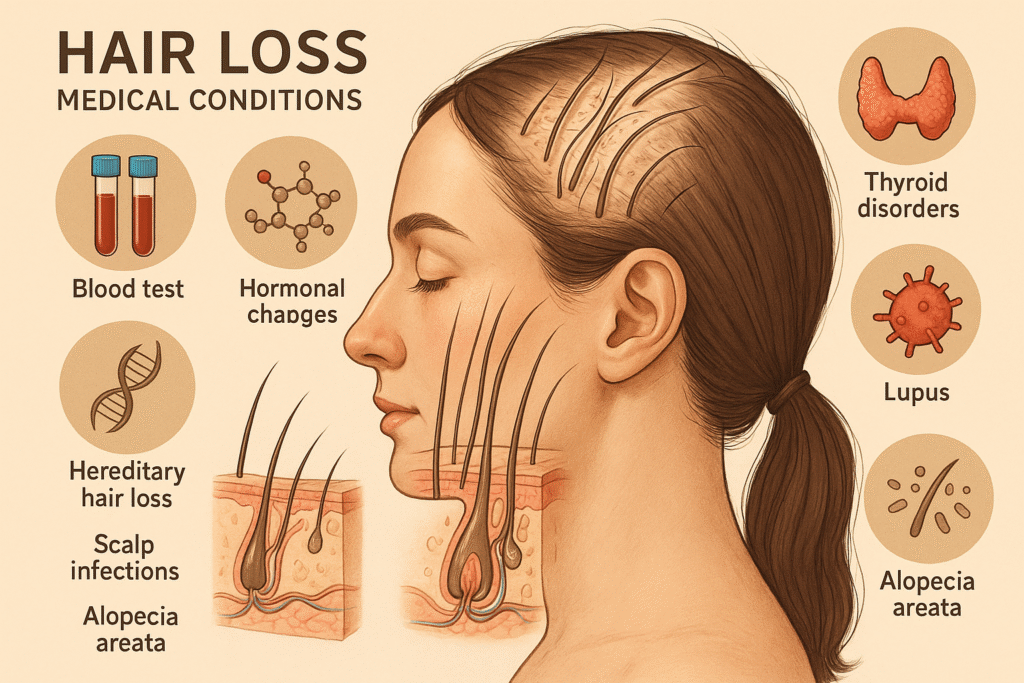
Hormonal imbalances can happen at any age, but they are more common during puberty, pregnancy, menopause, or times of extreme stress. They can also happen with medical problems, like polycystic ovary syndrome (PCOS), thyroid disease, or after starting or stopping certain medications.
How Hormonal Imbalances Affect Hair
Hair Thinning And Hair Loss
One of the most common signs of a hormonal problem is hair loss. This can look different depending on the cause:
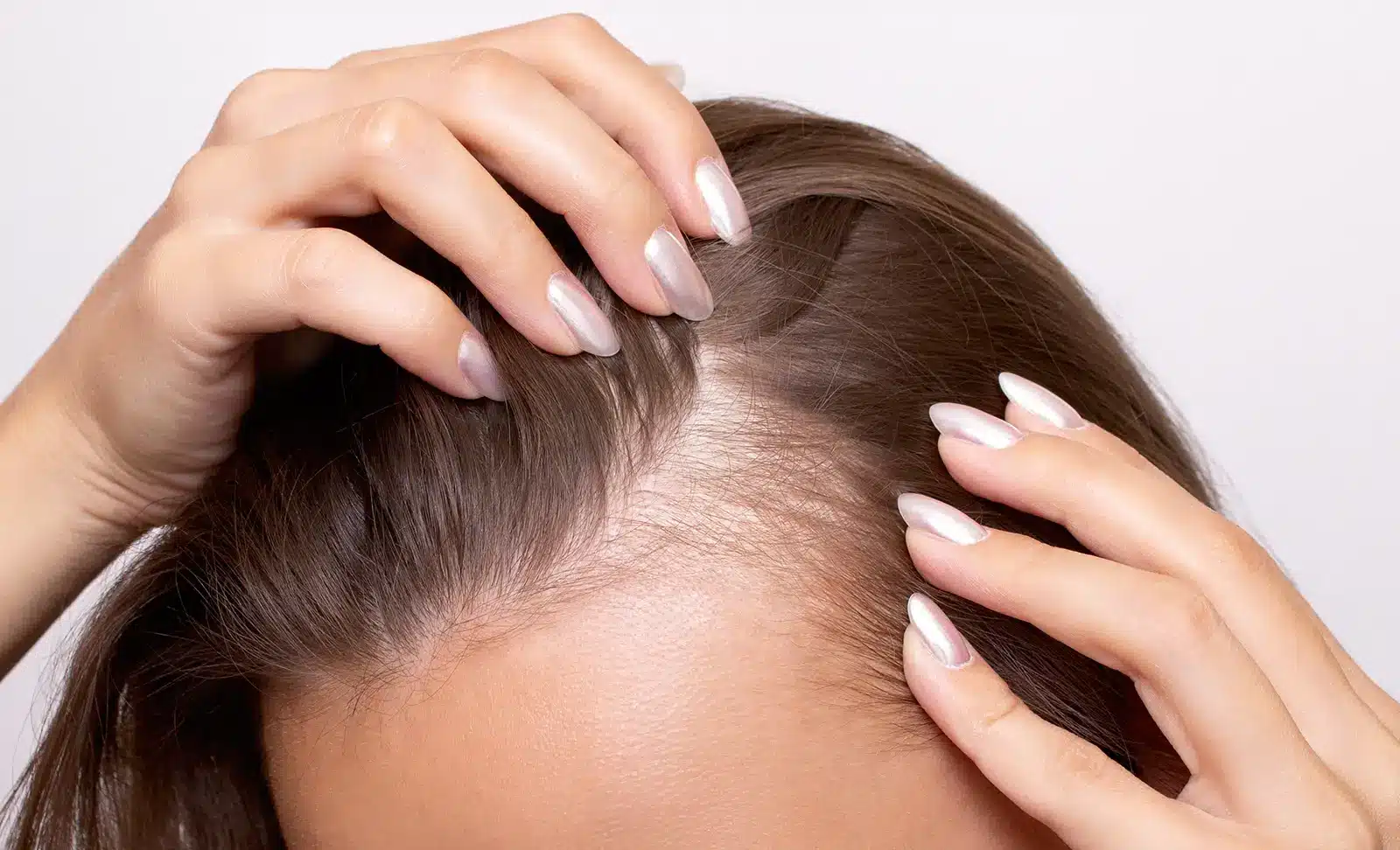
- In women, hair often becomes thinner on the top of the head or at the part line.
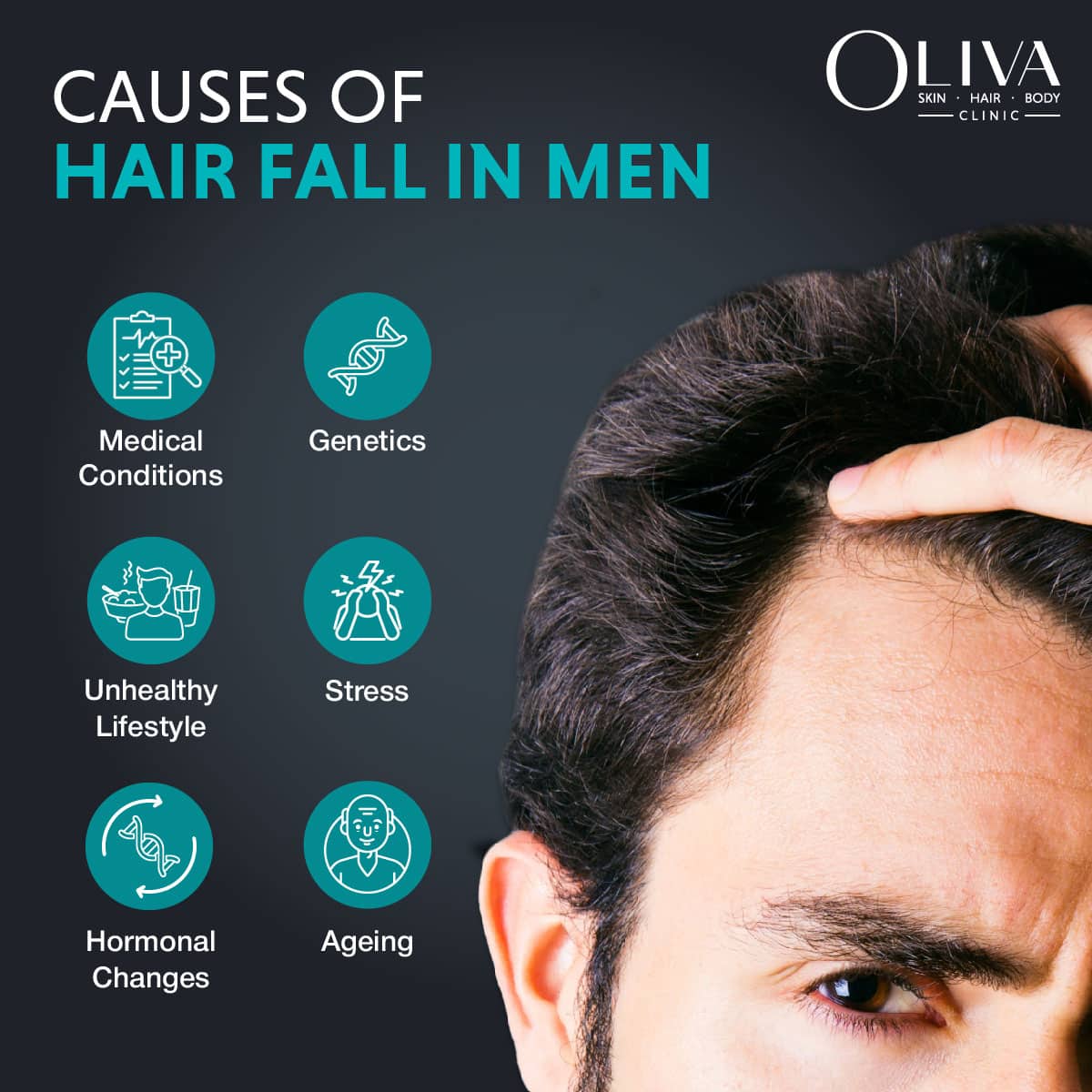
- In men, hair may recede at the temples or the crown of the head.
- Sometimes, hair falls out in small patches.
Androgens like testosterone are often responsible. High levels can shrink hair follicles, making hair thinner and shorter. This is called androgenetic alopecia, or “male/female pattern baldness.”
Thyroid hormones also play a big role. Both an overactive thyroid (hyperthyroidism) and an underactive thyroid (hypothyroidism) can cause hair to thin or fall out more than usual. Hair may also become dry and brittle.
Estrogen helps keep hair in its growing phase. When estrogen drops (for example, after pregnancy or during menopause), many women notice more hair shedding.
Non-obvious Insights
- Hair loss from hormones usually happens slowly, but some conditions (like after childbirth or severe stress) can make hair fall out suddenly. This is called telogen effluvium.
- Not all hair loss is from the scalp—hormonal changes can also affect eyebrows, eyelashes, and body hair.
Excess Hair Growth
Some people experience the opposite problem—excess hair growth in places they don’t want it. This is called hirsutism and often happens in women who have too much androgen.
You might notice:
- Dark, coarse hair on the face (chin, upper lip)
- Hair on the chest, back, or stomach
PCOS is a common cause of this type of hair growth.
Changes In Hair Texture And Quality
Hormonal changes can also make hair:
- More oily or dry
- More prone to breakage
- Change from straight to curly, or vice versa
For example, women going through menopause often notice their hair becomes drier, while teenagers with high androgens may notice oily hair.
Hair And The Menstrual Cycle
Many women notice hair changes at certain times of their menstrual cycle. During the luteal phase (the second half of the cycle), higher levels of progesterone can make hair oilier. Around menstruation, temporary hair shedding may occur.
Medications And Hair
Some birth control pills, hormone replacement therapy, or steroids can also change your hair’s thickness, growth rate, or texture because they alter your hormone levels.
Credit: www.olivaclinic.com
How Hormonal Imbalances Affect The Scalp
Oily Or Greasy Scalp
Sebaceous glands in your scalp make oil (sebum) that keeps your hair healthy. Androgens, especially testosterone, increase sebum production. When your hormones are out of balance, you might notice:
- Your scalp feels greasy soon after washing
- Hair looks limp or dirty
This is common in puberty, PCOS, or with certain medications.
Dry, Flaky, Or Itchy Scalp
Low levels of certain hormones, like estrogen or thyroid hormones, can make your scalp dry or even itchy. You may see:
- White flakes (sometimes mistaken for dandruff)
- Red or irritated skin
This is common during menopause or in people with hypothyroidism.
Scalp Acne Or Folliculitis
Hormonal imbalances, especially high androgens, can cause scalp acne. This shows up as:
- Small pimples or bumps on the scalp
- Tenderness or pain
- Sometimes, pus-filled spots
If the hair follicles become infected, this is called folliculitis.
Dandruff And Seborrheic Dermatitis
Dandruff can get worse with hormonal changes. Seborrheic dermatitis is a condition where the scalp becomes red, greasy, and covered with yellowish flakes. This is often seen during puberty, pregnancy, or times of stress.
Scalp Sensitivity
Hormonal shifts can make your scalp more sensitive to hair products, dyes, or even sun exposure. This may cause burning, tingling, or irritation.
Non-obvious Insights
- Scalp conditions caused by hormones can appear even if your skin elsewhere is normal or oily/dry in different ways.
- Treating the scalp with harsh shampoos can sometimes make hormone-related symptoms worse, not better.
How Hormonal Imbalances Affect The Skin
Acne Breakouts
One of the most common signs of hormonal imbalance is acne. This is not just a teenage problem—adults can also get hormonal acne, especially women.
Signs of hormonal acne:
- Pimples around the chin, jawline, or cheeks
- Deep, painful cysts (not just small whiteheads)
- Flare-ups around your period, during pregnancy, or under stress
High androgens increase oil production, which blocks pores. Low estrogen can make skin less able to fight bacteria.
Oily Skin
Too much androgen leads to more sebum. This makes skin shiny, greasy, and more likely to break out. Oily skin often appears during puberty, in people with PCOS, or when under stress.
Dry Or Sensitive Skin
Low thyroid hormones or estrogen can make skin thin, dry, and more sensitive. You might notice:
- Flaky patches
- Redness or irritation
- Skin feels tight or rough
This is common in menopause, hypothyroidism, or after stopping hormone medications.
Skin Pigmentation Changes
Hormonal changes can cause skin to become darker in some areas. This is called melasma or “the mask of pregnancy.” It usually appears as brown patches on the face, especially the cheeks and forehead.
Pregnancy, birth control pills, or hormone therapy can trigger melasma.
Hirsutism (excess Facial And Body Hair)
As with the scalp, high androgens can cause hair to appear where you don’t want it—like the upper lip, chin, chest, or back.
Skin Thickening And Coarseness
Some people with high levels of certain hormones (like growth hormone or cortisol) notice their skin becomes thicker, coarser, or more rough. This can happen with medical conditions like Cushing’s syndrome or acromegaly.
Stretch Marks
High cortisol (the stress hormone) can cause skin to lose its elasticity, leading to stretch marks—purple or white lines, usually on the stomach, thighs, or breasts.
Delayed Wound Healing
People with low estrogen or high cortisol may notice their skin takes longer to heal from cuts, scrapes, or acne scars.
Rashes And Skin Disorders
Some hormone imbalances can cause or worsen skin disorders like eczema, psoriasis, or chronic rashes.
Non-obvious Insights
- Hormonal skin changes often appear in “patterns”—for example, acne around the jawline is a classic sign, while acne on the forehead or nose is usually not hormonal.
- New skin symptoms, especially if they appear suddenly, can be the first sign of an internal hormone problem, even before blood tests show anything abnormal.
Key Hormonal Disorders Affecting Hair, Scalp, And Skin
Understanding the root cause of your symptoms is important. Here are some common conditions:
Polycystic Ovary Syndrome (pcos)
- Who is affected: Mostly women of reproductive age
- Common signs: Irregular periods, acne, oily skin, thinning hair on the scalp, excess facial/body hair
- Why it happens: Too much androgen
Thyroid Disorders
- Hypothyroidism: Low thyroid hormone; causes hair loss, dry skin, and brittle hair
- Hyperthyroidism: High thyroid hormone; causes fine, soft hair, sometimes hair loss, and warm, moist skin
Menopause
- Who is affected: Women around age 45–55
- Common signs: Hair thinning, dry skin, scalp sensitivity
- Why it happens: Drop in estrogen and progesterone
Cushing’s Syndrome
- Who is affected: Anyone; rare
- Common signs: Thinning hair, skin thinning, stretch marks, acne, slow wound healing
- Why it happens: Too much cortisol
Androgenetic Alopecia
- Who is affected: Both men and women
- Common signs: Gradual hair thinning, especially on the crown or part line
- Why it happens: Genetics and androgens
Pregnancy And Postpartum Changes
- Who is affected: Women during and after pregnancy
- Common signs: Thick, shiny hair during pregnancy; sudden hair shedding 2–4 months after giving birth
- Why it happens: Rapid changes in estrogen levels
Comparing Hormonal Effects: Hair, Scalp, And Skin
Sometimes it helps to see how different hormones create different symptoms. Here is a quick comparison.
| Hormone | Hair | Scalp | Skin |
|---|---|---|---|
| Testosterone/Androgens | Thinning or excess growth | Oily, acne, sensitivity | Oily, acne, hirsutism |
| Estrogen | Growth, shine; loss with drop | Dryness with low levels | Dry, thin, sensitive with low levels |
| Thyroid Hormones | Loss, dryness, brittle hair | Dry or oily, flaky | Dry, pale, rough |
| Cortisol | Loss, delayed regrowth | Thinning, slow healing | Thin, stretch marks, acne |
Diagnosing Hormonal Imbalances
If you notice sudden or unusual changes in your hair, scalp, or skin, it’s important to see a doctor. Diagnosis often involves:
- Medical history: Your doctor will ask about your symptoms, family history, and any medications you take.
- Physical exam: Looking at your skin, scalp, and hair patterns.
- Blood tests: Measuring hormone levels (such as thyroid, estrogen, testosterone, cortisol, insulin).
- Other tests: For women, sometimes a pelvic ultrasound for PCOS; for thyroid, imaging or antibody tests.
What Your Doctor Looks For
Doctors pay attention to:
- Where on your body you have symptoms (for example, hair loss at the crown vs. all over)
- How fast changes happened
- Any other health problems (weight change, period problems, fatigue)
Important Note
Not all hair, scalp, or skin changes are hormonal. Diet, stress, genetics, or other illnesses can cause similar symptoms. That’s why medical advice is important.
How To Manage And Treat Hormonal Effects
General Tips
Managing hormonal changes often means treating the underlying problem. But you can also help your hair, scalp, and skin from the outside.
- Get enough sleep: Poor sleep can disrupt hormones and worsen symptoms.
- Eat a balanced diet: Include protein, healthy fats, and plenty of fruits/vegetables.
- Exercise regularly: Helps balance hormones and reduces stress.
- Manage stress: Meditation, yoga, or talking to a counselor can help.
- Avoid harsh hair and skin products: Choose gentle, fragrance-free options.
Medical Treatments
- Birth control pills: Can help regulate hormones in women with PCOS or acne.
- Hormone replacement therapy: For menopause or certain thyroid problems.
- Anti-androgens: Medicines that block the effect of male hormones (for hirsutism or acne).
- Topical treatments: Creams or shampoos for acne, dandruff, or scalp irritation.
Hair Loss Solutions
- Minoxidil: Over-the-counter lotion for the scalp to promote growth.
- Finasteride: Prescription pill for men (not for women who are or may become pregnant).
- Supplements: Biotin, vitamin D, and iron—only if you have a deficiency.
Skin Care Tips
- Gentle cleansing: Don’t over-wash; it can make dryness or oiliness worse.
- Moisturize regularly: Especially if your skin is dry or flaky.
- Sun protection: Hormonal pigmentation gets worse with sun exposure.
- See a dermatologist: For severe acne, melasma, or unexplained rashes.
Scalp Care Advice
- Wash as needed: Oily scalp may need more frequent washing; dry scalp needs less.
- Use medicated shampoos: For dandruff or seborrheic dermatitis.
- Avoid hot water: It can dry out the scalp further.
- Massage gently: Improves blood flow and may help hair growth.
When To Seek Help
See a doctor if you have:
- Sudden, patchy, or severe hair loss
- Rapid changes in skin or scalp that don’t improve
- New symptoms along with weight gain/loss, fatigue, or period changes
Credit: hairgp.co.uk
Preventing Hormonal Imbalance Effects
While you can’t always prevent hormonal changes, you can reduce their impact.
- Regular check-ups: Early detection helps.
- Healthy lifestyle: Diet, exercise, and stress management matter.
- Know your family history: Some conditions are genetic—let your doctor know.
- Be careful with supplements and medications: Only take hormones under medical supervision.
Tracking Your Symptoms
Keeping a diary of hair, skin, and scalp changes along with your cycle, diet, or stress levels can help you and your doctor spot patterns.
Skin, Hair, And Scalp: What Is Normal, What Is Not?
Not every pimple or strand of hair falling out is cause for alarm. Here’s a summary of what is normal and what suggests a hormonal problem.
| Symptom | Normal Variation | Hormonal Imbalance Warning |
|---|---|---|
| Hair shedding | 50–100 hairs/day | Sudden increase, bald patches, or receding hairline |
| Oily scalp | Oily after a few days without washing | Oily within hours, with acne or dandruff |
| Skin breakouts | Occasional pimple | Persistent acne, especially on jawline/chin |
| Dry skin | In winter or with harsh soaps | All year, with itching or flaking |
| Facial/body hair | Fine, light hair | Dark, coarse hair in new areas |
| Skin pigmentation | Light tanning, freckles | Dark patches, especially during pregnancy or with new medication |
Credit: www.hshairclinic.co.uk
Practical Examples
To make these ideas clearer, consider these real-life situations:
- A 30-year-old woman starts getting acne along her jawline and notices her periods are irregular. She also sees more hair on her chin. These signs point to possible PCOS.
- A man in his late 40s notices his hair is thinning at the crown, and his scalp is getting oily. He has no other health issues. This could be androgenetic alopecia.
- A woman after childbirth finds large clumps of hair in her brush 2–3 months later, but her hair returns to normal by her baby’s first birthday. This is postpartum telogen effluvium, not a disease.
- A person with new, red stretch marks and slow-healing skin infections, along with rapid weight gain, might have Cushing’s syndrome and should see a doctor quickly.
The Mind-skin Connection
Don’t forget that stress can make hormonal problems worse. When you’re under pressure, your body releases more cortisol. This can lead to:
- More breakouts
- Oily scalp and hair
- Slow hair growth
- Skin rashes or sensitivity
Mindfulness, regular exercise, and enough sleep can help keep your hormones in balance.
Latest Research And Trends
Scientists are finding new links between hormones and skin/hair health all the time. For example:
- The gut microbiome (bacteria in your stomach) can affect hormone levels and skin health.
- New treatments, like laser therapy or platelet-rich plasma (PRP), may help with hormone-related hair loss.
- Skincare with ingredients like niacinamide and retinoids can help balance oily or acne-prone skin.
For more on the science behind hormones and appearance, see this National Institutes of Health review.
Frequently Asked Questions
What Are The First Signs Of Hormonal Imbalance In Hair And Skin?
Early signs include unusual hair shedding, thinning or excess growth in new areas, oily or dry scalp, and acne along the jawline or chin. New dark patches on your skin, or sudden dryness, can also be clues.
Can Hormonal Imbalances Cause Permanent Hair Loss?
Some types, like androgenetic alopecia, can cause lasting changes if not treated. But many cases (such as after pregnancy or stress) are temporary and hair regrows with time and proper care.
How Do I Know If My Acne Is Hormonal?
Hormonal acne often appears on the lower face (jawline, chin), comes as deep, painful cysts, and worsens before your period or during stress. If over-the-counter treatments don’t work, see a doctor.
What Tests Should I Ask For If I Think My Skin/hair Issues Are Hormonal?
Ask your doctor about blood tests for thyroid function, androgens (testosterone, DHEA), estrogen, progesterone, cortisol, and possibly insulin. For women, a pelvic ultrasound may be needed.
Can Changing My Diet Help Hormonal Hair And Skin Problems?
A balanced diet can support hormone health. Eat enough protein, avoid too much sugar, and include healthy fats. Some people benefit from reducing dairy or processed foods, but always check with a healthcare provider.
Hormonal imbalances can leave their mark on your hair, scalp, and skin in many ways. By knowing what to watch for, you’re better prepared to find answers and get help if you need it. If you’re facing tough symptoms, remember you’re not alone—and with the right steps, you can reclaim your confidence and your health.