

Perimenopause Hair Changes: Early Warning Signs Of Thinning
Perimenopause is a natural phase in a woman’s life. It marks the transition before menopause, often starting in the late 30s to mid-40s. For many women, this time brings new physical changes—some expected, others surprising. One change that catches many off guard is hair thinning.
Hair that was once thick and strong may start to lose volume, break easily, or shed more than usual.
Understanding why your hair changes during perimenopause is important. Early signs can help you take action sooner. This guide explains what happens to your hair, how to spot early warning signs, and what you can do about it. We’ll cover the science, real-life examples, and practical advice—so you know what to expect and how to protect your hair.
What Is Perimenopause And How Does It Affect Hair?
Perimenopause is the period when your body prepares for menopause. Hormones like estrogen and progesterone begin to drop, but not in a steady way. Levels may rise and fall sharply, causing symptoms that can confuse even experienced doctors.
Hormonal Changes And Hair Health
The main hormones affecting hair during perimenopause are estrogen and progesterone. As these decrease, another hormone—androgen—may stay the same or even increase. Androgens are often called “male hormones,” but women have them too. Higher androgen levels can shrink hair follicles, leading to thinner, weaker hair.
Estrogen usually supports hair growth. When estrogen drops, hair growth slows, and the resting phase (telogen) becomes longer. This means more hair falls out, and less new hair grows in.
Quick Data: Hormone Levels
Here’s how hormone levels typically change during perimenopause:
| Hormone | Premenopause | Perimenopause | Menopause |
|---|---|---|---|
| Estrogen | High | Fluctuating/Lower | Low |
| Progesterone | High | Fluctuating/Lower | Low |
| Androgen | Low/Normal | Normal/High | Normal/High |
Other Factors
Besides hormones, perimenopause brings changes in nutrition, stress levels, and sleep. All of these influence hair health. For example, poor sleep affects cell repair, including hair follicles. Stress increases cortisol, which can lead to hair loss.
Common Hair Changes During Perimenopause
Every woman’s experience is different, but some hair changes are very common during perimenopause.
Thinning
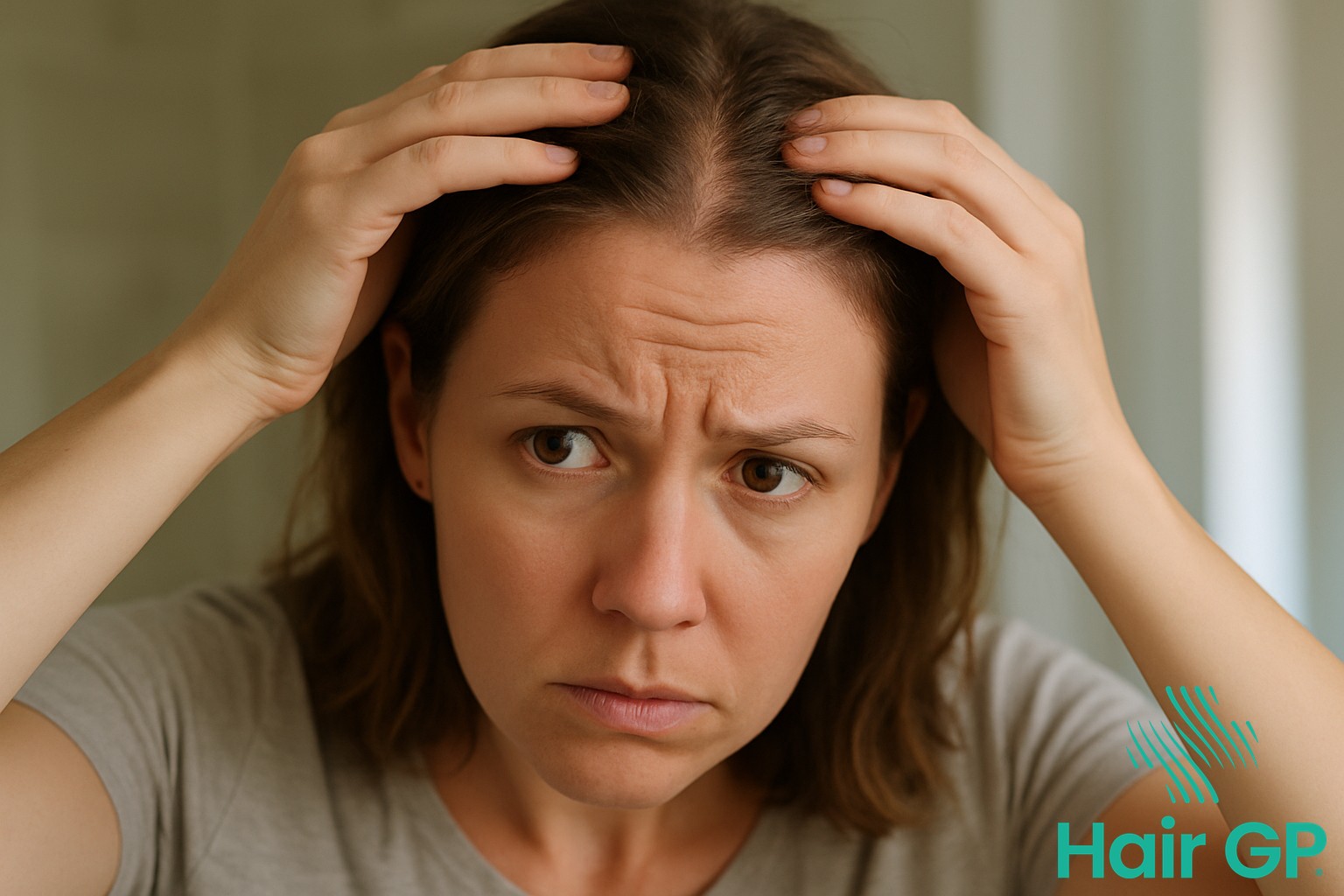
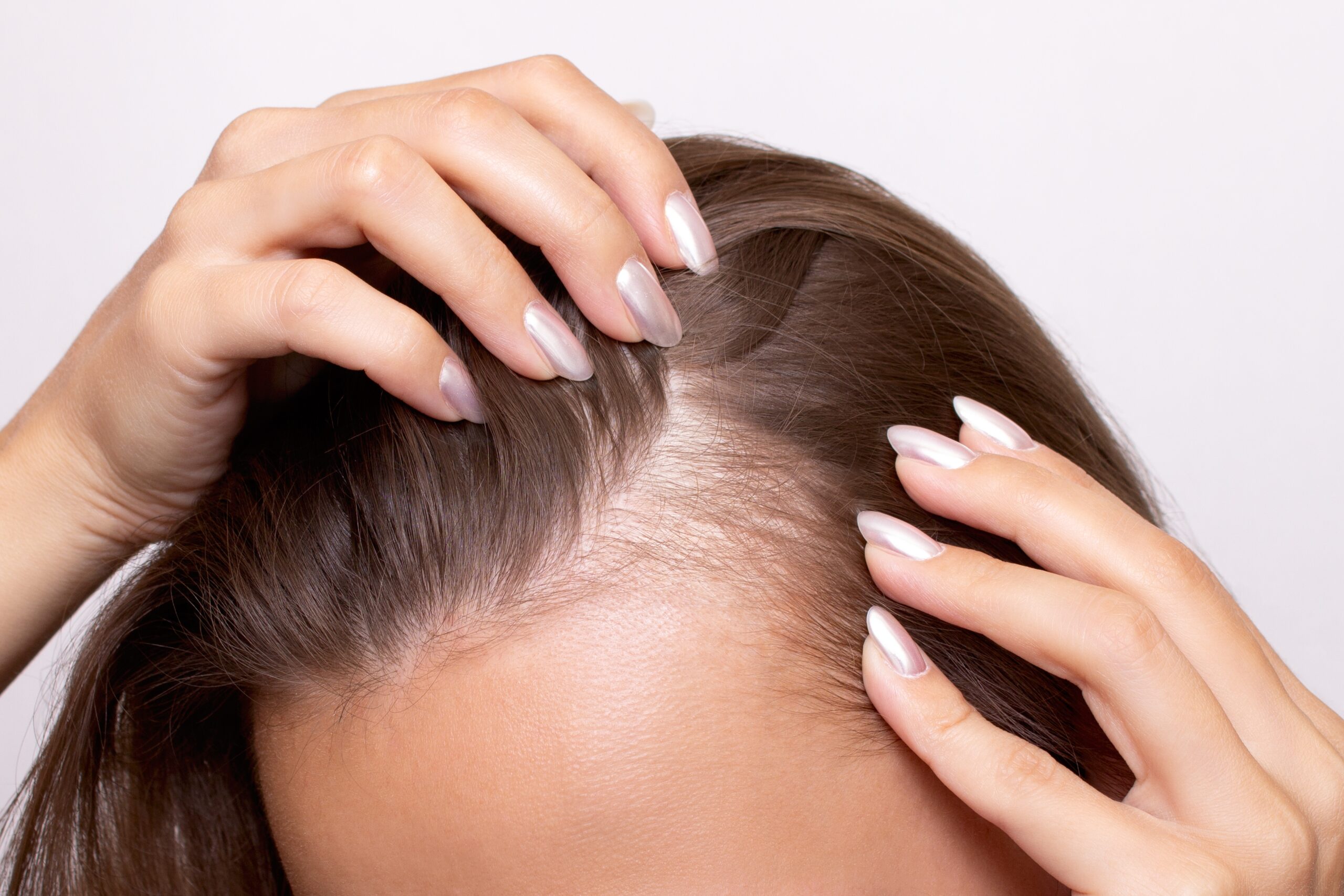
The most noticeable change is thinning hair. Hair may look less dense, especially around the temples and crown. You may notice your scalp is more visible in certain areas.
Increased Shedding
Many women see more hair on their brush or pillow. Normal hair loss is about 50–100 strands per day, but during perimenopause, this number can rise.
Texture Changes
Hair may become drier, brittle, or lose its natural shine. Some women report frizzier hair or curls that lose definition.
Slower Growth
Hair grows more slowly. You may notice you need fewer haircuts, or that your hair simply won’t reach its old length.
Graying
While not directly linked to thinning, graying often accelerates during perimenopause. This is another sign of aging hair follicles.
Real Example
One woman shared, “I always had thick, shiny hair. Around age 45, I started seeing more scalp, especially when tying my hair back. The strands felt finer, and I found more hair in the shower drain. I thought it was stress until my doctor explained perimenopause.
”
Early Warning Signs Of Hair Thinning
Spotting early signs can help you act before thinning gets worse. Here are some signs to watch for:
1. Wider Part Line
If your part looks wider than before, it’s a classic early warning sign. Take a photo once a month to track changes.
2. More Hair On Pillow Or Brush
Noticing more hair strands after brushing or in the shower isn’t always dramatic, but it adds up. If you see a steady increase, it’s worth paying attention.
3. Scalp Shows More
Look for areas where your scalp is more visible, especially under direct light or when your hair is wet.
4. Changes In Ponytail Thickness
Many women notice their ponytail feels thinner. If you can wrap your hair tie more times than before, thinning has started.
5. Hair Feels Fine Or Weak
If your hair feels softer, finer, or breaks easily, the structure is changing. This is often due to hormonal shifts.
6. Slower Hair Growth
If your hair takes longer to grow out after a cut, perimenopause may be affecting growth cycles.
7. More Breakage
Notice more split ends or hair breaking mid-shaft? Weak hair is more prone to breakage, even with gentle brushing.
8. Loss Of Volume
Hair may lose its bounce and fullness. Styles that once looked thick may now appear flat.
9. Changes In Hair Texture
Curls may loosen, waves may disappear, or straight hair may become frizzy and rough.
10. Dryness And Itchiness
Scalp dryness can go hand-in-hand with thinning. If your scalp feels itchy or flaky, it’s a sign that your skin and hair are changing.
Why Does Hair Thinning Happen During Perimenopause?
Understanding the science can help you feel less worried. Hair thinning during perimenopause is mainly caused by hormonal changes, but other factors play a role.
Estrogen Decline
Estrogen keeps hair follicles healthy. When levels drop, hair spends more time in the resting phase and less in the growing phase.
Androgen Dominance
As estrogen falls, androgens like testosterone may have a stronger effect. These hormones shrink hair follicles, leading to thinner hair.
Nutrient Deficiency
Perimenopause can affect how your body absorbs nutrients. Iron, vitamin D, and zinc are essential for hair health. If levels drop, hair suffers.
Stress And Cortisol
Perimenopause often brings emotional changes. High stress increases cortisol, which can trigger hair shedding.
Genetics
If women in your family experienced hair thinning, you are more likely to see it too.
Scalp Health
Changes in skin oil and moisture can lead to a less healthy scalp, affecting hair growth.
How To Track Hair Changes
Keeping track of your hair can help you spot patterns and act early.
Monthly Photos
Take photos of your part, temples, and crown each month. Use consistent lighting and angles.
Hair Count
Count the hair strands lost in your brush or shower for a week. If it’s over 100 strands per day, thinning is happening.
Ponytail Test
Measure your ponytail thickness with a ribbon or string. Compare month to month.
Texture Diary
Keep notes on how your hair feels and looks after washing or styling. Changes in texture can be early signs.
Doctor Visits
If you notice sudden or extreme hair loss, see a doctor. Blood tests can check hormone and nutrient levels.
Comparing Perimenopause Hair Thinning To Other Causes
Not all hair thinning is due to perimenopause. Here’s how it compares to other common causes:
| Cause | Pattern | Age | Other Symptoms |
|---|---|---|---|
| Perimenopause | Diffuse thinning, temples, crown | 40–55 | Hot flashes, irregular periods |
| Genetic (Female Pattern) | Gradual thinning, mainly crown | Any adult age | None |
| Stress (Telogen Effluvium) | Sudden shedding, all over | Any age | Stress, illness |
| Thyroid Disorders | Diffuse thinning | Any age | Fatigue, weight changes |
| Nutrient Deficiency | General thinning | Any age | Weak nails, pale skin |
Credit: hairgp.co.uk
Practical Tips To Slow Hair Thinning
While you can’t stop perimenopause, you can slow hair loss and keep your hair healthier.
1. Eat A Balanced Diet
Focus on foods rich in iron, protein, zinc, and vitamin D. Eggs, fish, nuts, and leafy greens are great choices.
2. Gentle Hair Care
Avoid harsh shampoos and heat styling. Use a soft brush and pat hair dry instead of rubbing.
3. Scalp Massage
Massaging your scalp for 5 minutes daily boosts blood flow, helping hair follicles.
4. Reduce Stress
Try yoga, meditation, or walking. Lowering stress keeps cortisol in check.
5. Hydrate
Drink plenty of water. Dry hair and scalp can worsen thinning.
6. Choose The Right Products
Look for shampoos and conditioners labeled for thinning hair. Avoid products with sulfates or heavy silicones.
7. Avoid Tight Hairstyles
Tight ponytails or braids can pull hair out, making thinning worse.
8. Get Enough Sleep
Aim for 7–8 hours of sleep. Sleep helps your body repair, including hair follicles.
9. Consider Supplements
If your doctor recommends, take supplements for biotin, iron, or vitamin D. Don’t self-medicate; get advice first.
10. Seek Medical Help
Dermatologists or endocrinologists can help. Blood tests may reveal treatable causes like thyroid issues.
Hair Loss Treatments: What Works And What Doesn’t
Hair loss treatments for perimenopause vary. Some are proven, others are less reliable.
Minoxidil
Minoxidil (Rogaine) is FDA-approved for female hair loss. It stimulates follicles and may slow thinning. Results take 3–6 months.
Hormone Therapy
Hormone replacement therapy (HRT) may help some women, but it’s not for everyone. Risks and benefits must be discussed with your doctor.
Platelet-rich Plasma (prp)
PRP uses your own blood, injected into the scalp. Some studies show improvement, but results vary.
Essential Oils
Rosemary oil, peppermint oil, and pumpkin seed oil may help, but evidence is limited. Never apply oils undiluted.
Hair Transplants
Transplants are rare for women and expensive. Not all women are good candidates.
Low-level Laser Therapy
Laser combs and helmets stimulate follicles. Results are mixed but may help some.
Biotin And Supplements
Biotin helps if you are deficient, but not everyone needs it. Overuse can cause skin problems.
Comparing Treatments
Here’s a summary of common treatments:
| Treatment | Effectiveness | Risks | Cost |
|---|---|---|---|
| Minoxidil | Proven for mild thinning | Itching, dryness | Low |
| HRT | Helps some women | Blood clots, cancer risk | Medium |
| PRP | Mixed results | Pain, cost | High |
| Essential Oils | Limited evidence | Allergy risk | Low |
| Laser Therapy | Some improvement | Cost | Medium |
| Hair Transplant | Permanent for some | Surgery risk | Very High |
| Supplements | Helps if deficient | Overdose risk | Low |
Non-obvious Insights For Perimenopause Hair Care
Most guides focus on basic tips. Here are some insights many women miss:
1. Changes Can Be Reversible
Some hair thinning during perimenopause is temporary. If you address hormone imbalances and improve nutrition, hair may recover.
2. Hair Cycles Are Slow
Hair growth cycles last months. Changes you make today may not show for 3–6 months. Tracking progress is important for motivation.
3. Scalp Health Is Often Overlooked
Healthy scalp equals healthy hair. Use gentle exfoliation and moisturizing treatments. Avoid heavy oils that clog pores.
4. Hair Styling Habits Matter
Using volumizing products, gentle coloring, and careful styling can make thinning less visible. Small changes add up.
5. Watch For Other Symptoms
Hair thinning with symptoms like fatigue, weight gain, or skin changes could signal thyroid or other issues. Don’t ignore these signs.
Real-life Stories And Experiences
Hearing from real women can make perimenopause feel less lonely.
Story 1: Maria, Age 47
Maria noticed thinning at her temples and crown. She started eating more protein and iron, switched to gentle shampoo, and did daily scalp massages. After six months, she saw improvement and felt more confident.
Story 2: Priya, Age 44
Priya’s ponytail got thinner. Her doctor found low vitamin D and iron. Supplements and better sleep helped her hair stop shedding.
Story 3: Linda, Age 52
Linda tried minoxidil after advice from her dermatologist. After five months, her part line narrowed, and she regained some lost volume.
Credit: www.alluraskin.com
How To Talk To Your Doctor About Hair Thinning
Many women feel embarrassed or unsure about discussing hair thinning. Here’s how to prepare:
Write Down Symptoms
List when thinning started, where you see it, and any other symptoms.
Bring Photos
Photos make it easier for your doctor to see changes.
Ask About Blood Tests
Tests for hormones, iron, vitamin D, thyroid, and zinc can help find causes.
Discuss Family History
Share if other women in your family had similar issues.
Ask About Treatment Options
Discuss safe treatments based on your health history.
Common Mistakes When Dealing With Perimenopause Hair Thinning
It’s easy to make mistakes when trying to fix hair thinning.
1. Ignoring Early Signs
Waiting too long makes thinning harder to reverse.
2. Using Harsh Products
Strong shampoos or chemical treatments can make thinning worse.
3. Over-styling
Heat styling, tight hairstyles, and frequent coloring all damage fragile hair.
4. Skipping Nutrition
Diet matters. Skipping meals or eating poorly slows hair recovery.
5. Self-medicating
Don’t take supplements or hormones without a doctor’s advice.
6. Not Tracking Progress
Without tracking, it’s hard to see if changes are working.
Prevention: What You Can Do Before Thinning Starts
If you’re approaching perimenopause, start these habits early:
1. Eat Well
Protein, iron, zinc, and omega-3s support hair strength.
2. Manage Stress
Chronic stress speeds up hair loss. Find stress relief that works for you.
3. Sleep Regularly
Sleep is essential for cell repair.
4. Gentle Hair Care
Use mild shampoo and conditioner. Avoid rough brushing.
5. Watch For Changes
Check your scalp, part line, and ponytail thickness monthly.
6. Visit Your Doctor
Annual check-ups can catch hormone or nutrient issues before they affect hair.
How To Style Thinning Hair
Thinning hair can be styled to look fuller.
1. Use Volumizing Products
Look for lightweight mousse or sprays.
2. Layered Haircuts
Layers add volume and movement.
3. Side Parts
Changing your part can hide thin areas.
4. Dry Shampoo
Dry shampoo lifts roots and adds fullness.
5. Avoid Heavy Gels
Heavy products make hair look flat.
6. Color Carefully
Highlights add dimension, but avoid frequent bleach.
7. Accessories
Headbands, scarves, and clips can cover thin spots.

Credit: www.versalie.com
Nutritional Supplements: What’s Proven, What’s Not
Supplements are popular for hair thinning, but not all work.
Iron
Iron deficiency is common in women. Low iron causes hair loss, especially after heavy periods.
Vitamin D
Vitamin D helps hair follicles. Low levels are linked to thinning.
Zinc
Zinc is needed for cell repair. Too much can be harmful.
Biotin
Biotin helps if you are deficient, but most women get enough from food.
Omega-3
Omega-3 fatty acids support scalp health.
Collagen
Collagen supplements are popular, but evidence is mixed.
What To Avoid
- High doses of any vitamin without medical advice.
- “Hair growth pills” with unknown ingredients.
Hair Myths: What’s True And What’s Not
Hair thinning during perimenopause is surrounded by myths. Let’s clear up confusion.
Myth 1: Cutting Hair Makes It Grow Faster
Trimming removes split ends, but doesn’t affect growth rate.
Myth 2: Only Men Lose Hair
Women lose hair too, especially during perimenopause.
Myth 3: Hair Loss Is Permanent
Some thinning is reversible with the right care.
Myth 4: Oils Make Hair Grow
No oil can change hair cycles, but some help moisturize.
Myth 5: Shampoo Causes Hair Loss
Shampoo doesn’t cause hair loss, but harsh products can damage fragile hair.
When To Seek Professional Help
Some signs mean you should see a specialist:
Sudden Or Severe Hair Loss
Losing large clumps or patches needs urgent attention.
Scalp Pain Or Sores
Pain, redness, or sores may signal a skin problem.
Other Symptoms
Fatigue, weight changes, or skin issues suggest deeper health concerns.
No Improvement After Six Months
If hair doesn’t improve after trying lifestyle changes, see a doctor.
Supporting Mental Health During Perimenopause
Hair thinning can affect confidence and mood. Emotional health is important.
Talk About It
Share your experience with friends, family, or support groups.
Seek Support
Counseling or therapy can help if thinning affects your self-esteem.
Practice Self-care
Enjoy hobbies, exercise, and relaxation to reduce stress.
Real Support Groups
Online forums and groups can provide advice and comfort. For more information, visit Mayo Clinic.
Frequently Asked Questions
What Age Does Perimenopause Hair Thinning Usually Start?
Most women notice hair changes in their late 30s to mid-40s, but it can begin earlier or later depending on genetics and health.
Can Perimenopause Hair Thinning Be Reversed?
Some thinning can be reversed if you address hormone imbalances, improve nutrition, and use gentle hair care. Results may take months.
What Is The Best Shampoo For Perimenopause Hair Thinning?
Look for shampoos labeled for thinning hair, free of sulfates and heavy silicones. Gentle, moisturizing formulas are best.
How Do I Know If Hair Thinning Is From Perimenopause?
If thinning comes with other symptoms like hot flashes, irregular periods, or mood changes, perimenopause is likely. Blood tests can confirm.
Are Supplements Safe For Hair Thinning?
Supplements like iron, biotin, and vitamin D are safe if prescribed by a doctor. Avoid self-medicating, as too much can harm your health.
Perimenopause is a time of change, but hair thinning doesn’t have to control your confidence or style. By spotting early warning signs, understanding the science, and using practical tips, you can keep your hair healthy and strong. Remember, you’re not alone—millions of women face these changes.
With patience, smart care, and the right support, you can manage perimenopause hair thinning and feel your best.