

Low porosity hair is one of the most misunderstood hair types. People with this hair often feel frustrated: no matter how many deep conditioners or oils they use, their hair remains dry and dull. Water seems to bead up and roll off instead of soaking in, and products just sit on the surface. Why does this happen, and what can you do about it? Whether you’re newly discovering your hair’s porosity or have struggled for years, understanding the science behind low porosity hair and learning the right care techniques can transform your routine—and your results.
What Is Low Porosity Hair?
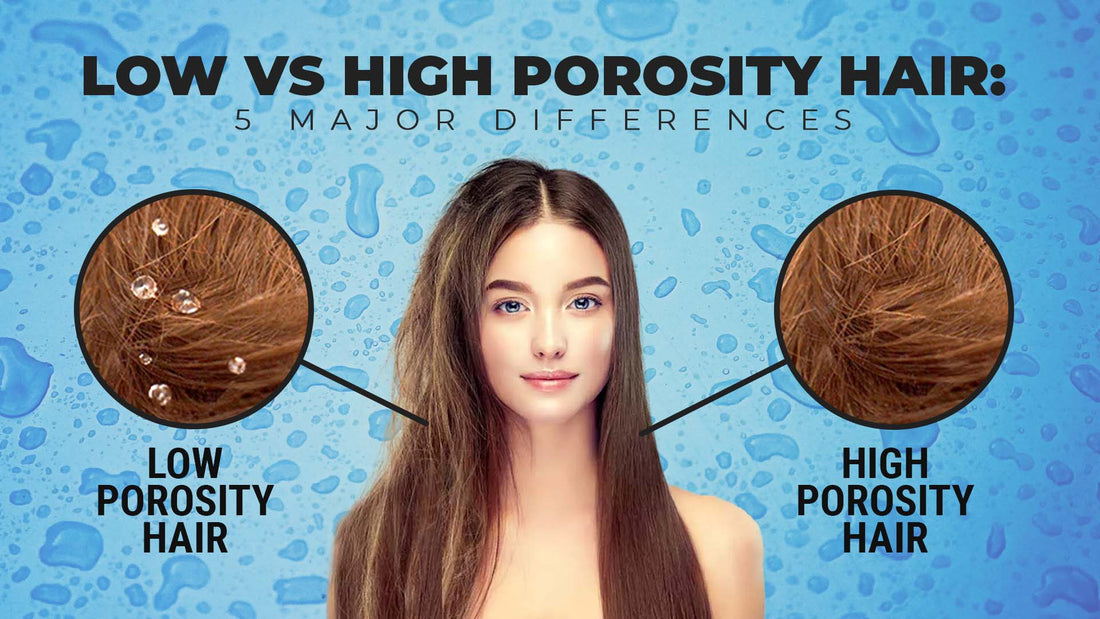
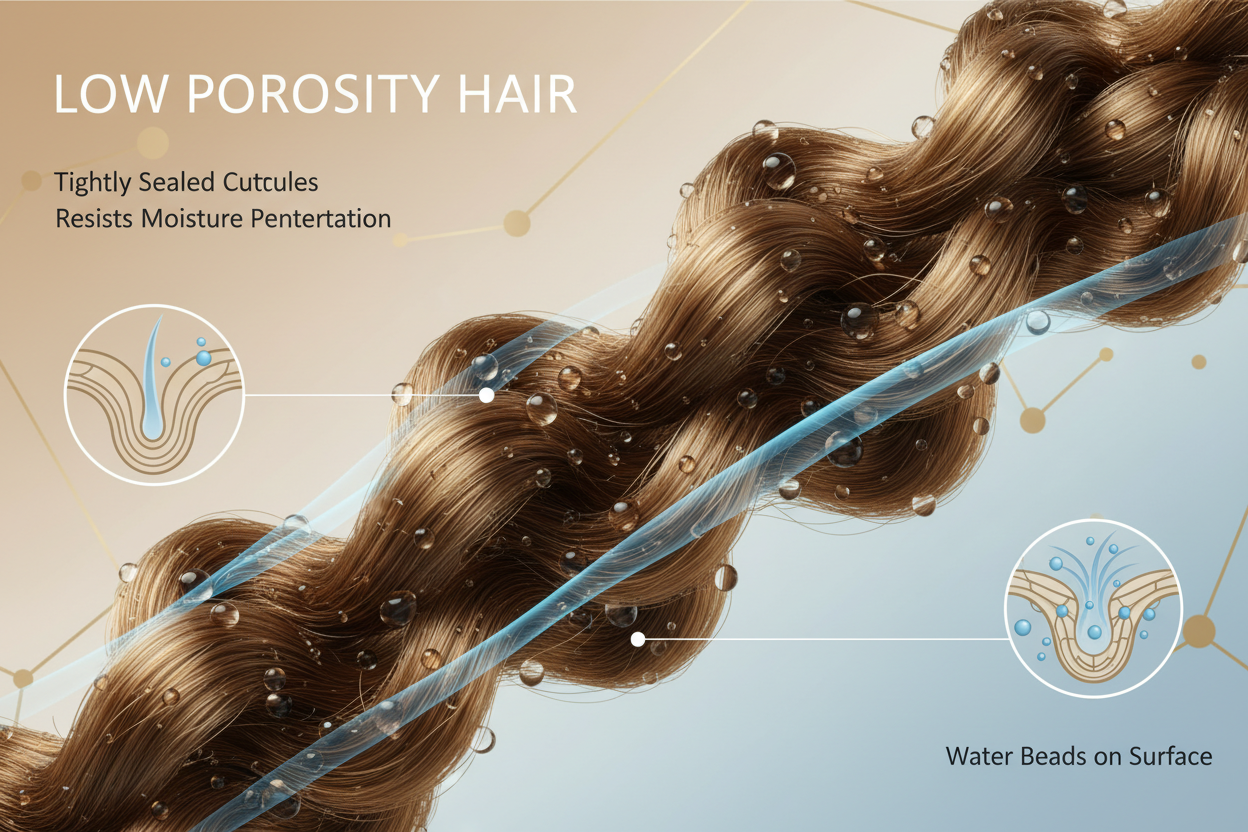
Porosity refers to how easily your hair absorbs and retains moisture. Hair has a protective outer layer called the cuticle, which is made of overlapping cells, like shingles on a roof. In low porosity hair, these cuticles are tightly packed and lay flat. This makes it very difficult for water and products to enter the hair shaft.
People with low porosity hair often notice:
- Water beads up on their hair before sinking in
- Products seem to “sit” on hair, causing buildup
- Hair dries slowly
- Hair can feel dry but greasy at the same time
Low porosity hair is common among people with straight, wavy, or some types of curly hair. Genetics play the biggest role, but heat and chemical damage can sometimes change your hair’s porosity over time.
The Science Behind Moisture Resistance
To understand why low porosity hair resists moisture, it helps to look at the hair structure more closely.
The Cuticle Layer
The cuticle acts as a shield for the inner parts of your hair. In low porosity hair, this shield is extra strong. The cuticle scales are so close together that there are few gaps for water or products to slip through.
Imagine trying to push a thick lotion through a plastic-wrapped sponge—the moisture just stays on the surface.
How Water And Products Behave
When you wet low porosity hair, you may notice droplets sitting on top rather than soaking in. Conditioners, creams, and oils often feel like they’re “coating” the hair instead of hydrating it. This is because the tightly packed cuticle doesn’t let large molecules pass through easily.
The Role Of Ph
Low porosity hair cuticles are already tightly closed. Most hair products are designed to be slightly acidic (around pH 4. 5–5. 5), which smooths the cuticle. But if your hair is already too smooth and sealed, typical products can make the barrier even stronger.
Alkaline products (higher pH) can temporarily lift the cuticle, but using them too often can cause damage.
Impact Of Product Buildup
With low porosity hair, product buildup is a common issue. Since products do not absorb well, they pile up on the surface. This buildup can block moisture even more, making the problem worse.
Key insight: Many people believe adding more product will help hydrate their hair. In reality, less is often more for low porosity hair. Using the wrong products or too much can actually make dryness and buildup worse.
How To Identify Low Porosity Hair
Knowing your hair’s porosity is the first step to proper care. Here are some simple ways to check if you have low porosity hair:
- Water Test: Place a clean strand of hair in a glass of water. If it floats for a long time before sinking, you likely have low porosity hair. High porosity hair sinks quickly.
- Spray Bottle Test: Spray water on a small section of your dry hair. If the water beads up or takes time to absorb, this is a sign of low porosity.
- Product Absorption: Apply a leave-in conditioner or oil to clean, damp hair. If it sits on top or takes a long time to absorb, your hair is likely low porosity.
- Drying Time: Low porosity hair takes longer to air dry because water has trouble entering and leaving the hair shaft.
Non-obvious insight: Sometimes, low porosity hair can feel soft on the outside but still be dry inside. This is because moisture is trapped on the surface but doesn’t reach the inner layers.
Common Challenges For Low Porosity Hair
People with low porosity hair often face unique problems:
- Dryness: Even with regular moisturizing, hair feels dry.
- Product Buildup: Oils, butters, and silicones accumulate quickly.
- Lack of Volume: Hair can look flat or greasy due to product sitting on top.
- Slow Absorption: Treatments and conditioners take longer to work.
- Frizz: Especially in humid conditions, hair can become frizzy because moisture sits on the surface.
These challenges can make it hard to find the right routine. But with the right techniques and products, low porosity hair can be healthy, shiny, and manageable.
Why Low Porosity Hair Resists Moisture
Let’s look deeper at the reasons behind this moisture resistance.
1. Tightly Bound Cuticles
Low porosity hair cuticles are so tightly packed that they create a waterproof barrier. This barrier blocks both water and other ingredients in hair products.
2. Larger Molecules Can’t Get In
Many conditioners and oils have large molecules. These cannot pass through the tiny gaps between tightly closed cuticle layers, so they sit on top of the hair instead of penetrating.
3. Product Buildup Forms A Barrier
As products accumulate on the hair’s surface, they create an extra layer that blocks moisture even more. Over time, this can make hair feel heavy, greasy, or sticky.
4. Natural Oils Have Trouble Penetrating
Even the scalp’s natural oils struggle to move down the hair shaft, which can lead to a dry-feeling scalp and hair at the same time.
5. Ph Imbalance
Using only acidic products can keep cuticles locked shut. While this protects from damage, it also makes it nearly impossible for moisture to enter.
6. Lack Of Heat
Heat helps open the cuticle slightly, allowing products to penetrate. If you never use heat, treatments may not work as well.
Key Mistake To Avoid
A common mistake is using heavy oils and butters, thinking they will moisturize better. In reality, these products often just sit on top and cause more buildup.
How To Fix Low Porosity Hair’s Moisture Problems
The good news is, you can work with your hair’s natural structure to improve moisture absorption. Here are proven solutions for each challenge.
Use Lightweight, Water-based Products
Look for leave-in conditioners, creams, and gels that are lightweight and water-based. These products have smaller molecules that can enter the hair shaft more easily.
Some ingredients to look for:
- Glycerin
- Aloe vera
- Panthenol (pro-vitamin B5)
- Hydrolyzed proteins (such as silk or wheat protein)
Avoid heavy butters (like shea or cocoa butter) and oils (like castor oil) unless they are specifically formulated for low porosity hair.
Clarify Regularly
Regular clarifying removes product buildup, allowing moisture to reach the hair shaft. Use a clarifying shampoo once every 2–4 weeks, depending on how much product you use.
Here’s a comparison of common shampoo types:
| Shampoo Type | Main Benefit | Recommended Frequency |
|---|---|---|
| Clarifying Shampoo | Removes buildup | Every 2–4 weeks |
| Sulfate-Free Shampoo | Gentle cleansing | Weekly/Bi-weekly |
| Moisturizing Shampoo | Adds hydration | As needed |
Apply Products To Damp, Warm Hair
Warmth opens the cuticle slightly, helping products absorb. After washing, apply leave-in products while your hair is still damp and warm. You can also use a warm towel or a hooded dryer for a few minutes to help open the cuticle.
Deep Condition With Heat
Deep conditioning is much more effective when heat is used. Try these methods:
- Use a heat cap or hooded dryer during deep conditioning.
- Cover hair with a plastic cap, then wrap a warm towel around your head.
- Use a steamer for extra moisture.
This helps lift the cuticle just enough for moisture to enter.
Use The Right Oils
Some oils have smaller molecules and can penetrate low porosity hair better. The best options are:
- Argan oil
- Baobab oil
- Grapeseed oil
- Sweet almond oil
Avoid heavier oils like castor or coconut oil, which tend to sit on top.
Avoid Protein Overload
Low porosity hair is already strong and doesn’t need a lot of added protein. Too much protein can make the hair stiff and brittle. Use protein treatments sparingly, and choose hydrolyzed proteins if you use them at all.
Rinse With Warm Water
Always rinse conditioners and treatments with warm water, not cold. Warm water helps keep the cuticle open long enough for moisture to enter, while cold water may close the cuticle too soon.
Opt For Humectants In Moisturizers
Humectants attract and hold onto water, making them ideal for low porosity hair. Common humectants include:
- Glycerin
- Honey
- Aloe vera
But, be careful in very dry climates—humectants can pull moisture out of your hair if the air is dry.
Limit Heavy Styling Products
Heavy gels, waxes, and pomades can weigh down low porosity hair and increase buildup. Use lightweight products and avoid layering too many products at once.
Be Patient And Gentle
Because absorption is slow, low porosity hair needs time. Apply products in sections, work them in gently, and give your hair time to soak them up.
Non-obvious insight: Many people rush through product application. Taking a few extra minutes to work in leave-ins and moisturizers can make a big difference for low porosity hair.
Credit: strandsoffaith.com
Creating A Low Porosity Hair Care Routine
A well-planned routine makes managing low porosity hair much easier. Here’s a practical, step-by-step guide.
Weekly Routine Example
- Clarify (every 2–4 weeks): Use a clarifying shampoo to remove buildup.
- Shampoo: Use a gentle, sulfate-free shampoo to keep hair clean.
- Deep Condition with Heat: Apply a lightweight deep conditioner and use heat to help it penetrate.
- Moisturize: While hair is damp and warm, apply a water-based leave-in conditioner.
- Seal: Use a small amount of a penetrating oil, focusing on the ends.
- Style: Use lightweight styling products.
Daily Or As-needed
- Refresh hair with a light mist of water or a water-based spray.
- Avoid adding more product unless hair feels truly dry.
Example Product Routine
Here’s an example of products that work well for low porosity hair:
| Step | Product Type | Key Ingredients |
|---|---|---|
| Clarify | Clarifying shampoo | Sulfates (occasionally), citrus extracts |
| Cleanse | Sulfate-free shampoo | Aloe vera, coconut-derived cleansers |
| Deep Condition | Lightweight deep conditioner | Glycerin, panthenol, hydrolyzed protein |
| Moisturize | Leave-in conditioner | Water, aloe vera, argan oil |
| Seal | Light oil | Argan, grapeseed, sweet almond |
Seasonal Adjustments
Low porosity hair can behave differently depending on the weather.
- In humid weather: Use lighter products and less oil to prevent frizz.
- In dry weather: Use more humectants, but be careful not to overdo it.
- In winter: Deep condition more often, and protect hair from cold, dry air.
Ingredients To Avoid And Ingredients To Seek
Understanding what’s in your products is key to managing low porosity hair.
Ingredients To Avoid
- Heavy butters: Shea butter, cocoa butter
- Heavy oils: Castor oil, coconut oil (unless you know your hair tolerates them)
- Silicones: Especially non-water soluble types (like dimethicone)
- Waxes and petrolatum: Hard to wash out, cause buildup
- Excessive protein: Avoid unless hair is damaged
Ingredients To Seek
- Lightweight oils: Argan, sweet almond, grapeseed
- Humectants: Glycerin, honey, panthenol, aloe vera
- Hydrolyzed proteins: In small amounts, help strengthen without buildup
- Amino acids: Penetrate and strengthen hair
Pro tip: Always check the first five ingredients on the label. These make up most of the product’s formula.
How To Maximize Deep Conditioning For Low Porosity Hair
Deep conditioning is the heart of any good low porosity hair routine. But the way you do it matters just as much as the product you use.
Pre-poo Treatments
A pre-poo (pre-shampoo) treatment with a lightweight oil or conditioner helps prepare the cuticle for cleansing. Apply a small amount to dry hair, cover with a shower cap, and let it sit for 15–30 minutes.
Use Heat
Deep conditioners work better with heat. Try these options:
- Heat cap: Wear a microwaveable heat cap over your deep conditioner.
- Hooded dryer: Sit under a dryer for 15–30 minutes.
- Steamer: Use a hair steamer if available.
Choose The Right Deep Conditioner
Look for products labeled “lightweight” or “for low porosity hair. ” Avoid those with heavy butters or lots of protein.
Don’t Overdo It
Deep conditioning too often can cause buildup. Once a week is usually enough.
Rinse Thoroughly
Rinsing out all product is crucial. Any leftover conditioner can cause extra buildup.
The Truth About The “greenhouse Effect” Method
Some people recommend the “greenhouse effect” for low porosity hair. This involves covering your hair with a plastic cap and letting your natural body heat create a mini sauna. While this can help open the cuticle, it can also cause excess sweating, scalp irritation, or even mildew if overused.
If you try this method:
- Do it for 30–60 minutes, not overnight.
- Make sure hair is clean and not overloaded with product.
- Let hair dry fully afterward.
Non-obvious insight: Overnight methods are not always better. Short, regular sessions with heat are safer and often more effective.
Credit: theradome.com
How To Avoid And Remove Product Buildup
Product buildup is one of the biggest problems for low porosity hair. If hair feels greasy, waxy, or looks dull, you likely have buildup.
Signs Of Buildup
- Hair feels sticky or coated
- Loss of natural shine
- Products stop working
- Scalp feels itchy or flaky
How To Remove Buildup
- Clarifying Shampoo: Use once every 2–4 weeks.
- Apple Cider Vinegar Rinse: Mix 1 part apple cider vinegar with 3 parts water. Pour over hair after shampooing, leave for a few minutes, then rinse.
- Avoid Co-washing Only: Washing with conditioner alone is not enough to remove buildup on low porosity hair.
Preventing Buildup
- Use less product overall
- Choose water-based, lightweight formulas
- Wash hair regularly (at least once a week)
How To Choose The Best Products For Low Porosity Hair
With so many products on the market, it’s easy to feel overwhelmed. Here’s a checklist to help you choose wisely:
- Check for “lightweight” or “for low porosity” on the label
- First ingredient should be water
- Avoid heavy butters, thick oils, and silicones
- Look for humectants and light proteins
- Try sample sizes first to see what works
Remember, less is more. One good leave-in conditioner and one light oil can go a long way.
How Diet, Lifestyle, And Health Affect Low Porosity Hair
While products and techniques are important, overall health also affects your hair’s ability to retain moisture.
Diet
A balanced diet rich in:
- Protein: Hair is made of keratin, a type of protein.
- Healthy fats: Omega-3 fatty acids support scalp health.
- Vitamins: Especially A, C, D, and E, plus biotin and zinc.
Hydration
Drink enough water daily. Dehydration leads to a dry scalp and brittle hair.
Stress And Sleep
Chronic stress and lack of sleep can slow hair growth and affect hair health. Practice stress management and aim for 7–9 hours of sleep per night.
Medication And Hormones
Some medications and hormonal changes can affect hair texture and porosity. If you notice sudden changes, consult a healthcare professional.
How To Protect Low Porosity Hair From Damage
Low porosity hair is strong, but not immune to damage. Here’s how to keep it healthy:
- Avoid excessive heat styling: Too much heat can damage the cuticle.
- Limit chemical treatments: Relaxers, perms, and dyes can change porosity.
- Sleep with a satin or silk scarf/pillowcase: Reduces friction and breakage.
- Detangle gently: Use a wide-tooth comb and plenty of conditioner.
- Trim regularly: Keeps ends healthy.
Non-obvious insight: Even though low porosity hair resists moisture, it can still become over-moisturized (hygral fatigue) if left wet for too long or saturated with too many products.
Comparing Low, Medium, And High Porosity Hair
Understanding the differences can help you appreciate your hair’s unique needs.
| Porosity Type | Cuticle Structure | Moisture Absorption | Product Needs |
|---|---|---|---|
| Low Porosity | Tightly closed | Slow, resists moisture | Lightweight, water-based products |
| Medium Porosity | Slightly raised | Balanced absorption | Most products work well |
| High Porosity | Very open, gaps present | Absorbs and loses moisture quickly | Heavier creams, oils, protein treatments |
Low Porosity Hair Myths And Truths
There are many myths about low porosity hair. Let’s clear up a few:
- Myth: Low porosity hair doesn’t need moisture.
- Truth: It needs moisture, but in the right form and with the right techniques.
- Myth: Heavy oils and butters are best.
- Truth: Lighter products work better for most people.
- Myth: More product equals more moisture.
- Truth: Too much product leads to buildup, not hydration.
- Myth: Protein treatments always help.
- Truth: Too much protein can make low porosity hair brittle.
Credit: theorganibrands.com
Real-life Success Stories
Many people have transformed their low porosity hair by switching routines. For example:
- Maria, age 27: Switched from heavy shea butter to water-based leave-ins and noticed softer, less greasy hair in two weeks.
- Kevin, age 34: Started using a heat cap with his deep conditioner, and for the first time, his curls felt hydrated.
- Aisha, age 22: Realized clarifying her hair every month made all her products work better and reduced flakiness.
These changes are simple, but they make a big impact.
When To See A Professional
If you’ve tried these tips and still have issues, it may be time to see a dermatologist or trichologist (hair specialist). Signs you should seek professional advice:
- Sudden or patchy hair loss
- Scalp pain or severe flaking
- No improvement after trying different routines
Experts can check for underlying issues and recommend prescription treatments if needed.
Frequently Asked Questions
Why Does My Low Porosity Hair Feel Greasy And Dry At The Same Time?
This happens because products and oils sit on the hair’s surface, making it feel greasy, while the inside of the hair remains dry. Using lighter products, clarifying regularly, and applying heat during treatments can help fix this balance.
How Often Should I Wash Low Porosity Hair?
Most people with low porosity hair do best washing once a week, or every 5–7 days. If you use a lot of products or have an oily scalp, you may need to wash more often. Avoid going too long without washing, as buildup can make moisture problems worse.
Can I Color Or Bleach Low Porosity Hair?
You can, but be careful. Low porosity hair resists chemical treatments, so color and bleach may not take evenly. Over-processing can damage the cuticle, making hair more porous over time. Always do a strand test, and consider seeing a professional stylist.
Do I Need To Use Protein Treatments?
Low porosity hair usually does not need a lot of protein. Too much protein can make hair stiff and brittle. Only use protein treatments if your hair is damaged, and choose products with hydrolyzed proteins for best results.
What Is The Best Way To Dry Low Porosity Hair?
Air drying is gentle, but can take a long time. Using a microfiber towel or cotton T-shirt helps absorb water without causing frizz. Avoid blow-drying on high heat, as this can damage the cuticle. If you need to use a hair dryer, choose a low heat setting.
Taking care of low porosity hair is all about understanding its unique structure and needs. By choosing the right products, using gentle techniques, and staying patient, you can unlock healthy, soft, and hydrated hair. For more scientific information on hair porosity, visit the Wikipedia Hair Care page. Remember, every head of hair is different—listen to your hair, adjust your routine as needed, and enjoy the process of learning what works best for you.