

Hair loss can be alarming. You notice more strands on your pillow, in the shower, or on your brush. Suddenly, you worry: “Is this normal shedding, or is something wrong?” Two of the most common types of hair loss are telogen effluvium and androgenetic alopecia. They seem similar, but they are different—both in cause and in how they affect your hair. Understanding which one you have is crucial for choosing the right treatment and for your peace of mind.
If you’re reading this, you probably want clear, practical answers. You want to know what signs to look for, how to tell the difference, and what you can do about it. This article will walk you through every detail: what telogen effluvium and androgenetic alopecia are, their causes, how they look, how doctors diagnose them, and what treatments work best. You’ll also learn about common mistakes people make when self-diagnosing, and get practical tips for managing hair loss. By the end, you’ll feel empowered to take the right next step for your hair health.
What Is Telogen Effluvium?
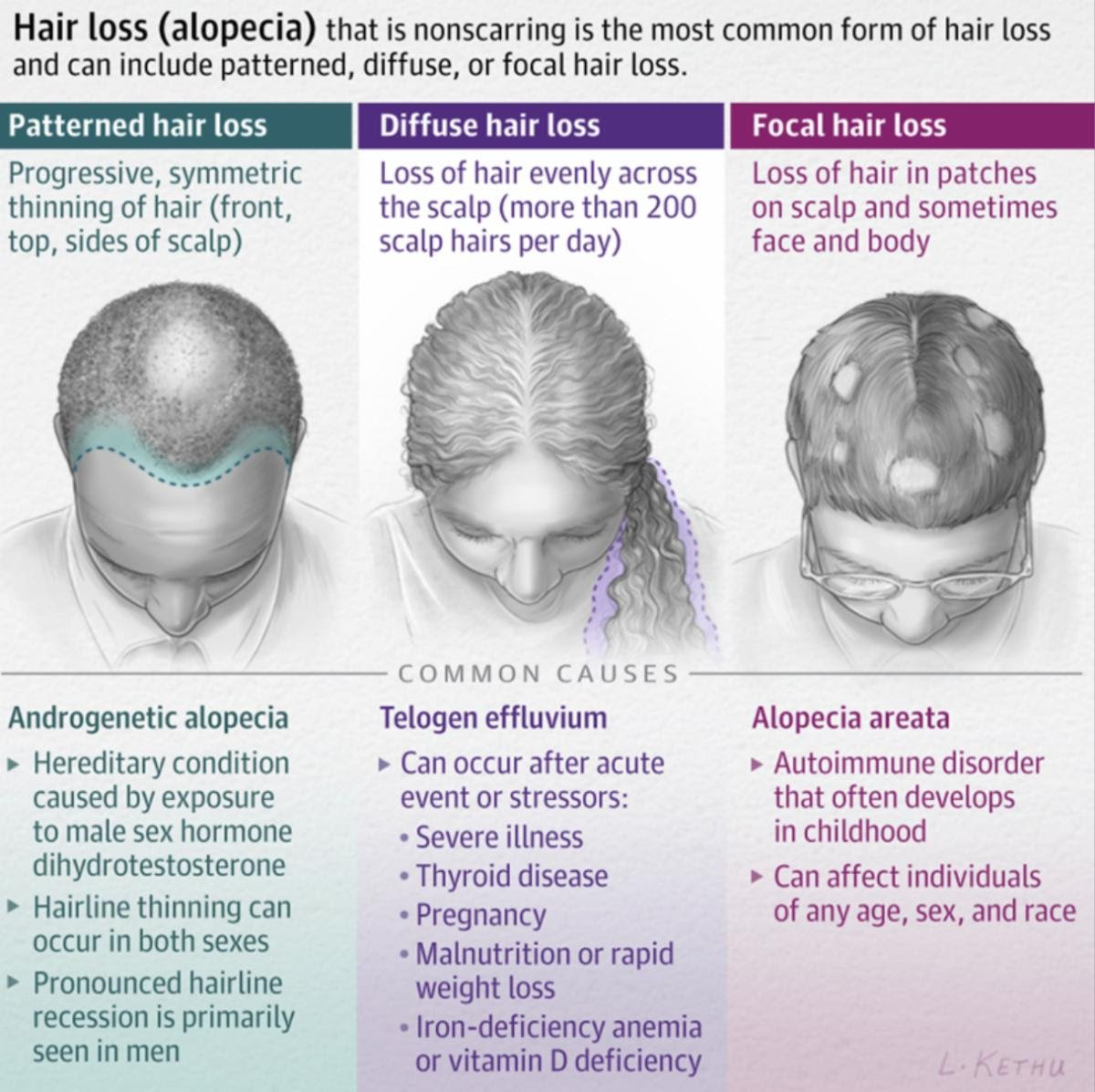
Telogen effluvium is a type of temporary hair loss. It happens when a large number of hair follicles enter the “resting” (telogen) phase of the hair cycle. Normally, about 10% of your hair is resting, but with telogen effluvium, that number can jump to 30% or even more. As a result, you see a sudden increase in hair shedding—sometimes hundreds of hairs per day.
This condition does not cause bald patches or scarring. Most people notice thinning all over the scalp, especially when washing or brushing their hair. Telogen effluvium can affect anyone, but it’s especially common in women.
Main Causes
Several events can trigger telogen effluvium:
- Physical or emotional stress: Surgery, illness, high fever, or a traumatic event.
- Hormonal changes: Pregnancy, childbirth, stopping birth control pills, or menopause.
- Poor diet: Rapid weight loss, crash diets, or nutritional deficiencies (like low iron).
- Medications: Some drugs for depression, blood pressure, or acne.
- Chronic illness: Thyroid problems or autoimmune diseases.
Usually, the hair loss starts two to three months after the trigger event. This delay is why people often miss the connection between the cause and the hair loss.
Symptoms And Patterns
- Sudden increase in shedding: You may see hair on your pillow, in the shower, or on your clothes.
- Diffuse thinning: The hair thins all over, not just in one spot.
- No bald patches: The scalp is still covered, but the hair feels less dense.
- Short regrowing hairs: Sometimes, you can see many short hairs growing in as the hair recovers.
Recovery And Prognosis
The good news: telogen effluvium is usually reversible. Once the trigger is removed or treated, the hair often starts to regrow within six months. Full recovery can take up to a year, but most people get their hair back. Chronic telogen effluvium (lasting more than six months) is less common, but it still doesn’t cause permanent baldness.
What Is Androgenetic Alopecia?
Androgenetic alopecia is a type of permanent hair loss. It is also known as male-pattern baldness or female-pattern hair loss. This condition is linked to genetics and hormones, especially androgens (male hormones like testosterone).
Unlike telogen effluvium, androgenetic alopecia follows a predictable pattern. In men, it usually starts with a receding hairline and thinning at the crown. In women, the hair thins on the top and crown, but the hairline usually stays intact.
Main Causes
Androgenetic alopecia happens when hair follicles are sensitive to dihydrotestosterone (DHT), a byproduct of testosterone. Over time, DHT shrinks the follicles, making the hair thinner and shorter. Eventually, the follicles stop producing hair altogether.
- Genetics: Family history is the biggest risk factor.
- Hormones: Changes at puberty, menopause, or due to medical conditions.
Symptoms And Patterns
- Gradual thinning: The process is slow, often taking years.
- Patterned loss:
- Men: Receding hairline, thinning at the temples and crown, possible bald spot.
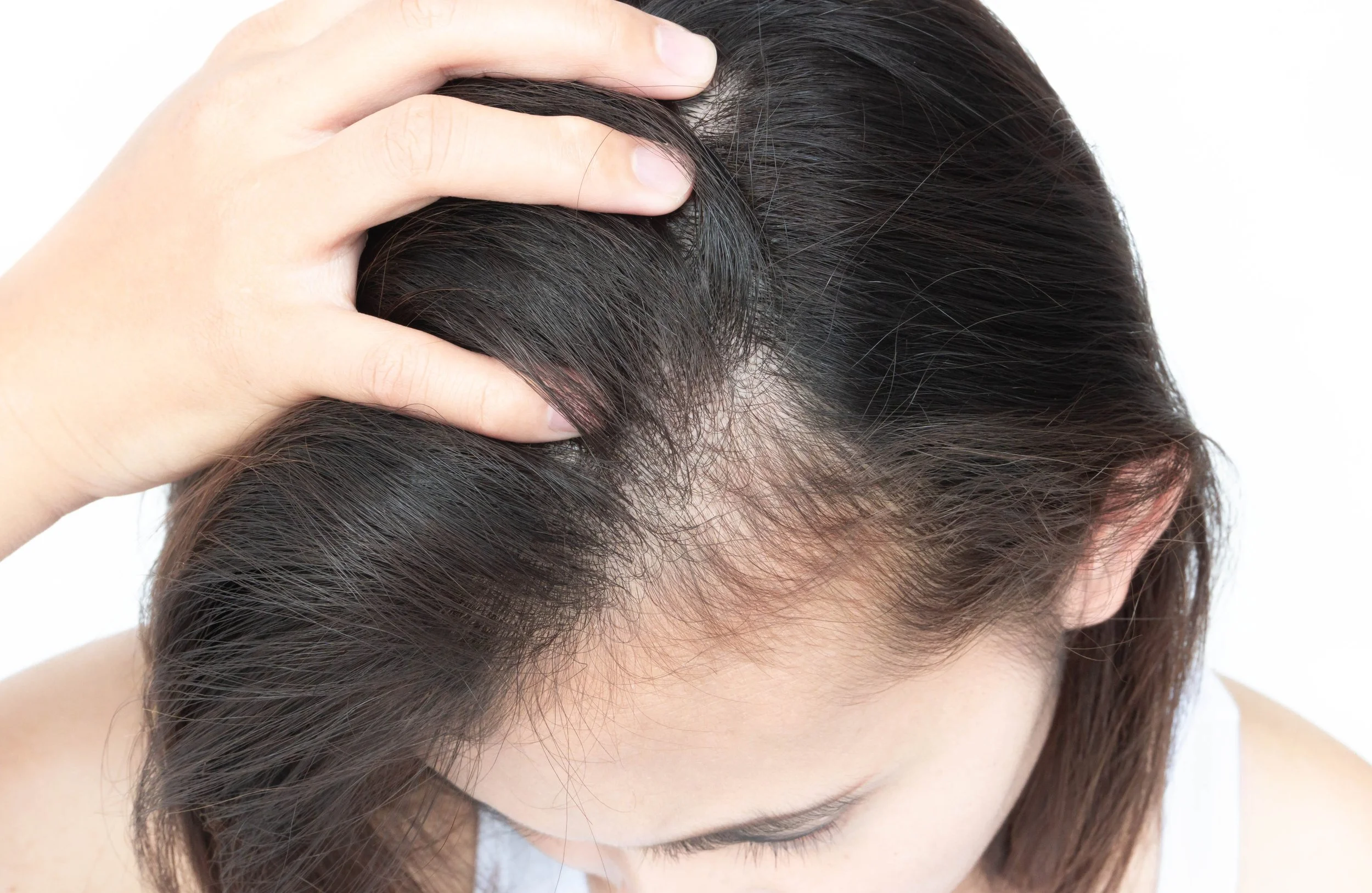
- Women: Widening part, thinning on the top of the scalp.
- Miniaturized hairs: The hair becomes finer, lighter, and shorter over time.
- Permanent loss: Without treatment, the hair does not grow back in the affected areas.
Recovery And Prognosis
Androgenetic alopecia is usually progressive. It does not improve on its own, but treatments can slow or sometimes reverse the process if started early. If you wait too long, the follicles may be too damaged to regrow hair.
Key Differences Between Telogen Effluvium And Androgenetic Alopecia
People often confuse these two types of hair loss. However, there are important differences in how they look, feel, and behave.
Comparing Causes And Triggers
- Telogen effluvium is usually triggered by a stressful event, illness, or change in your body.
- Androgenetic alopecia is mostly driven by genetics and hormones.
Onset And Progression
- Telogen effluvium: Sudden onset, usually two to three months after a trigger.
- Androgenetic alopecia: Slow, gradual thinning over months or years.
Patterns Of Hair Loss
- Telogen effluvium: Diffuse thinning all over the scalp.
- Androgenetic alopecia: Patterned thinning (receding hairline, thinning at the crown for men; widening part for women).
Shedding Vs. Miniaturization
- Telogen effluvium: Increased shedding of full-length hairs.
- Androgenetic alopecia: Gradual miniaturization—hairs become finer and shorter before disappearing.
Scalp Appearance
- Telogen effluvium: Scalp remains covered, no bald patches.
- Androgenetic alopecia: Noticeable thinning or bald spots, especially in advanced stages.
Prognosis
- Telogen effluvium: Usually reversible.
- Androgenetic alopecia: Permanent without treatment.
Table: Quick Comparison
| Feature | Telogen Effluvium | Androgenetic Alopecia |
|---|---|---|
| Onset | Sudden (2-3 months after trigger) | Gradual (over years) |
| Pattern | Diffuse thinning | Patterned loss (men: receding hairline; women: widening part) |
| Shedding | Increased | Normal or slightly increased |
| Miniaturization | No | Yes |
| Recovery | Usually full | Progressive without treatment |
How To Tell Which Type You Have
You might be asking: “How do I know if my hair loss is telogen effluvium or androgenetic alopecia?” The answer lies in looking at the details—your history, the pattern of loss, and a few simple tests.
1. Assess Recent Life Events
Think back over the last three to six months. Did you have:
- Severe stress, illness, or surgery?
- Major weight loss or dietary changes?
- Childbirth or stopping/starting birth control?
- New medications?
If yes, and your hair loss started suddenly, telogen effluvium is more likely.
If you did not have a clear trigger and your hair loss has been slow and gradual, androgenetic alopecia is more likely.
2. Examine The Pattern
- Is the hair loss spread evenly over your whole scalp? (Suggests telogen effluvium)
- Is there more thinning on top or at the temples? (Suggests androgenetic alopecia)
- Is your hairline receding? (Common in male-pattern androgenetic alopecia)
- Is your part widening? (Common in female-pattern androgenetic alopecia)
3. Check Shedding Rate
Normal hair shedding is about 50–100 hairs per day. In telogen effluvium, you may lose 200–300 hairs daily. Try the “pull test”: Gently tug a small group of hairs (about 60) from different areas of the scalp. If you easily pull out more than 6 hairs, telogen effluvium is likely.
In androgenetic alopecia, shedding is usually not dramatically increased—you lose hair, but it is thinner and finer.
4. Look For Miniaturized Hairs
Inspect your hair closely. Are there many short, fine, wispy hairs—especially in thinning areas? These are called “miniaturized” hairs and are common in androgenetic alopecia. In telogen effluvium, the shed hairs are full-length.
5. Consider Your Family History
Does your father, mother, or siblings have patterned hair loss? A family history makes androgenetic alopecia more likely.
6. Watch For Regrowth
In telogen effluvium, you may see many short regrowing hairs after a few months. In androgenetic alopecia, regrowth is slower, and hairs are often thinner.
Table: Self-check Checklist
| Question | Telogen Effluvium | Androgenetic Alopecia |
|---|---|---|
| Sudden or Gradual? | Sudden | Gradual |
| Recent Stress/Illness? | Often present | Not usually |
| Pattern of Loss? | All over | Patterned |
| Miniaturized Hairs? | No | Yes |
| Family History? | Not relevant | Often present |
Two Non-obvious Insights
- Many people think telogen effluvium always means you’re losing hair everywhere equally. In fact, the thinning can sometimes look worse in areas where your hair is naturally thinnest, like the temples or part line. This can mimic patterned loss, making self-diagnosis tricky.
- In women with androgenetic alopecia, the hair at the back of the head is usually preserved. If the back is also thinning, another cause (like telogen effluvium or a medical problem) may be involved.
Credit: dermatology.weill.cornell.edu
How Doctors Diagnose Hair Loss
While self-checks are helpful, seeing a dermatologist or hair specialist is the best way to get a clear answer. Here’s what you can expect at a medical visit:
Detailed History
The doctor will ask about:
- When the hair loss started
- How it has changed over time
- Family history of hair loss
- Recent illnesses, surgeries, or stress
- Diet and medications
Scalp And Hair Examination
- Pattern: The doctor will look for the specific pattern of thinning.
- Miniaturization: They may use a magnifying tool to look for fine, short hairs.
- Scalp health: Checking for redness, scaling, or scarring.
The Pull Test
The doctor gently tugs on a small group of hairs to see how many come out. More than usual suggests telogen effluvium.
Trichoscopy
This is a painless examination using a special magnifier. It allows the doctor to see:
- The diameter of hairs (miniaturization)
- The presence of new, regrowing hairs
- Scalp changes
Blood Tests
Blood tests may check for:
- Iron deficiency
- Thyroid problems
- Hormonal imbalances
- Other nutritional or medical conditions
Blood tests are especially important if the hair loss is sudden, diffuse, or if you have other symptoms like fatigue, weight changes, or menstrual problems.
Scalp Biopsy
Rarely, a small sample of scalp skin is taken to look at the hair follicles under a microscope. This is only done if the diagnosis is unclear or another disease is suspected.
Treatment Options: What Really Works
The best treatment depends on the type of hair loss you have. Using the wrong treatment wastes time and money, and can even make things worse.
Telogen Effluvium Treatments
The main approach is to identify and remove the trigger. In most cases, this means:
- Treating any underlying illness (like thyroid problems)
- Improving diet (especially iron, zinc, protein)
- Stopping or changing medications (with your doctor’s guidance)
- Managing stress
Supplements like biotin or multivitamins may help if you have a deficiency, but they don’t work for everyone. Most important is patience—recovery takes time.
Topical treatments (like minoxidil) are usually not necessary for telogen effluvium, unless another type of hair loss is also present.
Practical Tips
- Use gentle hair care products.
- Avoid tight hairstyles and harsh treatments.
- Do not panic—hair usually regrows as long as the trigger is removed.
- Keep a hair diary to track improvement.
Androgenetic Alopecia Treatments
This condition is chronic, but several treatments can help slow or reverse the process—especially if started early.
1. Minoxidil
Minoxidil is a topical solution or foam applied to the scalp. It can help both men and women. Results usually appear after 4–6 months, but you must keep using it to maintain the benefits.
2. Finasteride
Finasteride is a prescription pill for men. It blocks the conversion of testosterone to DHT. It is not approved for women due to possible side effects.
3. Low-level Laser Therapy (lllt)
Laser devices can stimulate hair growth in some people. The results are modest, and devices can be expensive.
4. Platelet-rich Plasma (prp)
Doctors inject a concentrate of your own blood platelets into the scalp. Some studies show increased hair thickness and growth. This is an emerging treatment and can be costly.
5. Hair Transplant Surgery
For advanced cases, hair can be moved from thick areas to thin or bald spots. This is the only permanent solution for severe androgenetic alopecia, but it requires a skilled surgeon and can be expensive.
6. Antiandrogen Drugs (women)
Women may take drugs like spironolactone or oral contraceptives to block androgens. These should only be used under a doctor’s supervision.
7. Cosmetic Options
Wigs, hairpieces, and scalp concealers can help with confidence during treatment or in severe cases.
Table: Treatment Overview
| Treatment | Telogen Effluvium | Androgenetic Alopecia |
|---|---|---|
| Remove Trigger | Essential | Not relevant |
| Minoxidil | Rarely needed | First-line |
| Finasteride | No | Men only |
| Laser Therapy | Not used | Optional |
| PRP Injections | No | Optional |
| Hair Transplant | No | Severe cases |
| Cosmetic Solutions | Yes | Yes |
Common Mistakes In Treatment
- Panic and over-treatment: Many people with telogen effluvium start strong medications or treatments they don’t need. This can cause side effects or even more shedding.
- Waiting too long: For androgenetic alopecia, early treatment is key. Delaying treatment can mean permanent loss.
- Ignoring underlying problems: Sometimes, hair loss is a sign of a medical issue (like thyroid disease or iron deficiency). Always check with a doctor if your hair loss is sudden or severe.
Credit: kopelmanhair.com
Real-life Examples
Let’s look at two real cases to see how the diagnosis and treatment differ.
Case 1: Sudden Hair Shedding After Illness
Maria, age 34, noticed clumps of hair falling out two months after recovering from COVID-19. She lost over 200 hairs per day. The hair thinned all over, but there were no bald spots. Her doctor checked her iron and thyroid—both normal.
Within six months, her hair stopped shedding, and new growth appeared.
Diagnosis: Telogen effluvium
Treatment: Reassurance, gentle care, improved diet
Outcome: Full recovery
Case 2: Gradual Thinning With Family History
David, age 28, noticed his hairline was receding and a bald spot forming at the crown. His father and grandfather had similar hair loss. The process was slow, over several years. He had no recent illness or stress. A dermatologist confirmed miniaturized hairs on exam.
Diagnosis: Androgenetic alopecia
Treatment: Minoxidil, finasteride
Outcome: Slowed loss, some regrowth
Psychological Impact And How To Cope
Hair loss can affect your confidence and emotional well-being. It’s normal to feel worried, frustrated, or even ashamed. Remember:
- You are not alone—millions experience hair loss.
- Most forms are treatable or manageable.
- Support groups, counseling, or talking to friends can help.
- Focus on overall health and stress reduction.
If you’re struggling, ask your doctor for resources or a referral to a counselor.
When To See A Doctor
While some shedding is normal, see a dermatologist if:
- Hair loss is sudden or severe
- You notice bald patches or scarring
- Hair loss comes with other symptoms (fever, rash, fatigue)
- You have a family history of autoimmune disease
- You are not sure about the cause
Early diagnosis gives you the best chance for recovery.
Preventing Hair Loss: Practical Tips
While you cannot change your genes, you can reduce your risk of excessive shedding:
- Eat a balanced diet with enough protein, iron, and vitamins
- Avoid crash diets and extreme weight loss
- Manage stress with exercise, meditation, or hobbies
- Treat scalp conditions (dandruff, psoriasis)
- Use gentle hair care: Avoid tight hairstyles, harsh chemicals, and excessive heat
Some supplements may help if you have a deficiency, but talk to your doctor before starting any new product.

Credit: www.youtube.com
Latest Research And New Treatments
Research in hair loss is always moving forward. Some promising areas:
- JAK inhibitors: New drugs being tested for several hair loss types.
- Stem cell therapy: Early studies show hope for regrowing hair.
- Genetic testing: May help predict who will develop androgenetic alopecia.
- Microneedling: Tiny needles to stimulate hair growth, sometimes with topical treatments.
For the latest advances, check trusted medical sources like the American Academy of Dermatology.
Frequently Asked Questions
What Is The Main Difference Between Telogen Effluvium And Androgenetic Alopecia?
The key difference is that telogen effluvium is a sudden, temporary hair loss caused by a trigger like stress or illness, with diffuse shedding. Androgenetic alopecia is gradual, patterned, and permanent without treatment, driven by genetics and hormones.
Can Both Telogen Effluvium And Androgenetic Alopecia Happen At The Same Time?
Yes, it’s possible to have both. For example, someone with patterned hair loss may have a sudden increase in shedding after stress or illness, making the thinning look worse. A dermatologist can help distinguish between the two.
How Long Does It Take For Hair To Grow Back After Telogen Effluvium?
Most people see regrowth within 3–6 months after the trigger is removed. Full recovery can take up to a year. Be patient—hair grows slowly, about 1 cm per month.
Are Over-the-counter Treatments Like Minoxidil Safe For Everyone?
Minoxidil is generally safe for adults, but some people may have side effects like scalp irritation or unwanted facial hair. Always read the label and talk to a doctor before starting any treatment, especially if you are pregnant, breastfeeding, or have medical conditions.
Will Changing My Shampoo Or Using Special Products Stop Hair Loss?
No shampoo or cosmetic product can cure androgenetic alopecia or telogen effluvium. Gentle products can help reduce breakage, but only medical treatments or correcting underlying problems can address true hair loss.
Hair loss can be confusing and stressful, but understanding the difference between telogen effluvium and androgenetic alopecia is the first step toward effective management. If you’re unsure, consult a dermatologist. The right diagnosis can save you time, money, and anxiety—and help you get back to feeling like yourself again.