

Hair loss is a common concern for millions of people around the world. Whether it starts slowly or happens suddenly, losing hair can affect self-confidence and daily life. In the search for effective solutions, many have turned to natural remedies. One of the most talked-about options is black seed oil, also known as Nigella sativa oil. This oil has a long history in traditional medicine for treating various health problems, but does it really help prevent hair loss? Let’s explore what modern studies say, how black seed oil works, and what you need to know before using it.
What Is Black Seed Oil?
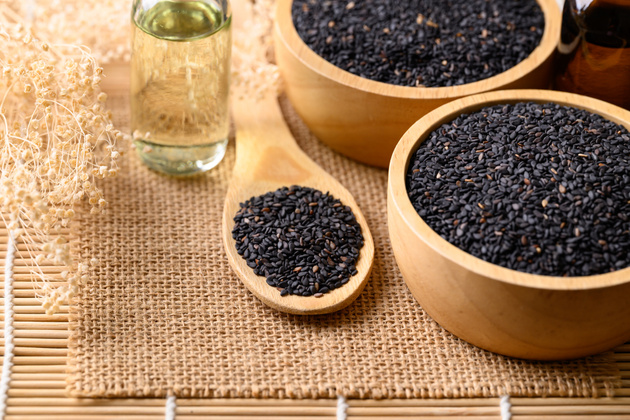
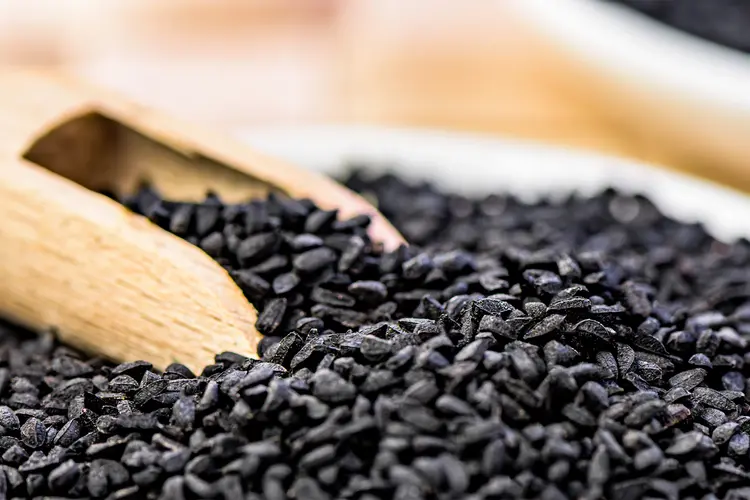
Black seed oil comes from the seeds of the Nigella sativa plant, which grows mainly in Southwest Asia, the Middle East, and parts of Africa. For centuries, people have used these tiny black seeds as a spice, but more importantly, as a natural remedy for different illnesses. In fact, black seed is sometimes called the “seed of blessing” in ancient texts.
The oil is rich in thymoquinone, a powerful antioxidant and anti-inflammatory compound. Along with thymoquinone, black seed oil also contains other healthy substances like:
- Essential fatty acids (omega-6 and omega-9)
- Vitamins (such as vitamin B1, B2, B3)
- Minerals (including iron, calcium, and zinc)
- Amino acids
These nutrients support overall health, but in recent years, interest has grown in how black seed oil might help with hair and scalp problems.
Why Does Hair Loss Happen?
Before understanding how black seed oil can help, it’s important to know why hair loss happens. Hair loss can affect both men and women, and it can occur for several reasons:
- Genetics: The most common cause is hereditary hair loss (androgenetic alopecia), often called male or female pattern baldness.
- Hormonal changes: Pregnancy, menopause, or thyroid issues can cause hair to thin or fall out.
- Medical conditions: Diseases like alopecia areata, scalp infections, or autoimmune disorders can damage hair follicles.
- Medications and treatments: Some drugs for cancer, arthritis, depression, or heart problems can trigger hair loss.
- Stress and nutrition: Poor diet, extreme stress, or rapid weight loss may lead to temporary hair shedding.
Understanding the root cause is key before choosing any treatment, including natural oils.
The Science Behind Black Seed Oil For Hair Loss
Does black seed oil really help prevent hair loss? To answer this, we need to look at published research. While traditional medicine has used black seed for centuries, only in the last few decades have scientists started to study it in detail.
Key Compounds That May Help Hair
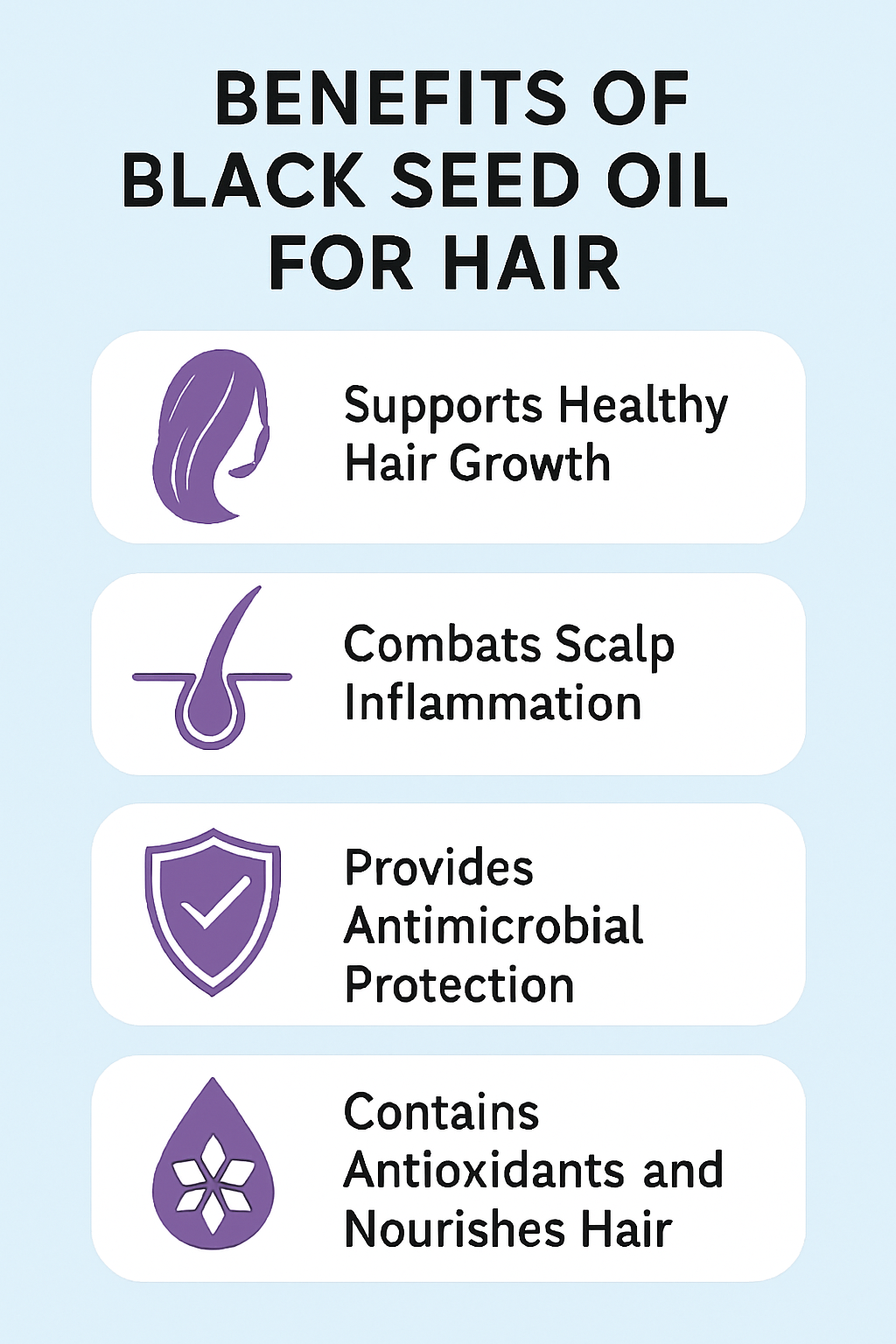
The main compound in black seed oil, thymoquinone, is known for its anti-inflammatory and antioxidant effects. These properties could protect hair follicles from damage and support healthy growth. Other compounds, like nigellone and various fatty acids, may also contribute by moisturizing the scalp and reducing irritation.
Main Mechanisms: How It Works
Black seed oil is believed to help prevent hair loss through several mechanisms:
- Reducing inflammation: Scalp inflammation can damage hair follicles. Black seed oil’s anti-inflammatory effect may calm irritated skin and support healing.
- Fighting microbes and fungi: Scalp infections can cause hair loss. Black seed oil has antibacterial and antifungal properties that may keep the scalp healthy.
- Improving blood circulation: Better blood flow means more nutrients reach the hair roots, which may help hair grow thicker and stronger.
- Balancing hormones: Some early studies suggest black seed oil might help balance certain hormones linked to hair loss.
Let’s look at what studies have found so far.
What Do Studies Show?
Several clinical and laboratory studies have explored black seed oil’s effects on hair loss. Here are some key findings:
- In a 2014 clinical trial published in the Journal of Cosmetics, Dermatological Sciences and Applications, a lotion containing black seed oil was tested on 20 women with hair loss. After 3 months, 70% of participants saw a reduction in hair shedding and improved hair density.
- Another study from 2017 observed that a hair tonic with black seed oil helped patients with telogen effluvium (temporary hair loss due to stress or illness). Participants reported less hair fall and better hair thickness after daily use for 90 days.
- Animal studies have shown that thymoquinone can stimulate hair follicle growth and increase the number of active follicles.
While these results are promising, it’s important to know that most studies are small and often combine black seed oil with other ingredients. More large, high-quality studies are needed to confirm the results.
Comparison: Black Seed Oil Vs. Popular Hair Loss Treatments
To see how black seed oil stacks up against common treatments, take a look at this comparison:
| Product | Main Action | Side Effects | Evidence Level |
|---|---|---|---|
| Black Seed Oil | Anti-inflammatory, antioxidant, antimicrobial | Mild scalp irritation (rare) | Limited but promising |
| Minoxidil (Rogaine) | Increases blood flow to follicles | Scalp dryness, itching | Strong (FDA approved) |
| Finasteride (Propecia) | Blocks DHT hormone | Sexual side effects, mood changes | Strong (FDA approved) |
| Natural Oils (e.g., coconut, castor) | Moisturize scalp | Very rare allergy | Mixed/limited |
How To Use Black Seed Oil For Hair Loss
If you’re interested in trying black seed oil, it’s important to use it correctly for the best results. Here are some simple steps and tips.
Choosing The Right Black Seed Oil
- Look for cold-pressed, pure oil: This type keeps more of the healthy compounds.
- Check for dark glass bottles: Light can break down the oil, so dark bottles protect its quality.
- Avoid added chemicals: Pure oil should not have perfumes or artificial colors.
Application Methods
There are a few ways to use black seed oil for hair:
- Direct scalp massage: Pour a small amount (1-2 teaspoons) of oil into your palm. Gently massage into the scalp for 5-10 minutes. This boosts blood flow and helps the oil absorb.
- Oil blend: Mix black seed oil with other oils (like coconut or olive oil) to dilute it if you have sensitive skin. This also gives extra moisture.
- Add to shampoo or conditioner: Some people add a few drops to their regular shampoo or conditioner.
- Hair mask: Combine black seed oil with honey or yogurt, apply to the scalp and hair, leave for 20-30 minutes, then wash out.
For best results, use black seed oil treatment 2-3 times per week. Do a patch test first to check for any allergic reactions.
How Long Does It Take To See Results?
Most users notice a difference in hair texture and reduced shedding after 8-12 weeks of regular use. However, results can vary based on the cause of hair loss, your overall health, and how consistently you use the oil.
Non-obvious Tips For Better Results
- Warm the oil slightly before application: This can help it absorb better.
- Use a scalp massager: A gentle silicone brush can boost circulation and spread the oil evenly.
- Combine with a healthy lifestyle: Good nutrition, hydration, and stress management will support hair health, making the oil more effective.
Potential Side Effects And Safety
Black seed oil is generally safe for most people when used on the skin and scalp. However, there are a few things to keep in mind:
- Allergic reactions: Rare, but possible. Always test a small amount on your skin before using it all over your scalp.
- Scalp sensitivity: Some people with very sensitive skin may feel mild irritation or redness.
- Interaction with medication: If you’re using topical steroids or other scalp treatments, talk to your doctor before adding black seed oil.
Taking black seed oil by mouth (as a supplement) is also popular, but it’s best to consult a healthcare professional first, especially if you have medical conditions or take regular medication.
What Experts Say
Dermatologists and trichologists (hair specialists) recognize the potential of natural oils like black seed, but most agree the evidence is still developing. Here are some expert opinions:
- Dr. Rachel Nazarian (board-certified dermatologist): Says that black seed oil’s anti-inflammatory properties may help with scalp issues, but more large-scale studies are needed to recommend it as a primary hair loss treatment.
- Dr. Antonella Tosti (hair research specialist): Points out that while black seed oil is promising, it should be used as a complementary approach, not as a replacement for proven medical treatments.
Experts also warn against expecting “miracle” results overnight. Patience and consistency are key.
Benefits Beyond Hair Loss Prevention
Black seed oil may do more than just help prevent hair loss. It has a range of benefits for hair and scalp health:
- Moisturizes dry scalp: Prevents flaking and itching.
- Reduces dandruff: Its antifungal properties can help control dandruff.
- Adds shine and softness: Hair looks healthier and feels smoother.
- Strengthens hair: Reduces breakage and split ends over time.
- Protects against environmental damage: Antioxidants help defend hair from pollution and sun.
Some users even report faster hair growth and improved thickness, though more research is needed to confirm these effects.
Who Should Consider Using Black Seed Oil?
Black seed oil may be especially helpful for:
- People with mild to moderate hair loss who want a natural approach.
- Those with dry, flaky, or irritated scalp.
- People looking to improve general hair shine and strength.
- Individuals with sensitive skin who react badly to chemical treatments.
However, if you have sudden, severe, or patchy hair loss, or if you have a scalp infection, it’s best to see a doctor or dermatologist for advice.
Real-world Experiences: What Users Say
Many people have tried black seed oil for hair loss, with mixed but generally positive results. Here are some real-world experiences:
- Maria, age 35: “I started using black seed oil after my hair started thinning post-pregnancy. After three months, my hair looks fuller and I see less on my brush.”
- Ali, age 42: “I mixed black seed oil with coconut oil and massaged it into my scalp twice a week. My dandruff improved, and my hair feels stronger.”
- Sana, age 28: “It took about two months before I noticed a difference, but my hair breakage has definitely reduced.”
It’s important to note that not everyone sees the same results. Some people may not notice much change, while others experience significant improvement.
How Black Seed Oil Compares To Other Natural Oils
Black seed oil isn’t the only oil used for hair loss, but it stands out for its unique properties. Here’s a look at how it compares to other popular oils:
| Oil | Main Benefit | Best For | Drawbacks |
|---|---|---|---|
| Black Seed Oil | Anti-inflammatory, antifungal, antioxidant | Thinning hair, scalp issues | Strong scent, may stain |
| Coconut Oil | Deep moisture, repairs damage | Dry hair, split ends | Can feel greasy, may clog pores |
| Castor Oil | Promotes growth, thickens hair | Thin or slow-growing hair | Sticky texture, hard to wash out |
| Argan Oil | Shine and softness | Frizzy or dull hair | Expensive, less scalp focus |
Black seed oil is especially good for people with scalp inflammation or those who have tried other oils without success.
Common Myths And Misunderstandings
When a natural remedy gets popular, myths often spread. Here are some common misunderstandings about black seed oil and hair loss:
- Myth: Black seed oil works instantly. In reality, any improvement usually takes weeks or months.
- Myth: More is better. Using too much oil can actually clog pores and cause buildup.
- Myth: It cures all types of hair loss. Black seed oil may help with some types, but not all. Genetic baldness may not respond as well as temporary or stress-related hair loss.
- Myth: Only pure oil works. While pure is best, blends with other natural oils can also be helpful.
- Myth: It has no side effects. Allergic reactions are rare but possible, so always test first.
Understanding these points can save you time, money, and frustration.
What To Look For When Buying Black Seed Oil
The market is full of different brands and types of black seed oil. Here’s what to consider:
- Purity: Check that the oil is 100% pure Nigella sativa, with no fillers.
- Production method: Cold-pressed oils keep more nutrients than those made with heat or chemicals.
- Packaging: Choose oil in dark glass bottles to prevent light damage.
- Smell and color: High-quality oil has a strong, spicy scent and a dark golden or amber color.
- Certification: Look for organic or non-GMO certification if possible.
Be wary of very cheap products or those with many added ingredients.
Credit: www.anadolumedicalcenter.com
Integrating Black Seed Oil Into Your Hair Care Routine
You don’t have to change your entire hair care routine to use black seed oil. Here’s how to make it work for you:
- Weekly treatment: Massage into the scalp and leave for 30 minutes before washing out.
- Daily care: Add a few drops to your regular shampoo or conditioner.
- Deep treatment: Use as a hair mask with other nourishing ingredients once a week.
- Leave-in option: For very dry ends, use a tiny amount on the tips of your hair after washing.
Remember, consistency is more important than quantity.
Combining Black Seed Oil With Other Treatments
Some people use black seed oil along with medical treatments or other natural remedies. Here’s how to do this safely:
- With minoxidil or finasteride: You can usually use black seed oil alongside these, but apply them at different times of day to avoid irritation.
- With supplements: Biotin, zinc, and vitamin D may help hair health when used together with topical oils.
- With scalp treatments: If you use medicated shampoos, apply black seed oil on non-treatment days.
Always check with a healthcare professional if you are unsure about combining treatments.
Credit: www.webmd.com
Non-obvious Insights For Better Results
Most beginners focus only on applying the oil, but there are two important tips that many people miss:
- Scalp exfoliation before oiling: Removing dead skin and buildup can help black seed oil penetrate deeper and work more effectively.
- Lifestyle factors: Stress, lack of sleep, and poor nutrition can all contribute to hair loss. Black seed oil works best as part of a healthy routine.
These small changes can make a big difference over time.
What Research Still Needs To Answer
While black seed oil shows promise, there are still some gaps in scientific knowledge:
- Optimal dosage and frequency: Studies vary in how much and how often to use the oil.
- Best application method: More research is needed to compare scalp massage, oral supplements, and combination use.
- Long-term effects: Most studies last only a few months. We don’t yet know the effects of long-term, regular use.
- Effectiveness for genetic vs. non-genetic hair loss: Some types of hair loss may respond better than others.
If you want to read more about the science behind black seed oil, visit the National Institutes of Health.
Credit: aventusclinic.com
Frequently Asked Questions
What Is The Best Way To Apply Black Seed Oil For Hair Loss?
The most effective method is to massage black seed oil directly into the scalp 2-3 times per week. Leave it on for at least 30 minutes before washing out. For sensitive skin, dilute it with another oil like coconut or olive oil.
Are There Any Side Effects Of Using Black Seed Oil On Hair?
Black seed oil is safe for most people when used on the scalp. Rarely, some may experience mild irritation or an allergic reaction. Always do a patch test before full use. If you notice redness, itching, or rash, stop using it and consult a doctor.
How Long Does It Take To See Results From Black Seed Oil?
Most people notice less hair shedding and improved hair texture after 8–12 weeks of regular use. Results depend on the cause of hair loss and how consistently you use the oil.
Can Black Seed Oil Regrow Hair In Bald Spots?
Black seed oil may help with thinning hair and mild hair loss, especially if caused by inflammation or poor scalp health. However, it is less likely to regrow hair in areas of complete baldness or advanced genetic hair loss.
Is Black Seed Oil Safe To Use With Other Hair Loss Treatments?
Yes, black seed oil can be used alongside most other treatments like minoxidil or medicated shampoos. Apply them at different times to avoid irritation. Always consult your doctor if you’re combining treatments, especially if you have sensitive skin or scalp conditions.
Hair loss can be a frustrating experience, but natural remedies like black seed oil offer a gentle, science-backed option worth considering. While research is still growing, many users find that regular use improves hair texture, reduces shedding, and supports scalp health.
For best results, use high-quality oil, apply it consistently, and combine it with a healthy lifestyle. If you have concerns about ongoing hair loss, don’t hesitate to seek professional advice. Black seed oil may not be a miracle cure, but it’s a powerful addition to your hair care toolkit.