

Menopause is a natural stage in a woman’s life, but its effects can feel anything but natural. Many women are surprised when they notice more hair falling out during brushing or see their hair thinning in the mirror. What’s often missed is the deep connection between estrogen, progesterone, and hair health. These two hormones are not just about periods or pregnancy—they play a huge role in how your hair grows, sheds, and even how thick it feels. Understanding what happens to these hormones before, during, and after menopause is key to knowing why hair loss happens and what you can do about it.
Let’s look at how estrogen and progesterone change throughout the menopause timeline, why these changes can trigger hair loss, and what you can realistically expect at each stage. This guide covers the science, practical advice, and answers the questions women ask most about hair loss at this important time of life.
The Role Of Estrogen And Progesterone In Hair Health
Many people think of hair as something purely cosmetic. However, hair growth is influenced by a delicate balance of hormones, especially estrogen and progesterone. These hormones do much more than control the menstrual cycle—they directly impact the hair’s growth phase, thickness, and overall health.
Estrogen: The Hair Protector
Estrogen has a protective effect on hair. It extends the growth phase (anagen) of hair follicles, which means hair stays on your head longer before falling out. Higher estrogen levels are one reason why many women experience thicker, shinier hair during pregnancy. This hormone also helps keep hair follicles in their active state and can slow down the rate at which hair enters the shedding phase (telogen).
Progesterone: The Balancer
Progesterone works alongside estrogen. It helps to balance the effects of other hormones, especially androgens (like testosterone), which can cause hair follicles to shrink and produce thinner hair. Progesterone reduces the conversion of testosterone into dihydrotestosterone (DHT), the hormone most linked to pattern hair loss.
Why Hormones Matter
When estrogen and progesterone are balanced, hair follicles get the signal to keep growing strong, healthy hair. When these hormones drop, especially around menopause, the balance shifts. Androgens can become more dominant, leading to weaker, thinner hairs and even more hair shedding.
Non-obvious insight: Many women don’t realize that hair follicles on different parts of the scalp respond differently to hormone changes. The top of the scalp, for example, is much more sensitive to declining estrogen and rising DHT than the sides or back.
The Menopause Timeline: Hormonal Changes And Hair Loss
Menopause is not a single event but a process that unfolds over several years. Understanding what happens to your hormones—and your hair—at each stage helps you know what to expect and how to plan.
Perimenopause: The Early Shifts
Perimenopause typically starts in a woman’s 40s, but for some, it can begin in the late 30s. This stage can last anywhere from 4 to 10 years. During perimenopause, hormone levels begin to fluctuate and gradually decline.
- Estrogen and progesterone levels become unpredictable. Some months, your body produces more; other months, much less.
- Periods may become irregular.
- Hot flashes, mood swings, and sleep problems often start here.
How Perimenopause Affects Hair
These hormone swings can make hair growth unpredictable. Some women notice:
- More hair in the brush or shower
- Thinner ponytails
- Hair growing slower
- Increased shedding around the part line and crown
Non-obvious insight: It’s not just the lower hormone levels, but the *fluctuations* during perimenopause that shock the hair follicles, often triggering shedding months before menopause actually arrives.
Menopause: The Big Drop
Menopause is officially marked when you haven’t had a period for 12 months in a row. The average age is 51. At this stage, the ovaries stop producing most of their estrogen and progesterone.
- Estrogen and progesterone levels drop sharply and stay low.
- Androgen levels (like testosterone) stay the same or decrease less, so the relative amount of androgens increases.
Hair Loss In Menopause
At menopause, hair loss often becomes more obvious. Common signs include:
- Widening part line
- Thinner hair at the temples
- More visible scalp
- Hair that feels finer and more fragile
Some women also notice increased facial hair (like chin or upper lip hairs). This is because androgens act more strongly when estrogen and progesterone are low.
Postmenopause: The New Normal
Postmenopause is the stage after menopause. Hormone levels are now steady but much lower than before. Hair loss may slow down or stabilize, but hair rarely returns to its pre-menopausal thickness.
- Hair may continue to thin, especially at the crown and part.
- Hair texture often changes—many women find their hair becomes dryer or more brittle.
Practical tip: The rate of hair loss often slows after the first 1–2 years postmenopause, but regrowth is limited because hair follicles have adjusted to the new low hormone environment.
Hair Loss Patterns Linked To Menopause
Hair loss in menopause doesn’t look the same for everyone. While men often lose hair in an “M” shape, women’s hair loss patterns are different. Here’s what to watch for:
Female Pattern Hair Loss (fphl)
The most common pattern is called female pattern hair loss or androgenetic alopecia. In women, this usually means:
- Gradual thinning on the top of the head and crown
- The frontal hairline is usually preserved
- The part line gets wider over time
Diffuse Thinning
Some women notice diffuse thinning, where hair becomes thin all over the scalp rather than in one spot. This can make ponytails much thinner and hair feel less dense.
Increased Shedding
This is called telogen effluvium. Instead of hair falling out in patches, you may see more hair in your comb or shower drain. This type is often triggered by the rapid hormone changes of perimenopause.
Uncommon Patterns
A small number of women develop patchy hair loss (alopecia areata), but this is less related to menopause and more to autoimmune factors.
Estrogen, Progesterone, And Androgens: The Delicate Balance
It’s the *balance* of hormones that matters most for hair, not just the absolute levels. Here’s how these main hormones interact:
| Hormone | Main Effect on Hair | Change in Menopause | Result for Hair |
|---|---|---|---|
| Estrogen | Extends growth phase, protects follicles | Sharp drop | Shorter growth, more shedding |
| Progesterone | Blocks DHT, supports estrogen | Sharp drop | Less DHT blocking, more thinning |
| Androgens (DHT) | Shrinks follicles, thins hair | Relative increase | More miniaturization, pattern thinning |
Key takeaway: When estrogen and progesterone fall, even if androgens do not rise, their effects become stronger by comparison. This “relative androgen excess” is why many women see hair thinning during and after menopause.
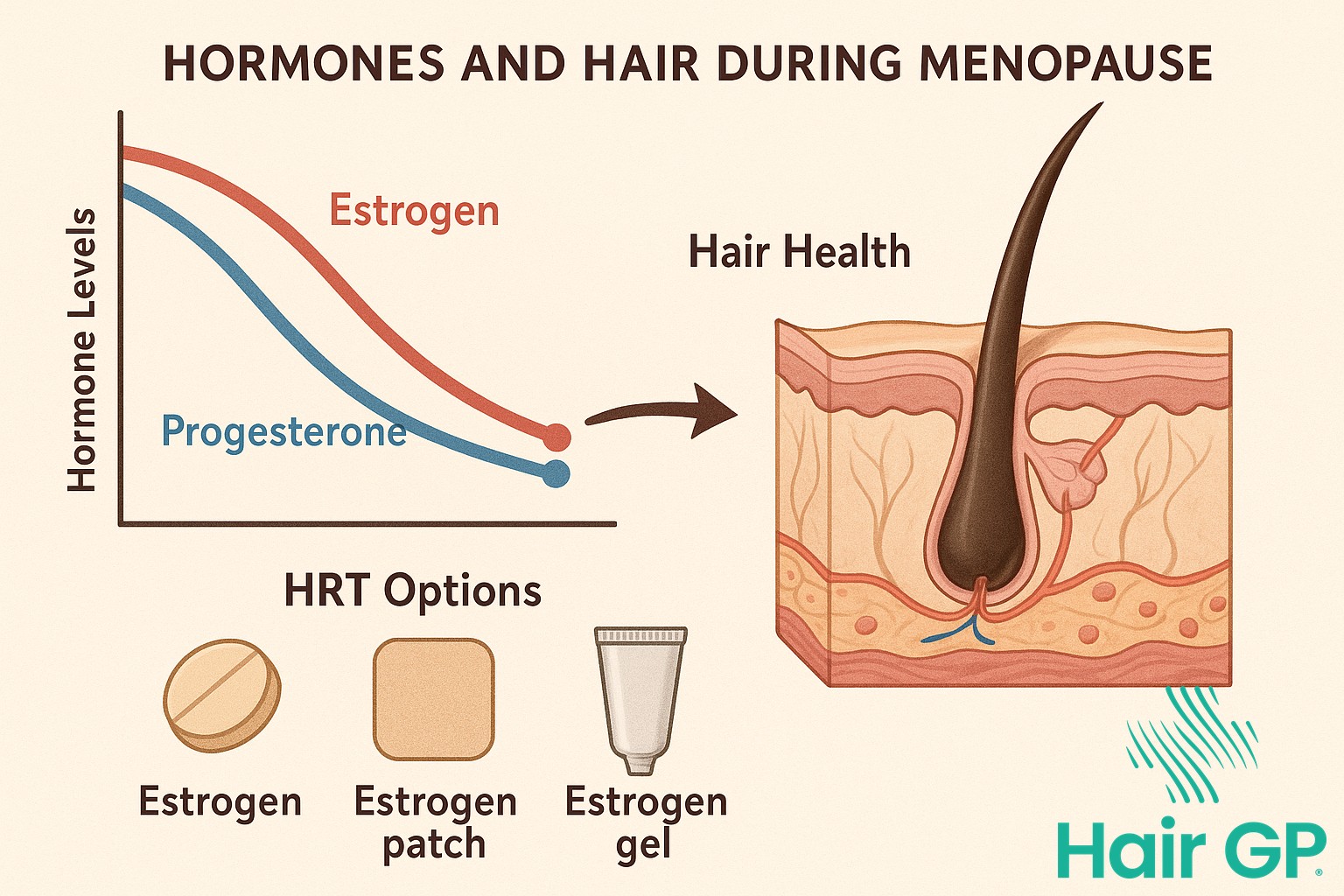
Credit: hairgp.co.uk
Other Factors That Affect Hair Loss During Menopause
Hormones are a major cause, but they’re not the only reason hair thins during menopause. Other factors can make hair loss worse or more likely.
Genetics
If your mother, grandmother, or sisters experienced hair thinning during menopause, you are more likely to as well. Genetics decide how sensitive your hair follicles are to hormone changes.
Stress And Emotional Health
Stress increases cortisol, another hormone that can push hair follicles into the shedding phase. The emotional changes and sleep problems common in menopause can amplify stress-related hair loss.
Nutrition And Diet
Low iron, vitamin D, and protein intake can worsen hair shedding. Menopausal women often eat less or skip meals, leading to nutrient gaps that affect hair growth.
Medications
Some drugs, especially those for blood pressure, cholesterol, or depression, can trigger hair thinning as a side effect. If you notice sudden hair loss after starting a new medication, talk to your doctor.
Thyroid Disorders
Thyroid issues are more common after 40 and can cause or worsen hair loss. Both underactive and overactive thyroid problems disrupt hair growth cycles.
Autoimmune Conditions
Diseases like alopecia areata or lupus can cause patchy hair loss and are sometimes triggered or worsened by menopause.
Hair Styling And Care Habits
Bleaching, frequent coloring, heat styling, and tight hairstyles put extra stress on hair that is already more fragile due to hormone changes.
Non-obvious insight: Many women don’t realize that scalp conditions like dandruff or seborrheic dermatitis often get worse around menopause, creating extra inflammation and making hair loss more obvious.
What To Expect: The Hair Loss Timeline Across Menopause
Hair loss is not instant—it develops and changes over time. Here’s how the typical timeline unfolds:
| Stage | Years | Hormonal Changes | Common Hair Changes |
|---|---|---|---|
| Early Perimenopause | -8 to -4 | Hormone swings, cycles shorten | Slight shedding, texture changes |
| Late Perimenopause | -4 to 0 | More missed periods, sharp hormone drops | Increased shedding, thinning at crown |
| Menopause | 0 | Very low estrogen/progesterone | Noticeable thinning, wider part |
| Postmenopause | 1–5+ | Stable low hormone levels | Continued thinning, slower hair growth |
Practical advice: The earlier you notice and address hair changes, the more options you have to slow or reduce thinning. Once follicles shrink and become inactive, regrowth is very difficult.

Credit: drchristinemaren.com
How To Manage Menopause-related Hair Loss
While you can’t stop menopause, you can take steps to protect your hair. Here’s what really helps:
Optimize Nutrition
Focus on a diet rich in:
- Protein: Hair is made of keratin, a protein. Include eggs, lean meats, beans, and nuts.
- Iron: Low iron can cause hair loss. Red meat, spinach, and lentils are good sources.
- Vitamin D: Supports hair follicle cycling. Sunlight, fatty fish, and fortified foods help.
- Omega-3s: Found in fish and flaxseed, these may reduce inflammation.
Gentle Hair Care
- Use mild, sulfate-free shampoos and conditioners.
- Limit heat styling and chemical treatments.
- Avoid tight ponytails or braids that pull on fragile hair.
- Use a wide-tooth comb to detangle gently.
Manage Stress
Try techniques like:
- Yoga or meditation: Reduces cortisol and helps sleep.
- Mindfulness: Being aware of stress triggers can help you respond calmly.
Consider Medical Treatments
- Minoxidil (Rogaine): The only FDA-approved topical treatment for female pattern hair loss.
- Hormone Replacement Therapy (HRT): Can help some women, but is not suitable or effective for all. Discuss with your doctor.
- Spironolactone: A medication that blocks androgen effects; sometimes used for women with significant hair loss.
Address Underlying Medical Issues
- Get your thyroid checked if you have symptoms like fatigue, weight change, or dry skin.
- Treat scalp conditions (like dandruff or psoriasis) with medicated shampoos.
Supplements
Some women try biotin or other hair supplements. While these may help if you have a deficiency, they do not reverse hormone-related hair loss unless a nutritional gap exists.
Non-obvious insight: Many hair regrowth products work only if started early. They help keep existing hair longer, but can’t revive “dead” follicles.
Hormone Therapy: Pros, Cons, And Considerations
Hormone therapy can reduce hot flashes, improve mood, and sometimes help hair, but it’s not right for everyone. Here’s what to know:
Benefits
- May slow or reduce hair thinning in some women
- Improves other menopausal symptoms (like night sweats or bone loss)
Risks
- Not suitable for women with certain cancers, blood clots, or high-risk factors
- Can have side effects like breast tenderness, weight change, or mood swings
Alternatives
If you cannot take HRT, ask your doctor about topical estrogens, low-dose oral contraceptives (in early perimenopause), or anti-androgen medications.
Practical tip: Hormone therapy works best when started close to menopause. It is less effective for hair loss if started many years after menopause.
Alternative And Natural Approaches
Some women prefer to avoid medication or hormones. Here are some options with varying levels of evidence:
Scalp Massage
Regular scalp massage can increase blood flow to hair follicles and may help some women retain hair longer.
Essential Oils
Oils like rosemary, peppermint, or pumpkin seed oil have small studies suggesting they may help reduce hair loss when used regularly.
Laser Therapy
Low-level laser devices (like laser combs) are FDA-cleared for hair thinning. Results are mixed, but some women see improvement.
Herbal Supplements
Saw palmetto, black cohosh, and phytoestrogens are sometimes used, but evidence is limited, and they can interact with other medications.
Important: Always talk to your healthcare provider before starting new supplements, especially if you have other health conditions or take medications.
Psychological And Social Impact Of Menopausal Hair Loss
Hair is often linked to self-image and confidence. Thinning hair can feel like a loss of femininity or youth. It’s normal to feel upset, but you’re not alone—up to 50% of women notice significant hair thinning by age 50.
Coping Strategies
- Talk to friends or support groups—sharing experiences can reduce isolation.
- Consider new hairstyles or hairpieces for volume.
- Focus on overall health and self-care, not just hair.
Non-obvious insight: Many women feel better after talking to a dermatologist or trichologist. Just understanding the cause and what to expect can reduce anxiety and prevent over-spending on ineffective treatments.

Credit: honehealth.com
Comparing Hair Loss: Menopause Vs. Other Causes
It’s easy to blame menopause for every hair change, but other causes can look similar.
| Cause | Timing | Pattern | Response to Treatment |
|---|---|---|---|
| Menopause | 40s–50s, gradual | Diffuse, crown/part thinning | Slows with early treatment |
| Telogen Effluvium | After stress, illness | Sudden, diffuse shedding | Usually recovers in 6–12 months |
| Thyroid Disease | Any age, gradual or sudden | Diffuse or patchy | Improves with thyroid treatment |
| Alopecia Areata | Any age, sudden | Round bald patches | May regrow, often recurs |
If hair loss is sudden, patchy, or you see other symptoms (like weight loss, fever, or skin changes), see a doctor to rule out other causes.
When To See A Doctor
Not all hair loss is just “menopause.” See your doctor or dermatologist if:
- Hair falls out in clumps or patches
- You notice itching, scaling, or redness on the scalp
- Hair loss is rapid or started suddenly
- You have other symptoms (weight loss, fever, joint pain)
- Family history of autoimmune disease
A professional can help identify the cause and recommend the right treatment, saving time and stress.
Latest Research And Promising Treatments
New studies are exploring better ways to protect hair during menopause. Some highlights:
- Platelet-Rich Plasma (PRP): Injections of your own blood’s growth factors into the scalp have shown promise in early studies.
- Topical anti-androgens: New creams that block DHT at the scalp level are in clinical trials.
- Stem cell therapies: Still experimental but may offer future options for regrowing lost hair.
To learn more about ongoing research and up-to-date findings, visit the National Institutes of Health.
Frequently Asked Questions
What Is The Best Shampoo For Menopause-related Hair Loss?
Look for gentle, sulfate-free shampoos with strengthening ingredients like biotin, keratin, or caffeine. Avoid heavy silicones or harsh cleansers, as these can weigh down thinning hair or irritate the scalp.
Can Hormone Replacement Therapy (hrt) Stop Hair Loss?
HRT can help slow or reduce hair thinning for some women, especially if started close to menopause. However, it is not effective for everyone and may not fully restore lost hair. Always discuss risks and benefits with your doctor.
Will My Hair Grow Back After Menopause?
Some women see mild regrowth if they address nutrition, manage stress, and treat medical issues. However, once hair follicles shrink and become inactive, full regrowth is unlikely. Early intervention gives the best results.
Are There Any Natural Remedies That Really Work?
Natural approaches like scalp massage, essential oils (such as rosemary), and a balanced diet can help slow hair loss or improve scalp health. However, results vary and are usually modest compared to medical treatments.
When Should I See A Doctor For Hair Loss During Menopause?
See a doctor if hair loss is sudden, patchy, or comes with other symptoms like scalp redness, itching, or unexplained weight change. Persistent or rapid thinning deserves professional assessment to rule out treatable causes.
Menopause brings many changes, but understanding the role of estrogen and progesterone in hair health can help you make informed choices. Early action, gentle care, and realistic expectations are key. You’re not alone—and with the right knowledge, you can take steps to protect your hair and confidence as you move through this important life stage.