

Hair care is not one-size-fits-all. You might use products that work well for others, yet your hair stays dry, oily, or frizzy. The secret often lies in hair porosity—a hidden trait that controls how your hair absorbs and keeps moisture. Understanding your hair’s porosity can transform your hair care routine. But how do you actually determine your hair porosity? There are several testing methods, and each has pros and cons. This guide compares every popular hair porosity test, shows you how to do them at home, and explains how to interpret your results. By the end, you’ll know exactly what your hair needs to look and feel its best.
What Is Hair Porosity And Why Does It Matter?
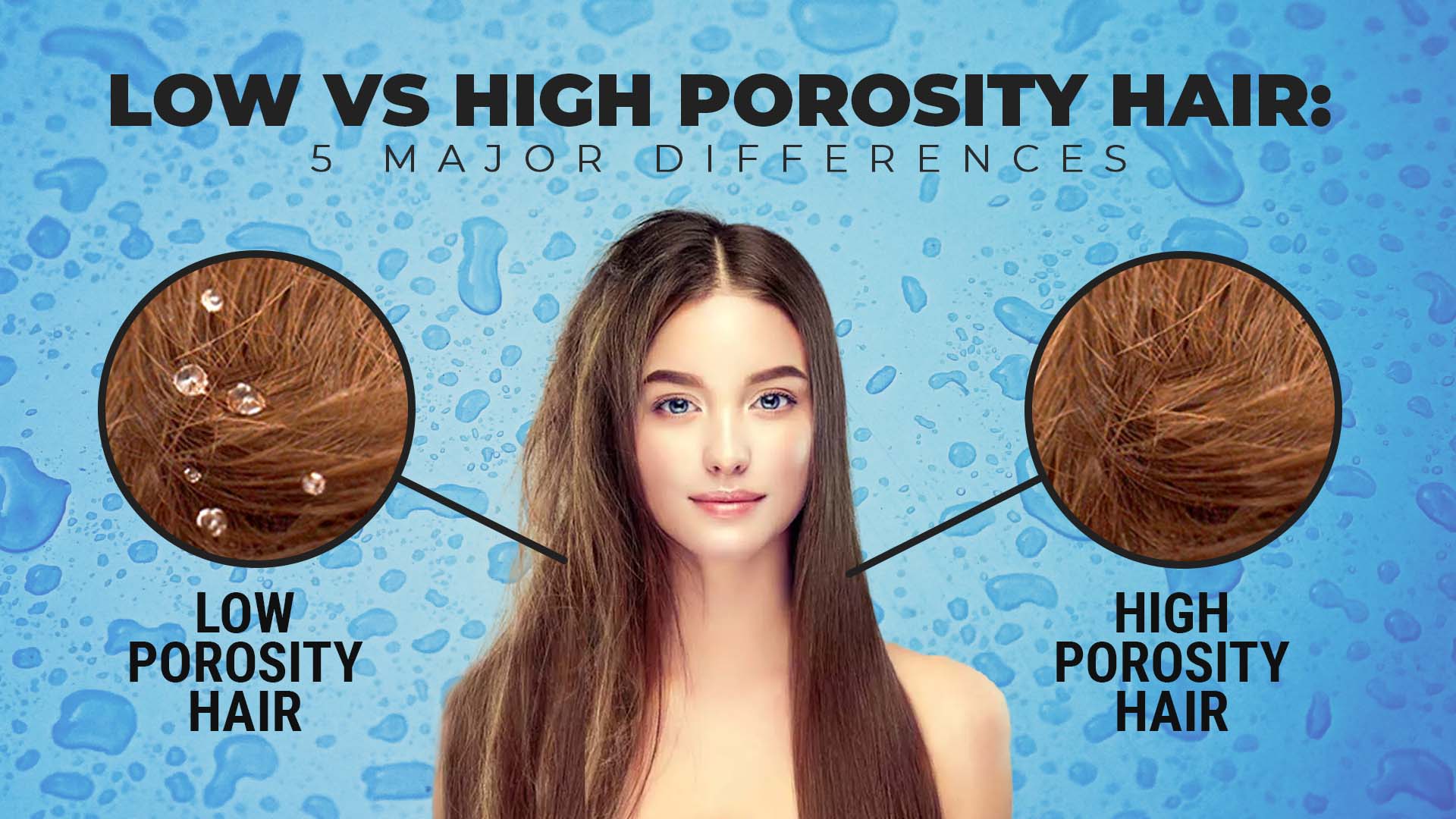
Hair porosity refers to how well your hair can take in and hold moisture. This depends on the structure of your hair cuticle—the outer layer that looks like overlapping scales. When the cuticle is flat and tight, water and oils have a harder time getting in. When it’s raised or open, moisture gets in easily, but may also leave just as fast.
There are three main types:
- Low porosity: Cuticles are tight. Hard for moisture to enter, but once in, it stays.
- Medium/normal porosity: Cuticles are slightly open. Moisture flows in and out easily.
- High porosity: Cuticles are wide open or damaged. Hair absorbs water quickly but loses it just as fast.
Why does this matter? If you have high porosity hair, you may need heavier products or protein treatments. Low porosity hair often needs lighter products and more heat to help moisture sink in. Knowing your porosity can save you time, money, and frustration.
For example, some people with low porosity hair find deep conditioners just “sit” on their hair without soaking in, making them feel greasy or weighed down. On the other hand, high porosity hair can become dry and brittle if not sealed with the right oils or creams, leading to breakage and split ends.
Porosity also matters when you style or color your hair. Low porosity hair can resist chemical treatments, requiring longer processing times or stronger formulas, while high porosity hair can take color too quickly and fade fast. Understanding this can help you communicate better with your stylist and avoid unnecessary damage.
Key Signs Of Each Hair Porosity Type
While tests help, you can also spot clues in your hair’s daily behavior:
- Low porosity hair repels water, takes ages to dry, and products often sit on top. You might notice water beads on your hair after a shower, and conditioners or leave-ins feel sticky or hard to rinse out. Hair may look shiny but feels stiff or coated.
- Medium porosity hair feels soft, holds styles well, and manages color easily. Your hair stays hydrated but not greasy, and you rarely struggle with frizz or limpness. Styles last a few days, and you can switch products without much trouble.
- High porosity hair dries very fast, frizzes easily, and soaks up products quickly. It can feel rough or straw-like, especially at the ends. You might need to use more product to keep your hair feeling moisturized, and rain or humidity can instantly create frizz.
But for many, these signs overlap, or aren’t clear. That’s where porosity testing comes in. For instance, tightly curled hair often appears dry, but the reason could be high porosity or just the way curls reflect light. That’s why relying only on “feel” can be misleading.
Why Test Your Hair Porosity?
Knowing your hair porosity helps you:
- Pick the right shampoos, conditioners, and oils
- Avoid product buildup and dryness
- Choose better heat styling and coloring methods
- Prevent wasting money on products that don’t work
Many people guess their porosity and end up frustrated. A proper test can give you confidence and clarity. For example, if you keep switching products, blaming your shampoo for dryness, but your hair is actually high porosity, you might need to focus more on sealing in moisture and protecting your cuticle, not just changing brands.
Porosity testing also helps you understand why your hair reacts differently in changing seasons. In winter, low porosity hair can become stiff and resistant to moisture, while high porosity hair may become brittle in dry indoor air. Testing gives you a starting point to adjust your routine before problems appear.
The Main Hair Porosity Testing Methods Compared
There are several ways to test hair porosity at home and in salons. Each method has strengths and weaknesses. Let’s compare the most popular ones, step by step.
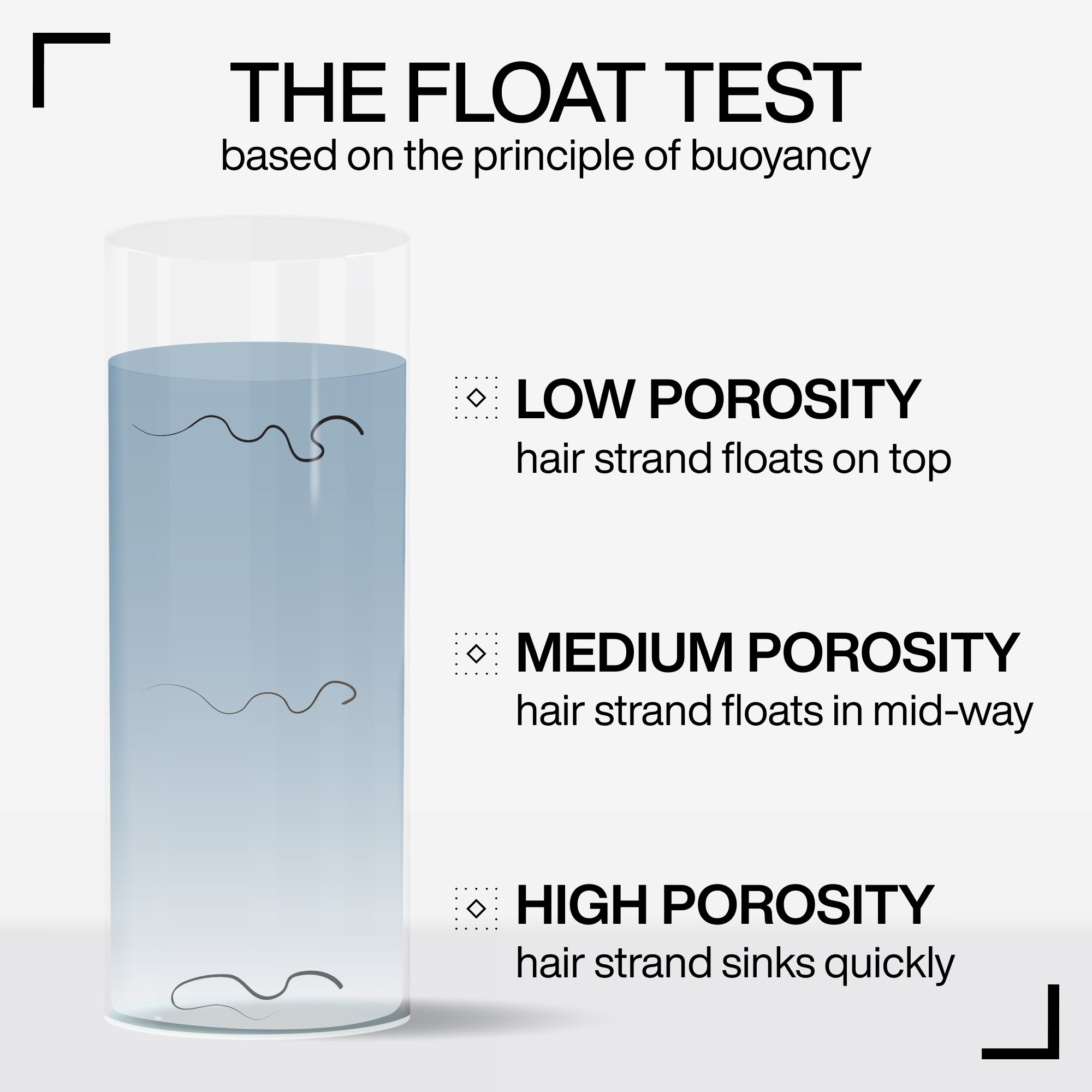
1. The Water Float Test
This is the most famous DIY test. It’s simple, but not always accurate.
How to do it:
- Wash your hair with a gentle shampoo. Do not use conditioner or products.
- Take a few clean, dry hair strands (from your brush or comb).
- Fill a clear glass with room temperature water.
- Drop the strands in and wait 2-4 minutes.
- Observe what happens.
Interpretation:
- Hair floats = Low porosity (cuticles are tight)
- Hair sinks slowly = Medium porosity
- Hair sinks quickly = High porosity (cuticles open)
Pros:
- Fast and easy
- No special tools needed
Cons:
- Oil or product residue can affect results
- Water temperature matters
- Some hair naturally floats due to shape, not porosity
Practical tip: Always use freshly washed, product-free hair for best results. Also, try testing a few hairs at once, as a single strand can sometimes give a false reading due to its thickness or any past damage.
2. The Slip ‘n’ Slide Test
This tactile test uses your fingers to feel the cuticle’s texture.
How to do it:
- Take a clean, dry strand of hair.
- Hold one end and slide your fingers from the tip to the scalp.
Interpretation:
- Smooth = Low porosity (cuticles flat)
- Slight bumps = Medium porosity
- Rough, bumpy = High porosity (cuticles raised)
Pros:
- Instant feedback
- No tools needed
Cons:
- Hard to judge bumps if you’re not experienced
- Curl pattern can affect how it feels
Insider tip: Try several strands from different parts of your head. Some areas may be more porous due to sun or heat damage. For example, hair near your face often gets more sun and styling tool exposure, making it feel rougher than hair underneath.
3. The Spray Bottle Test
This method checks how your hair responds to water droplets.
How to do it:
- Take a small section of dry, clean hair.
- Mist it with a spray bottle of water.
Interpretation:
- Water beads up, sits on top = Low porosity
- Water absorbs after a moment = Medium porosity
- Water absorbs instantly = High porosity
Pros:
- Mimics real-world moisture contact
- Quick and visual
Cons:
- Hard to judge absorption speed
- Humidity and air temp can change results
Pro tip: Try this test on different days and compare. If your hair acts differently in winter vs. summer, that’s a sign that humidity and air quality are affecting your results.
4. The Drying Time Test
This method measures how long it takes your hair to dry after washing.
How to do it:
- Wash your hair and gently towel dry.
- Leave it to air-dry without any products.
Interpretation:
- Takes more than 4 hours = Low porosity
- Dries in 2-4 hours = Medium porosity
- Dries in less than 2 hours = High porosity
Pros:
- Reflects real-world behavior
- No tools needed
Cons:
- Depends on hair thickness, length, and weather
- Not practical if you always blow-dry
Expert hint: Use this test in combination with others for best accuracy. Also, try to note not just overall drying time, but if your roots, mid-lengths, and ends dry at different rates—this can reveal mixed porosity.
5. The Product Absorption Test
This looks at how quickly your hair soaks up leave-in products.
How to do it:
- Apply a light leave-in conditioner or oil to a small section of clean, damp hair.
- Watch how long it takes to absorb.
Interpretation:
- Sits on surface = Low porosity
- Absorbs with light rubbing = Medium porosity
- Soaks in instantly = High porosity
Pros:
- Shows how your hair interacts with real products
- Can be done during your normal routine
Cons:
- Oil type and amount changes results
- Not a standalone test
Non-obvious insight: Try this with both oil and water-based products. Some hair absorbs one better than the other. For example, low porosity hair might reject coconut oil but absorb aloe vera gel easily.
6. The Strand Stretch Test (wet Elasticity Test)
This test is more common in salons but can be done at home to check hair strength and porosity.
How to do it:
- Take a wet strand of clean hair.
- Gently stretch it between your fingers.
Interpretation:
- Stretches and returns = Medium porosity
- Breaks quickly = High porosity
- Hard to stretch = Low porosity
Pros:
- Shows hair health as well as porosity
- Easy to do
Cons:
- Can damage hair if pulled too hard
- Other factors (protein, health) also affect elasticity
Practical tip: Only stretch a small section, and never pull too hard. If your hair feels “gummy” or stretches a lot before snapping, you may need more protein treatments.
7. The Porosity Microscope Test
Some salons and trichologists use microscopes to check the cuticle layer.
How it works:
- A hair sample is placed under a microscope.
- The cuticle’s condition is checked directly.
Interpretation:
- Flat, smooth cuticle = Low porosity
- Slightly lifted cuticle = Medium porosity
- Highly raised or missing cuticle = High porosity
Pros:
- Most accurate method
- Shows damage, split ends, and porosity
Cons:
- Requires professional tools
- Not practical for most people
Pro tip: If you’re struggling with hair health and nothing works, consider a salon analysis. Some stylists offer digital microscope imaging, which can even show product buildup and breakage points along the strand.
8. The Color Processing Test
Hair dye or bleach can reveal porosity by how your hair reacts to chemicals.
How to do it:
- Notice how quickly your hair lightens or takes color compared to others.
Interpretation:
- Takes longer to process = Low porosity
- Processes as expected = Medium porosity
- Processes quickly, or color fades fast = High porosity
Pros:
- Useful for people who color their hair often
- Real-world impact on hair care
Cons:
- Can damage hair if not careful
- Not suitable for children or people who avoid chemicals
Non-obvious insight: Stylists often use this method to adjust timing for each client. If your hair “grabs” color unevenly, you might have areas of mixed porosity.
Side-by-side Comparison: Which Hair Porosity Test Is Best?
Here’s a look at how each method stacks up on key factors:
| Test Method | Ease of Use | Accuracy | Best For | Limitations |
|---|---|---|---|---|
| Water Float Test | Very easy | Low–medium | First-timers, quick check | Can be affected by residue |
| Slip ‘n’ Slide | Very easy | Medium | Tactile learners | Subjective, needs practice |
| Spray Bottle Test | Easy | Medium | Visual learners | Affected by climate |
| Drying Time Test | Easy | Medium | Natural hair routines | Weather and hair thickness matter |
| Product Absorption | Easy | Medium | Product users | Oil type changes results |
| Strand Stretch | Medium | Medium | Damage checkers | Can break weak hair |
| Microscope Test | Hard | High | Professional analysis | Not DIY |
| Color Processing | Medium | Medium | People who dye hair | Chemical risk |
How To Get The Most Accurate Results
No single test is perfect. For best accuracy, combine at least two or three different methods. Here’s a step-by-step approach that works for most people:
- Wash your hair well. Remove all styling products, oils, and dirt.
- Try the Water Float Test and Spray Bottle Test first—they’re easy and quick.
- Check the Slip ‘n’ Slide and Product Absorption test for more data.
- Watch your hair’s drying time after a wash.
- Compare results: If most tests point to the same porosity, you have your answer.
If results are mixed or unclear, try the tests again after a few days, or ask a stylist for help. If you recently used a clarifying shampoo, wait a week before retesting, as your hair may temporarily behave differently.
Factors That Can Affect Test Results
- Product buildup: Oils, silicones, or conditioners on the hair can prevent water from entering.
- Water temperature: Hot or cold water can change how hair reacts.
- Weather: High humidity or dryness in the air affects water absorption.
- Hair damage: Heat tools, chemicals, and the sun can change porosity over time.
- Location on your head: The hair at your crown, nape, and ends may have different porosity.
Pro tip: Always test with several hair strands from different areas. If you use protective styles like braids or weaves, test new growth as well as older hair to see if there’s a difference.
Credit: theradome.com
Understanding Your Porosity Test Results
Interpreting porosity is not only about labels—low, medium, or high. It’s about learning how your hair *behaves* and adjusting your routine.
Low Porosity Hair
- Traits: Shiny, slow to absorb water, product buildup is common.
- Care tips: Use light, water-based products. Apply heat (like a warm towel or steamer) to help products absorb. Avoid heavy oils and butters.
Low porosity hair can get overloaded easily, leading to limp or greasy roots. To avoid this, use clarifying shampoos every few weeks. When deep conditioning, wear a shower cap and wrap a warm towel around your head to gently lift the cuticle.
Always rinse out conditioners thoroughly to avoid buildup.
Medium Porosity Hair
- Traits: Holds styles well, easy to color, manageable moisture.
- Care tips: Maintain with regular washing and balanced products. Deep condition occasionally.
Medium porosity hair is the easiest to manage, but it can change with age or damage. Rotate your products and include both moisture and protein treatments to maintain balance. If you start to notice more frizz or dryness, check if your porosity has shifted.
High Porosity Hair
- Traits: Frizzy, soaks up water and products fast, dries quickly.
- Care tips: Use heavier creams and oils. Try protein treatments. Rinse with cool water to help seal cuticles.
High porosity hair benefits from “layering”—applying a leave-in, then oil or cream, and finishing with a sealing product. This helps trap moisture inside. Avoid frequent heat styling, as it can worsen porosity. If your hair feels weak, increase protein treatments, but not too often—too much protein can cause brittleness.
Non-obvious insight: Hair porosity can change over time, especially with chemical treatments or heat styling. Retest every few months if your routine changes. For example, after coloring or relaxing hair, your porosity may increase, requiring a different care routine.
Common Mistakes When Testing Hair Porosity
Many people get the wrong results because of simple errors. Avoid these mistakes for the most reliable outcome:
- Testing dirty hair: Always test with clean, product-free hair.
- Using only one method: Combine tests for a clearer picture.
- Ignoring environmental factors: Do tests in a controlled environment if possible.
- Not considering hair health: Damaged hair can have mixed porosity.
- Over-interpreting results: Porosity is a guide, not a rule. Adjust your care based on how your hair feels and looks.
Another common mistake is confusing hair density (how much hair you have) with porosity. Dense hair can take longer to dry, even if it’s high porosity, simply because there’s more of it. Always consider the full picture.
Credit: www.redken.com
Real-world Examples: How Porosity Testing Changed Hair Care
Many people discover better hair health after testing porosity. Here are some real-life scenarios:
- Case 1: Maria had dry, brittle hair and always used heavy oils. After testing, she learned her hair was low porosity. She switched to lighter leave-in sprays and saw less buildup and more shine. She also started using a heat cap when deep conditioning, which improved moisture absorption.
- Case 2: David’s curls were frizzy and hard to manage. Testing showed high porosity from old bleach damage. He started using protein masks and sealing oils, and his curls became defined and soft. David also avoided hot showers and started rinsing with cool water, which helped close his cuticles.
- Case 3: Priya thought her hair was healthy but noticed her color faded fast. Porosity tests revealed high porosity, so she added color-protective serums and deep conditioning, keeping her color vibrant longer. She learned to avoid clarifying shampoos right after coloring, which helped her results last.
You may find your own “aha” moment after testing, realizing that a simple change—like using heat with your conditioner or layering leave-ins—makes a huge difference.
How Hair Porosity Relates To Hair Type And Genetics
Porosity is not only about hair type (straight, wavy, curly, coily). Even people with the same curl pattern can have different porosity. Genetics play a role, but so does how you treat your hair.
- Fine hair often has low or medium porosity.
- Coarse or curly hair is more likely to be high porosity, especially after coloring or heat styling.
- Aging and sun exposure can raise porosity over time.
Interesting fact: Even within one head of hair, the ends are usually more porous than the roots, due to age and exposure. For example, someone with straight hair can have high porosity ends from years of ponytail holders and sun, while their roots remain low porosity.
Porosity also affects how your hair reacts to humidity. High porosity hair swells and frizzes, while low porosity hair may stay flat and smooth. Understanding this can help you choose anti-humidity or moisture-locking products as needed.
Are Salon Or Lab Tests Worth It?
Professional porosity tests use microscopes or chemical analysis. They are more accurate, but also costly and less accessible. For most people, home tests are enough. But if you have ongoing hair problems, or are planning a major chemical treatment, a salon test can help prevent mistakes.
Professional tests can reveal not just porosity, but other issues like fungal infections, scalp health, or breakage patterns. If you are considering treatments like relaxing, perming, or major color changes, a salon test is a wise investment.
For more on professional analysis, see this research article.
Table: Hair Porosity Vs. Best Hair Care Practices
To make things clearer, here’s a quick reference for what works best for each porosity type:
| Porosity Type | Best Products | Care Tips | Avoid |
|---|---|---|---|
| Low | Light leave-ins, liquid sprays | Use heat for deep conditioning, clarify often | Heavy oils, butters, too much protein |
| Medium | Balanced conditioners, light oils | Regular care, occasional deep treatments | Over-processing, harsh chemicals |
| High | Rich creams, sealing oils, protein masks | Layer products, cool water rinses | Frequent heat, harsh sulfates |
How To Adjust Your Hair Routine After Testing
Once you know your porosity, small changes can have a big impact:
- Low porosity: Try warming up conditioners or applying them with heat. Use clarifying shampoos to prevent buildup.
- Medium porosity: Stick to balanced routines. Deep condition every 2-4 weeks.
- High porosity: Use leave-in conditioners and oils to seal in moisture. Avoid daily heat styling.
If you color or bleach your hair, always check porosity first. High porosity hair is more likely to get damaged. Use bond-building products before and after coloring to help protect your cuticle.
Non-obvious insight: The “LOC” method (liquid, oil, cream) is popular for high porosity hair, but can weigh down low porosity hair. Try each method for a week and see which works best for you.
Frequently Asked Questions
What Is The Easiest Way To Test Hair Porosity At Home?
The easiest way is the Water Float Test. Wash your hair, take a clean strand, and drop it in a glass of water. If it sinks fast, you have high porosity; if it floats, you have low porosity. Combine it with the Spray Bottle Test for better accuracy.
Can Hair Porosity Change Over Time?
Yes, hair porosity can change due to chemical treatments, heat styling, sun exposure, and aging. If you notice your hair behaves differently after coloring or using new products, retest your porosity.
Is It Possible To Have Mixed Hair Porosity?
It’s common to have different porosity in different areas of your head. For example, the ends may be more porous from damage, while roots are less porous. Test strands from different places for a full picture.
Are Salon Porosity Tests More Accurate Than Home Tests?
Salon tests using microscopes or special tools are more accurate and can show cuticle damage and other issues. However, for most people, home tests are good enough if done carefully and with clean hair.
How Often Should I Test My Hair Porosity?
Test your porosity every few months or whenever you make big changes to your routine, like starting a new treatment or after coloring. If your hair health is stable, once or twice a year is usually enough.
Finding your hair porosity might feel confusing at first, but it’s worth the effort. By combining a few simple tests and paying attention to your hair’s needs, you’ll unlock a care routine that makes your hair look and feel its best. Remember: your hair is unique, and what works for others may not work for you. Trust your results, adjust as needed, and enjoy the journey to healthier, happier hair.
Credit: elitehaircareusa.com