

Many people struggle with hair that seems impossible to manage. It feels dry but gets greasy fast. Products just sit on top, and no matter how much you moisturize, your hair still looks dull. If this sounds familiar, you might have low porosity hair. This hair type can be tricky, but with the right knowledge, you can turn challenges into strengths. This guide breaks down every aspect of low porosity hair, reveals the problems you might face, and shows you practical, proven solutions. Whether you have curls, waves, or straight strands, understanding low porosity hair is the key to healthy, beautiful locks.
What Is Low Porosity Hair?
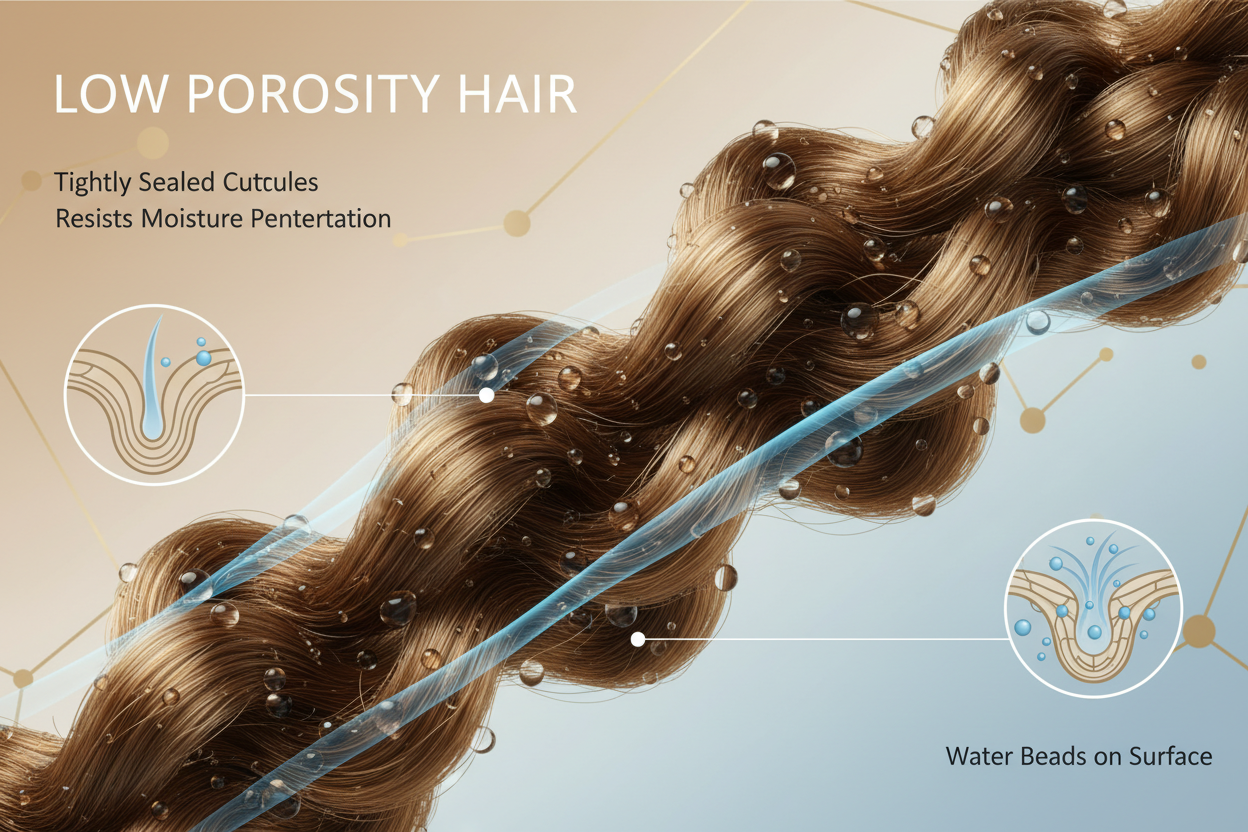
Low porosity hair means the cuticles—the tiny scales on each hair strand—are tightly packed and lay flat. This makes it hard for moisture and products to enter the hair shaft. Think of it like a roof with shingles pressed tightly together.
Water and oils just slide off instead of soaking in.
How To Tell If You Have Low Porosity Hair
Not sure about your hair type? Here are common signs of low porosity hair:
- Water beads up and rolls off your hair in the shower.
- Products tend to sit on top of your hair.
- Hair takes a long time to get wet.
- It also dries slowly.
- Protein-rich products make your hair stiff or straw-like.
A simple test: Place a clean strand of hair in a glass of water. If it floats for several minutes before sinking, your hair likely has low porosity.
Why Porosity Matters
Porosity affects how hair absorbs and retains moisture, oils, and styling products. Knowing your porosity helps you choose the best products and care routines. Low porosity hair needs special attention because it resists moisture, but can also trap buildup.
The Science Behind Low Porosity Hair
Each hair strand is covered with cuticles, which are like tiny scales. In low porosity hair, these cuticles are tightly closed. This protects hair from damage but also blocks moisture and products. Genetically, some people naturally have low porosity hair, but it can also result from overusing protein treatments or heat styling.
Hair Porosity Types Compared
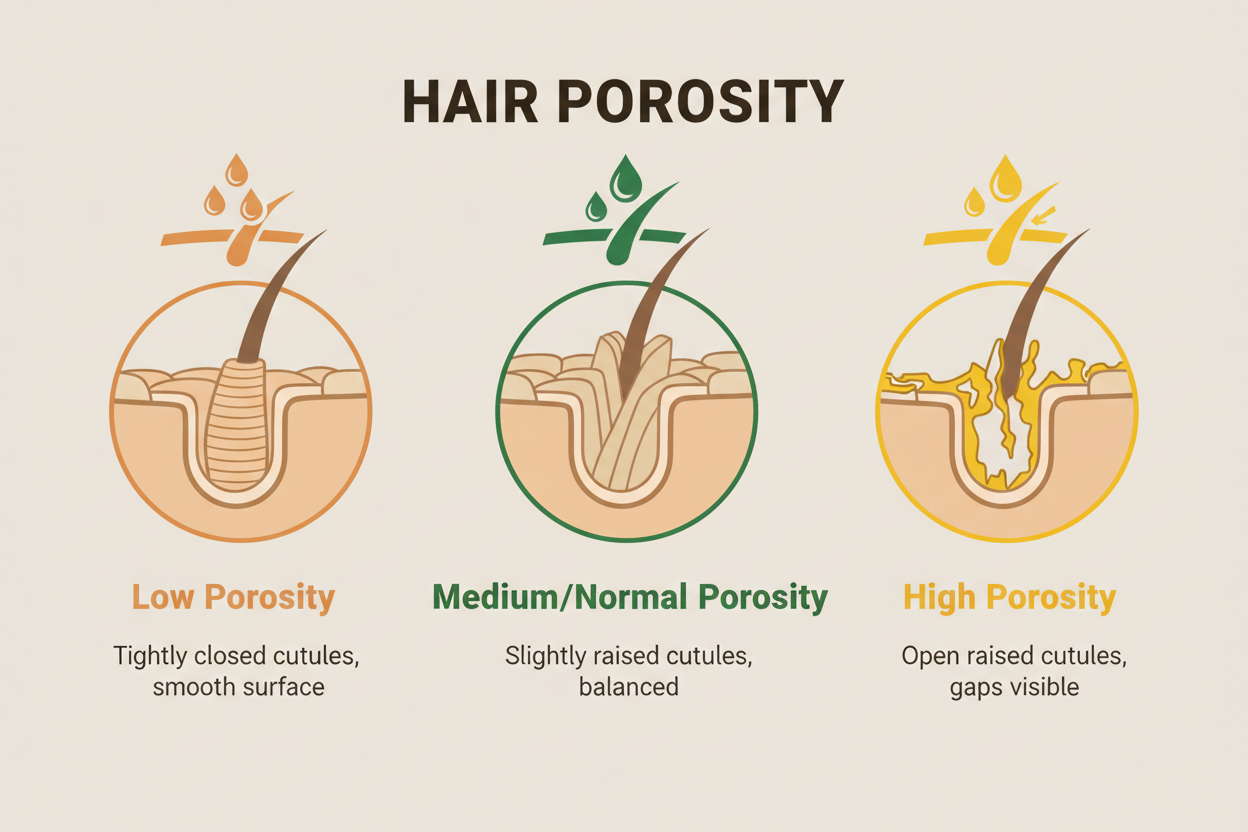
Understanding the three porosity types helps you see where low porosity fits:
| Porosity Type | Cuticle Structure | Moisture Absorption | Common Issues |
|---|---|---|---|
| Low | Tightly closed | Hard to absorb | Buildup, dryness |
| Medium | Slightly open | Balanced | Few problems |
| High | Very open/raised | Absorbs quickly, loses moisture fast | Frizz, dryness |
Credit: theorganibrands.com
Common Low Porosity Hair Problems
Low porosity hair comes with unique challenges. Understanding these problems is the first step to fixing them.
1. Product Buildup
Because the cuticle is tightly sealed, products often sit on the surface instead of soaking in. This can leave hair feeling greasy or sticky, even after washing.
2. Dryness Despite Moisturizing
Moisture struggles to enter the hair shaft. You may use leave-in conditioners and oils, but your hair still feels dry.
3. Slow Drying Time
Water does not enter or exit the hair quickly, so your hair can stay wet for hours after washing.
4. Difficulty Absorbing Oils And Conditioners
Heavy oils and thick creams just coat the hair, making it look weighed down instead of healthy.
5. Protein Sensitivity
Low porosity hair often reacts badly to protein-rich products. These can make hair stiff, hard, or brittle.
6. Dull Appearance
With moisture and products sitting on top, hair can look lifeless or lack shine.
7. Scalp Issues
Product buildup near the roots can clog pores, sometimes causing itchiness or flakes.
8. Styling Challenges
It can be tough to get certain styles to hold, especially if your hair is resistant to setting products.
9. Prone To Tangling
Because hair is dry and lacks slip, it may tangle more easily, especially with curls or waves.
10. Color Resistance
If you dye your hair, color might not penetrate well, leading to uneven results.
Why Low Porosity Hair Needs Special Care
Low porosity hair is not damaged; it is just different. The main challenge is getting moisture and nutrients inside the hair, not just on the surface. If you use the wrong products or routines, you can actually make things worse—more dryness, more buildup, and more frustration.
Non-obvious Insight 1: Over-washing Can Worsen Problems
Many people think washing more often will fix greasy or dull hair, but frequent washing strips away natural oils and encourages more buildup from products.
Non-obvious Insight 2: The Right Water Temperature Matters
Warm water opens the cuticle slightly, helping moisture and conditioners enter. Cold water can help seal in moisture at the end, but starting with warm water is key.
Everyday Solutions For Low Porosity Hair
You can’t change your hair’s natural porosity, but you can work with it. Here are proven ways to manage and improve low porosity hair health.
1. Clarify Regularly
Use a gentle clarifying shampoo once every 1-2 weeks to remove product buildup. Avoid harsh sulfates, which can dry out hair even more.
2. Use Lightweight, Water-based Products
Heavy creams and oils often sit on top of low porosity hair. Instead, choose light leave-in conditioners and sprays with water as the first ingredient.
3. Apply Heat When Deep Conditioning
Heat helps open the cuticle. After applying a deep conditioner, use a shower cap and sit under a hooded dryer or wrap a warm towel around your head for 15-30 minutes.
4. Avoid Protein Overload
Check product labels for protein ingredients like keratin, silk protein, or wheat protein. Use protein treatments rarely—once every 4-6 weeks if needed.
5. Choose The Right Oils
Some oils penetrate better than others. The best oils for low porosity hair are:
- Argan oil
- Grapeseed oil
- Baobab oil
- Sweet almond oil
Avoid heavy oils like castor or coconut oil, which can just sit on top.
6. Moisturize On Damp, Not Soaking Wet Hair
After washing, gently blot hair with a towel so it’s damp, not dripping. This helps products absorb better.
7. Limit Heavy Styling Products
Stay away from waxes, pomades, and thick gels. If you use styling products, go for lightweight mousses or sprays.
8. Try The “greenhouse Effect”
Apply a light moisturizer, cover your hair with a plastic cap, and let your body heat boost moisture absorption for 30-60 minutes.
9. Use Satin Or Silk Pillowcases
Cotton pillowcases absorb moisture and cause friction. Satin or silk helps keep hair hydrated and reduces breakage.
10. Detangle Gently
Use a wide-tooth comb or your fingers when your hair is damp and conditioned. This prevents breakage and reduces tangling.
Building A Low Porosity Hair Routine
Consistency is more important than perfection. Your routine doesn’t need to be complicated, but it should help your hair get and keep the moisture it needs.
Weekly Wash Day Routine Example
- Pre-poo: Apply a light oil or conditioner 20-30 minutes before shampooing to protect your hair.
- Shampoo: Use a gentle, sulfate-free shampoo or a clarifying shampoo if it’s your clarifying week.
- Deep condition with heat: Apply a deep conditioner, cover with a cap, and add gentle heat for better absorption.
- Rinse with cool water: This helps seal the cuticle and lock in moisture.
- Apply a leave-in conditioner: Choose a lightweight, water-based formula.
- Seal with a light oil: Lock in moisture without weighing hair down.
- Style as usual: Use minimal, lightweight products.
Daily And Nighttime Care
- Mist hair lightly with water or a water-based spray in the morning.
- At night, cover your hair with a satin/silk scarf or bonnet.
Best Products For Low Porosity Hair
The right products can make a big difference. Here are some top recommendations for each step of your routine.
| Step | Product Type | Recommended Features | Popular Example |
|---|---|---|---|
| Shampoo | Clarifying, gentle | Sulfate-free, removes buildup | Kinky Curly Come Clean |
| Conditioner | Moisturizing, light | Water-based, no heavy oils | Aussie Miracle Moist |
| Deep Conditioner | Hydrating, heat-friendly | Lightweight, glycerin-free | Mielle Babassu Oil & Mint |
| Leave-in | Spray or light cream | Water as first ingredient | Giovanni Direct Leave-In |
| Oils | Penetrating | Lightweight, non-greasy | Argan oil, grapeseed oil |
How To Moisturize Low Porosity Hair Properly
Getting moisture inside low porosity hair takes patience and technique. Here’s what works:
Use The Lco Method
LCO stands for Liquid, Cream, Oil. This method helps seal in moisture:
- Liquid: Start with water or a water-based leave-in.
- Cream: Add a lightweight, non-protein cream.
- Oil: Finish with a small amount of light oil to lock in moisture.
Note: Some people try LOC (liquid, oil, cream), but for low porosity hair, LCO usually works better.
Apply Products To Sections
Work in small sections to make sure every strand gets coated, especially if you have thick or curly hair.
Use Steam Or Heat
Steam opens the cuticle for better absorption. You can use a handheld steamer, a hooded dryer, or even the steam from a hot shower.
Don’t Overdo It
Too much product causes buildup. Start with small amounts—you can always add more if needed.
Credit: theorganibrands.com
Top Mistakes To Avoid With Low Porosity Hair
Many people make the same errors over and over. Avoiding these can save you years of frustration.
- Using too much product: Less is more. Build up happens fast with low porosity hair.
- Skipping clarifying: Even the best products can cause buildup if you don’t clarify regularly.
- Relying on heavy oils/butters: These rarely penetrate and can make hair greasy.
- Ignoring heat: Without heat, deep conditioners often don’t work as well.
- Not reading ingredients: Watch out for hidden proteins in products.
- Brushing dry hair: Always detangle damp with conditioner for less breakage.
- Assuming all dryness is from lack of oil: Sometimes it’s just product buildup blocking moisture.
Special Tips For Different Hair Types
Low porosity hair can be straight, wavy, curly, or coily. Each type needs a slightly different approach.
Straight Low Porosity Hair
- Use very light products—avoid anything that feels sticky or heavy.
- Rinse thoroughly to avoid residue.
Wavy Low Porosity Hair
- Use sprays and foams instead of creams.
- Scrunch in leave-ins for better definition.
Curly/coily Low Porosity Hair
- Section hair carefully for even product application.
- Consider steam for maximum moisture.
- Try the “greenhouse effect” for added hydration.
Fine Vs. Thick Low Porosity Hair
- Fine hair: Go even lighter with products. Overdoing it weighs hair down.
- Thick hair: Use a bit more product, but still avoid heavy oils and butters.
How To Handle Buildup
Buildup is one of the biggest issues for low porosity hair. It blocks moisture, causes itchiness, and makes hair look dull.
Signs Of Buildup
- Hair feels coated or sticky.
- Products stop working.
- Scalp feels itchy or flakes appear.
Fixing Buildup
- Use a clarifying shampoo once every 1-2 weeks.
- Try natural rinses like diluted apple cider vinegar (1 part vinegar to 5 parts water).
- Avoid co-washing only—mix in a regular shampoo now and then.
Deep Conditioning: The Right Way
Deep conditioning can transform low porosity hair, but only if done correctly.
When To Deep Condition
Aim for once a week, or every other week if your hair is very fine.
How To Deep Condition
- Wash hair with warm water to open the cuticle.
- Apply a lightweight, protein-free deep conditioner.
- Cover with a plastic cap.
- Use heat for 15-30 minutes.
- Rinse with cool water.
Choosing The Best Deep Conditioner
Look for formulas with ingredients like:
- Glycerin
- Aloe vera
- Panthenol
- Argan oil
Avoid heavy butters or too much protein.
Protective Styling For Low Porosity Hair
Protective styles help prevent breakage and retain moisture. However, be careful with product application.
- Choose styles that don’t pull tightly on the scalp.
- Moisturize before styling, not after.
- Refresh styles with a light mist, not heavy creams.
Popular styles include braids, twists, buns, and updos. If adding extensions, keep them light.
Coloring Low Porosity Hair
Coloring can be tricky because dye struggles to enter the tightly closed cuticle.
Tips For Better Results
- Always clarify before coloring to remove buildup.
- Consider a professional stylist for best results.
- Use heat during the coloring process if possible.
- Deep condition after coloring to restore moisture.
Caution
Repeated coloring can increase dryness. Space out dye sessions and always use gentle, ammonia-free formulas.
Trimming And Growth Tips
Low porosity hair is strong but still needs regular trims to prevent split ends.
- Trim every 8-12 weeks.
- Focus on moisture and gentle handling for better growth.
- Massage your scalp to boost blood flow.
Natural Remedies For Low Porosity Hair
You don’t need expensive products. Many natural ingredients work well for low porosity hair.
Light Oils
- Sweet almond oil: Absorbs easily and gives shine.
- Grapeseed oil: Lightweight and non-greasy.
Aloe Vera
Acts as a natural moisturizer and helps products absorb better.
Rice Water Rinses
Some people find that rice water (fermented or plain) adds shine and strength. Use sparingly to avoid protein overload.
Green Tea Rinses
Rich in antioxidants, green tea helps reduce buildup and soothes the scalp.
Diy Low Porosity Hair Masks
Homemade masks can be effective if you avoid heavy or protein-rich ingredients.
Moisturizing Avocado Mask
- 1 ripe avocado
- 1 tablespoon grapeseed oil
- 1 tablespoon aloe vera gel
Mash together, apply to clean, damp hair, cover with a cap, and leave for 20 minutes. Rinse thoroughly.
Banana And Honey Mask
- 1 ripe banana
- 2 tablespoons honey
- 1 tablespoon sweet almond oil
Blend until smooth, apply, leave for 20-30 minutes, then rinse.
Managing Low Porosity Hair In Different Climates
Humidity, dry air, and temperature all affect low porosity hair.
In Humid Weather
- Use anti-humidity sprays that are lightweight.
- Clarify more often, as sweat and moisture can cause extra buildup.
In Dry Or Cold Weather
- Deep condition more often.
- Use a humidifier indoors to maintain moisture in the air.

Credit: prakruth.care
Children With Low Porosity Hair
Kids’ hair is often even more delicate. Use very mild shampoos and lightweight conditioners. Detangle gently, and avoid heavy oils or butters.
Myths About Low Porosity Hair
There’s a lot of misinformation online. Here are some common myths:
- “Low porosity hair doesn’t need moisture.” False! It needs moisture, just applied correctly.
- “All oils are bad for low porosity hair.” Not true—just choose the right light oils.
- “You can change your hair’s porosity.” Porosity is mostly genetic, but you can manage it well.
Real-life Success Stories
Many people have transformed their low porosity hair by changing routines. For example, a woman with 4A coils struggled with dryness for years. She switched to water-based leave-ins, used heat during deep conditioning, and trimmed every 10 weeks. Now, her hair is softer, shinier, and easier to manage.
Another example: A man with straight, low porosity hair had constant flaking. He started clarifying every two weeks and switched to a satin pillowcase. His scalp cleared, and his hair looked healthier.
Comparing Low Porosity Hair With High Porosity Hair
Seeing the differences can help you understand your hair better.
| Feature | Low Porosity | High Porosity |
|---|---|---|
| Cuticle Structure | Tight, closed | Open, raised |
| Moisture Absorption | Slow | Quick |
| Moisture Loss | Slow | Fast |
| Best Oils | Light oils | Heavier oils |
| Common Problems | Buildup, dryness | Frizz, breakage |
When To See A Professional
If you have tried all the above and your hair is still not improving, it may be time to consult a trichologist (hair specialist) or a skilled stylist familiar with low porosity hair. Medical issues like scalp psoriasis or dermatitis can also look like hair product buildup, so getting a professional opinion is sometimes necessary.
Helpful Resources
For more in-depth information and ongoing research on hair porosity and care, visit the National Institutes of Health.
Frequently Asked Questions
What Are The Best Shampoos For Low Porosity Hair?
Look for gentle, sulfate-free shampoos that clarify without stripping your hair. Avoid heavy, creamy shampoos and use a clarifying shampoo every 1-2 weeks to remove buildup.
How Often Should I Moisturize Low Porosity Hair?
Moisturize lightly every day or every other day, using water-based sprays or mists. Avoid overloading your hair with creams or oils—start with less and add more only as needed.
Can I Use Coconut Oil On Low Porosity Hair?
Coconut oil is often too heavy and sits on top of low porosity hair. Instead, try argan oil or grapeseed oil for better absorption and less buildup.
How Do I Know If My Hair Has Too Much Protein?
If your hair feels stiff, hard, or straw-like after using products, you might be experiencing protein overload. Switch to protein-free products and focus on moisture until your hair feels softer.
Do I Need To Use Heat Every Time I Condition?
You don’t need heat for every conditioning session, but using gentle heat during deep conditioning helps your hair absorb moisture better. For regular conditioners, heat is less important but can still help.
Low porosity hair can be challenging, but with the right care, it can be strong, soft, and healthy. Small changes in your routine and products can make a big difference. Focus on gentle handling, lightweight moisture, and regular clarifying. With patience and consistency, your hair will thrive—no matter its porosity.