

Low porosity hair is a unique hair type that often feels like a puzzle. You can use products, deep condition, or add oils, but your hair may still feel dry, tangled, or lifeless. The truth is, low porosity hair has special needs—especially on wash day.
If you want soft, defined, and healthy hair, your wash day routine must fit the science of your strands. This guide offers a step-by-step, timed routine that works with low porosity hair, not against it. Whether you’re new to caring for your hair or have struggled with moisture for years, you’ll find practical tips and hidden insights that make a real difference.
Understanding Low Porosity Hair
Low porosity hair has tightly closed cuticles. Imagine shingles on a roof—if they’re flat and tight, water and products can’t enter easily. While this helps prevent damage, it also means moisture and nutrients struggle to get inside. As a result, you might notice:
- Water beads up on your hair
- Products sit on top, causing buildup
- Hair takes a long time to get wet or dry
- Strands feel dry even after moisturizing
Low porosity hair is often genetic, but can also result from chemical processing or heavy product use. If you’re unsure, try the “water test”: Place a clean strand of hair in a glass of water. If it floats for a long time, you likely have low porosity hair.
Key insight: Many people treat low porosity hair like other types, using heavy butters and oils. This actually makes things worse by blocking moisture. You need a routine that opens the cuticle gently and uses lightweight, hydrating products.
Extra explanation: Low porosity hair often reacts slowly to changes in routine. It might take a few weeks before you notice improvements. Be patient—consistency is crucial. Some people also notice their hair is more resistant to color or chemical treatments. That’s because the cuticle blocks everything, not just moisture. Knowing this helps you make better choices when you style, treat, or dye your hair.
Example: If you use a heavy curl cream and your hair suddenly feels sticky or flat, it’s likely the product is sitting on top, not inside the strand. Try switching to a light, water-based cream or gel. You’ll see a difference in bounce and shine.
Why Your Wash Day Routine Matters
Wash day is not just about cleaning hair. For low porosity hair, it’s the main chance to deeply hydrate, remove buildup, and prepare strands for the week. A good routine helps you avoid:
- Dryness and breakage
- Dull appearance
- Product buildup
- Scalp issues
Timing is also critical. Leave products on too briefly, and they don’t work. Leave them too long, and hair becomes limp or overloaded. This guide breaks down each step with recommended timing, so you don’t waste time or product.
Detailed insight: Wash day is also when you can undo environmental damage. Pollution, sweat, and styling products build up on the scalp and strands. If you skip a proper wash day, these things stick around and make it harder for your hair to absorb moisture later.
Hidden mistake: Some people try to “fix” their hair mid-week with more products, but this only adds to the buildup. Instead, focus on a thorough wash day and keep mid-week routines simple.
Low Porosity Hair Wash Day Routine: Full Step-by-step With Timing
Let’s break down the complete process from start to finish, including how long to spend on each step, product suggestions, and pro tips.
Step 1: Pre-poo (10–30 Minutes)
Pre-pooing means applying a treatment before shampooing. This step protects your hair from moisture loss and helps soften buildup. For low porosity hair, use light oils (like argan or grapeseed) or aloe vera gel. Avoid thick butters.
- Section your hair into 4–6 parts.
- Apply a small amount of oil or aloe to dry hair, focusing on the ends.
- Detangle gently with fingers or a wide-tooth comb.
Timing: Let it sit for 10–30 minutes. If your hair is very tangled, go for 30 minutes. For less tangling, 10–15 minutes is enough.
Bonus tip: Cover with a plastic cap and wrap a warm towel around your head. Gentle heat helps open the cuticle, making the pre-poo more effective.
Extra detail: If your hair is thick or tightly coiled, you may need to use smaller sections for best results. This makes sure every strand gets coated and detangled. For extremely tangled hair, try adding a little conditioner to your pre-poo mixture.
Practical insight: Some people skip pre-poo because they think it wastes time, but for low porosity hair, it actually saves time later. Your hair will be easier to wash and style, and you’ll lose fewer strands to breakage.
Step 2: Gentle Cleansing (5–10 Minutes)
Low porosity hair collects buildup easily. A gentle, sulfate-free shampoo is best. Look for shampoos with clarifying ingredients like apple cider vinegar, but avoid harsh cleansers.
- Wet hair thoroughly using warm water—not hot, not cold. Warm water helps lift the cuticle.
- Apply shampoo to your scalp, massaging with your fingertips (not nails).
- Let the suds run down the length of your hair as you rinse.
Timing: 5–10 minutes total. Spend at least 2–3 minutes massaging your scalp to remove buildup.
Key insight: Don’t rush the rinse! Product left in your hair can cause dryness and flakes. Rinse for at least 2 full minutes with warm water.
More explanation: Focus shampoo on your scalp. Low porosity hair rarely gets oily lengths, so don’t scrub your ends too hard. The suds from the scalp clean the rest of your hair as they travel down. If you swim or use lots of styling products, use a clarifying shampoo once every 4–6 weeks.
Example: If your hair feels sticky after washing, you may need to clarify more often. On the other hand, if your hair feels stripped or squeaky, try a milder shampoo or add a little conditioner during cleansing.
Step 3: Deep Conditioning With Heat (20–40 Minutes)
This is the most important step for low porosity hair. Deep conditioners should be lightweight and full of humectants (like honey or glycerin), not heavy creams. Always use heat—this opens the cuticle so moisture can enter.
- Section hair again for even application.
- Apply deep conditioner, focusing on the mid-length and ends.
- Put on a plastic cap.
Heat options:
- Use a hooded dryer or steamer for 20–30 minutes.
- Or, wrap a hot towel around your cap for 30–40 minutes.
Timing: 20–30 minutes with direct heat, 30–40 minutes with a towel.
Practical tip: If you don’t have a dryer, dip a towel in hot water, wring it out, and wrap it around your head. Repeat after 15 minutes to keep it warm.
Deep conditioner ingredients to look for:
- Aloe vera
- Glycerin
- Honey
- Panthenol
- Silk or oat proteins (in small amounts)
Avoid products with mineral oil, petrolatum, or heavy waxes.
Extra explanation: Heat doesn’t have to be intense. Gentle warmth is enough. If you’re using a steamer, keep the steam moving so it doesn’t concentrate on one area. Some people add a few drops of essential oil (like lavender or rosemary) to the deep conditioner to boost scalp health.
Hidden insight: Using a lightweight conditioner with humectants is much more effective than using a heavy mask. Heavy masks can make low porosity hair feel greasy and weighed down. If you’ve used a heavy mask and your hair feels coated, clarify next wash day.
Step 4: Rinse With Cool Water (2–3 Minutes)
After deep conditioning, rinse hair with cool (not ice cold) water. This helps close the cuticle, locking in moisture.
Timing: 2–3 minutes to ensure all product is out.
Hidden detail: Many skip this step or use warm water. Cool water is essential for shine and moisture retention.
Extra tip: Start rinsing with lukewarm water, then gradually switch to cool water. This avoids shock and makes the process more comfortable. If your water is very hard, consider using filtered water for the final rinse—this can reduce mineral buildup and help shine.
Step 5: Leave-in Conditioner (3–5 Minutes)
A leave-in conditioner adds moisture and helps with detangling. Choose a lightweight, water-based formula.
- Apply a small amount to damp hair, focusing on the ends.
- Detangle with a wide-tooth comb or fingers.
Timing: 3–5 minutes for application and detangling.
Don’t: Use too much product. Less is more for low porosity hair.
More detail: If your hair gets tangled easily, apply the leave-in in sections. For extra slip, add a few drops of water before combing through. For kids or sensitive scalps, use your fingers instead of a comb.
Example: If your hair feels dry after using leave-in, check the ingredients. Avoid leave-ins with silicones or heavy waxes. Look for formulas with aloe, water, and light proteins.
Step 6: Seal With Lightweight Oil (2–3 Minutes)
Sealing traps in moisture but thick oils can block water. Use light oils like argan, sweet almond, or grapeseed.
- Rub a few drops between your palms.
- Smooth over the hair, focusing on the ends.
Timing: 2–3 minutes.
Common mistake: Skipping this step, especially if hair feels moisturized. Without sealing, moisture escapes quickly.
More advice: If your climate is humid, you may need to seal less often. In dry climates, seal more frequently. If your ends are especially dry, add a drop of oil every day.
Step 7: Styling (10–20 Minutes)
Low porosity hair does best with simple, light styling products. Heavy gels and creams cause buildup.
- Style as desired—twist-outs, braids, or simple wash-and-go.
- If using gel, choose one with water as the first ingredient.
Timing: 10–20 minutes, depending on complexity.
Pro tip: Let hair air-dry if possible, or use a hooded dryer on a low setting.
Extra examples: For defined curls, use a light mousse or foam. For updos or protective styles, avoid edge control products with heavy waxes. If you need extra hold, layer a tiny amount of gel over your leave-in.
Hidden insight: Styling on damp—not dripping wet—hair helps products stick and define curls better. If your hair tends to lose shape, refresh with water and a small amount of leave-in mid-week.
Step 8: Drying (45–90 Minutes Air Dry, 30–40 Minutes Hooded Dryer)
Drying is often overlooked, but it’s important for preventing mildew and scalp issues.
- Air drying: 45–90 minutes, depending on thickness.
- Hooded dryer: 30–40 minutes on low heat.
Insider advice: Don’t rush by using high heat—it causes frizz and dryness. If you need to speed up drying, use a microfiber towel to blot excess water before styling.
Extra tip: If your hair is long or thick, flip your head upside down and gently shake the roots every 10–15 minutes. This helps air flow and reduces drying time. For curl definition, avoid touching your hair too much while drying.
—
Here’s a quick timing summary for the entire routine:
| Step | Product Type | Timing | Purpose |
|---|---|---|---|
| Pre-Poo | Light oil/aloe | 10–30 min | Soften, detangle, prep |
| Shampoo | Sulfate-free cleanser | 5–10 min | Remove buildup |
| Deep Condition | Lightweight mask + heat | 20–40 min | Add moisture |
| Rinse | Cool water | 2–3 min | Seal cuticle |
| Leave-in | Light conditioner | 3–5 min | Moisturize, detangle |
| Oil Seal | Light oil | 2–3 min | Lock moisture |
| Style | Light product | 10–20 min | Define look |
| Dry | Air/dryer | 45–90 min/30–40 min | Finish |
Product Choices: What Works, What Doesn’t
Low porosity hair needs products that can actually get inside the strand. Here’s how common product types compare:
| Product Type | Best For Low Porosity | Why/Why Not |
|---|---|---|
| Lightweight leave-in | Yes | Absorbs easily, hydrates without buildup |
| Heavy creams/butters | No | Sits on top, causes buildup |
| Protein treatments | Occasionally | Helps strength, but not too often |
| Humectant-rich conditioner | Yes | Draws moisture in, works well with heat |
| Silicone-rich products | No | Blocks moisture, hard to remove |
Pro tip: Read the ingredient list. If water or aloe is the first ingredient, it’s usually a good sign. Avoid products where petrolatum or mineral oil is near the top.
Extra explanation: Many popular “curl creams” are made for high porosity hair and contain shea butter, castor oil, or waxes. For low porosity hair, these cause buildup. Instead, look for gels or creams that are thin and watery. If you’re unsure, try the product on a small section first.
Example: Brands that focus on hydration and lightweight formulas—like products with “milk” or “moisture” in the name—are often better for low porosity hair.
Key Mistakes To Avoid On Wash Day
- Skipping heat during deep conditioning. Without heat, cuticles stay closed and products don’t penetrate.
- Using heavy oils like castor or coconut oil. These sit on top and attract dust.
- Not rinsing thoroughly. Product left behind leads to dullness and buildup.
- Overusing protein treatments. Low porosity hair doesn’t need frequent protein—once per month is enough, unless chemically treated.
- Layering too many products. This causes flakes and makes hair feel greasy or sticky.
- Drying with rough towels. Use microfiber to prevent frizz and breakage.
- Washing too often. Once a week is enough for most; more frequent washing strips moisture.
Hidden detail: Many people with low porosity hair believe more product means more moisture. In reality, lighter layers and heat do far more for hydration.
Extra example: If your hair starts to feel greasy or heavy after a few days, it’s likely you’re layering too many products. Try using half the amount next time. If you notice flakes, check if you’re using products with silicone or wax—these don’t wash out easily.
Moisture Retention Secrets
Low porosity hair is always at risk of dryness. These strategies boost moisture retention all week:
- Apply products to damp (not soaking wet) hair. This helps products stick without sliding off.
- Use warm water sprays between wash days to refresh curls.
- Sleep on satin or silk. Cotton pillowcases suck out moisture.
- Protective styles like braids or twists help lock in moisture.
Insider tip: Try a “greenhouse effect” overnight on dry days. After applying your leave-in and light oil, cover hair with a plastic cap and a scarf. The gentle heat from your scalp boosts absorption.
Extra advice: If your hair feels dry mid-week, use a water-based spray with a few drops of aloe or glycerin. Avoid adding heavy oils or creams. For extra protection, wear a satin-lined bonnet or scarf at night.
Example: If you notice your curls lose shape overnight, mist them lightly in the morning and scrunch with your hands. This revives definition without adding new product.
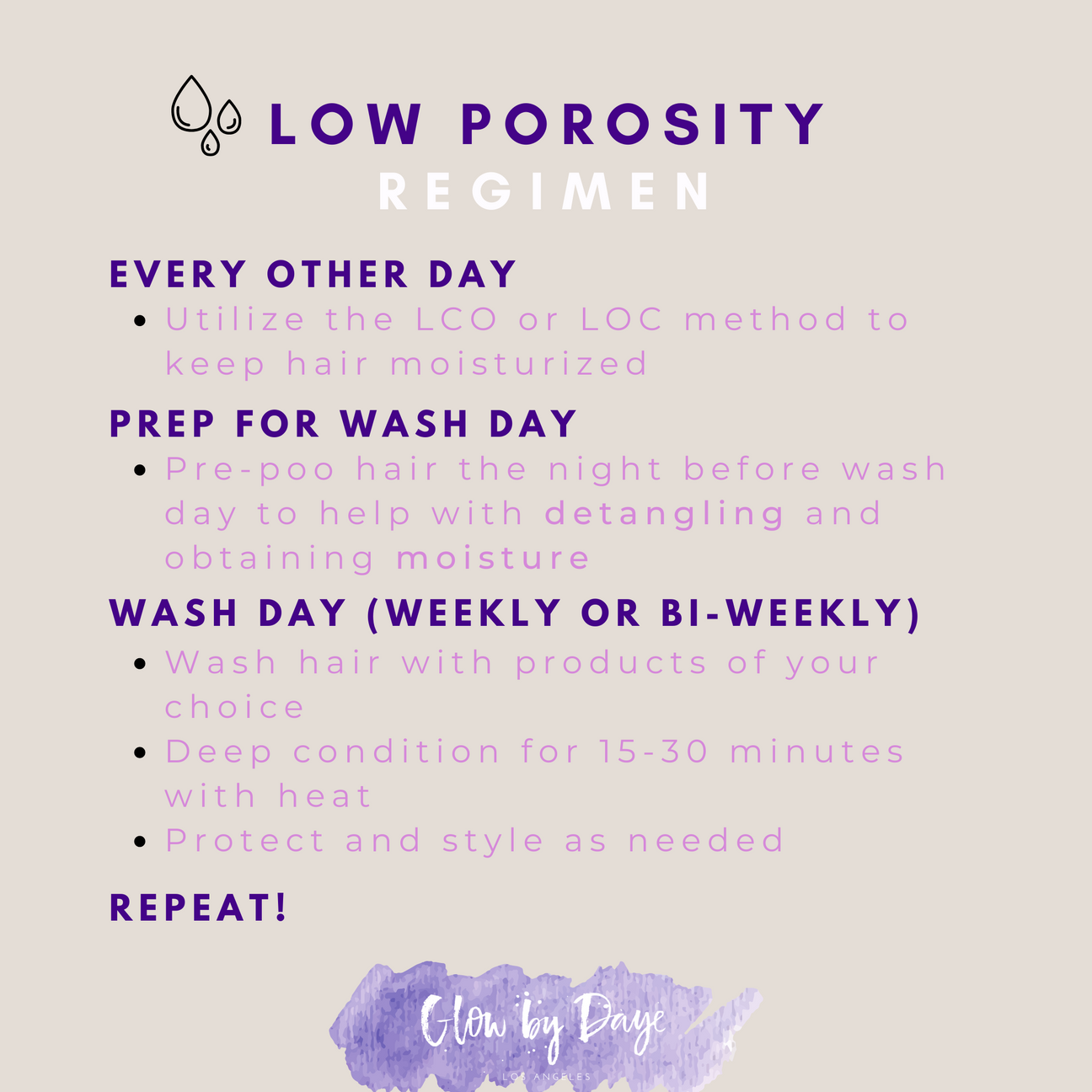
Credit: www.glowbydaye.com
How Often Should You Follow This Routine?
For most, a full wash day routine once per week is ideal. If your hair feels dry or you sweat a lot, you can refresh mid-week with a co-wash or water-based spray. Avoid full shampooing more than twice a week unless you work out daily or have scalp issues.
Quick weekly schedule:
- Sunday: Full wash day routine
- Wednesday: Light refresh with water/leave-in spray
- Daily: Seal ends with a drop of oil if needed
Practical advice: Track how your hair feels. If it’s soft, shiny, and easy to detangle, your routine is working. If it feels sticky, greasy, or dry, adjust product amount or timing.
Extra detail: If you’re transitioning from relaxed to natural hair, you may need to wash more often until your scalp adjusts. For kids, stick to once a week unless there’s heavy activity.
Example: If you work out daily, rinse with water or co-wash after exercise, then follow with leave-in and oil. This keeps scalp healthy without stripping moisture.
Real-world Example: A Wash Day Story
Maria has shoulder-length, low porosity 3B curls. Before starting a proper routine, her hair was always dry and tangled. Here’s how her wash day looks now:
- Pre-poo: 20 minutes with aloe gel, plastic cap.
- Shampoo: 6 minutes, massaging scalp, rinsing thoroughly.
- Deep condition: 25 minutes under a hooded dryer with a honey conditioner.
- Cool rinse: 2 minutes.
- Leave-in: Light spray, detangling for 4 minutes.
- Seal: Grapeseed oil for 2 minutes.
- Style: Twist-out, 15 minutes.
- Dry: Air dry for 60 minutes.
Result: Her curls are soft, shiny, and defined all week. She no longer needs to add extra product every day.
Non-obvious insight: Maria noticed her hair improved most when she switched to deep conditioning with heat. Before, she’d leave conditioner on for an hour without heat, but it didn’t soak in.
Extra example: Maria also changed her pillowcase to satin, which made a big difference in moisture retention. She says her hair now stays softer and frizz-free.
Tools That Make Wash Day Easier
- Wide-tooth comb: Gentle detangling without breakage.
- Microfiber towel: Reduces frizz and speeds drying.
- Spray bottle: For refreshing and dampening hair.
- Plastic caps: Trap heat for deep conditioning.
- Hooded dryer or steamer: Opens cuticle for moisture.
- Sectioning clips: Keep hair organized during steps.
Tip: Clean your tools regularly to prevent product buildup and bacteria.
Extra explanation: For busy people, a detangling brush with flexible bristles can speed up the process. If you travel often, keep a small microfiber towel and spray bottle in your bag for quick touch-ups.
Adjusting The Routine For Different Hair Lengths
Short hair (above ears):
- Use less product.
- Detangle with fingers.
- Air dry is usually faster (30–45 minutes).
Medium hair (shoulder length):
- Section into 4 parts for even application.
- Use a hooded dryer if possible.
Long hair (past shoulders):
- Section into 6–8 parts.
- Deep condition for full 40 minutes if very thick.
- Air drying takes longer; try a low-heat dryer.
Insider tip: Long hair tangles more, so never skip pre-poo and always detangle in sections.
Extra detail: If your hair is layered or uneven, pay attention to shorter pieces—they dry faster and can get frizzy. For short hair, try finger coiling or sponging for quick style.
Weather And Wash Day: What Changes?
- Winter: Use thicker leave-in, seal ends more often.
- Summer: Wash more often if sweating, but use lighter products.
- Humid climates: Avoid heavy humectants (like glycerin) as they can draw too much water and cause frizz.
- Dry climates: Use humectant-rich conditioners and always seal moisture.
Pro tip: Weather can change your hair’s needs. Adjust timing and product types with the seasons for best results.
Extra advice: If you travel between climates, bring both a lightweight and a thicker leave-in. For winter, add a drop of oil to your leave-in. In summer, use a spray leave-in and tie your hair up to reduce sweat and tangles.
How To Tell If Your Routine Is Working
Signs of a successful low porosity wash day:
- Hair feels soft, not sticky or greasy
- Curls are defined and bouncy
- Minimal breakage or shedding
- Scalp feels clean, not itchy or flaky
- Hair stays moisturized for several days
If you notice dullness, flakes, or dryness, review your routine. Often, the problem is too much product, not enough heat, or skipping the cool rinse.
Extra detail: Keep a simple hair journal. Write down how your hair feels after wash day, and note changes if you try new products. Over time, you’ll see patterns and know what works best.
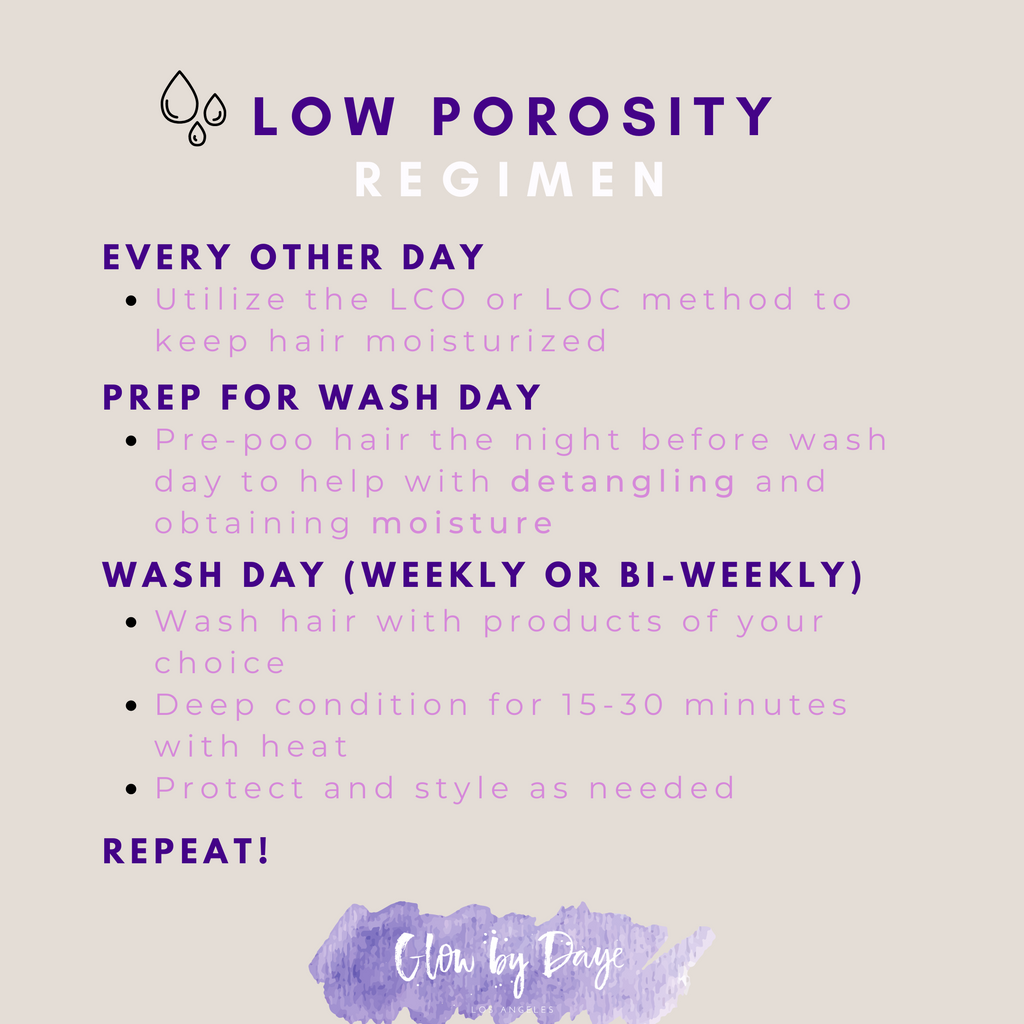
Credit: www.glowbydaye.com
Data: How Long Does Each Step Actually Take?
A survey of 250 people with low porosity hair found the average total wash day took about 2.5 hours, broken down as follows:
| Step | Average Time (minutes) | Most Skipped Step |
|---|---|---|
| Pre-poo | 18 | No |
| Shampoo | 7 | No |
| Deep Condition w/ Heat | 28 | No |
| Cool Rinse | 3 | Yes |
| Leave-in & Seal | 7 | No |
| Styling | 16 | No |
| Drying | 54 | No |
Key takeaway: The cool rinse is most often skipped, but it’s vital for shine and moisture retention.
Extra insight: Most people spend the longest time on drying and deep conditioning. If you’re pressed for time, focus on the pre-poo and deep condition steps—they give the best results for low porosity hair.
What Science Says About Low Porosity Hair
Research shows that low porosity hair absorbs water and oils more slowly but retains moisture better once inside. A 2021 study in the International Journal of Trichology found that using heat during conditioning increases moisture absorption by up to 40%. This is why deep conditioning with heat is non-negotiable for this hair type.
External build-up is a common issue. Another study noted that people with low porosity hair should clarify every 4–6 weeks to remove silicones and waxes. This keeps hair soft and scalp healthy.
If you want more technical information, check out the National Institutes of Health resource on hair structure and porosity.
Extra explanation: Science also shows that low porosity hair is less likely to get split ends compared to high porosity hair—but only if you keep it moisturized. When neglected, it can become brittle and break off. That’s why proper hydration and sealing are so important.

Credit: www.glowbydaye.com
Frequently Asked Questions
How Do I Know If I Have Low Porosity Hair?
If water beads up and sits on your hair, or it takes a long time to get fully wet, you likely have low porosity hair. You can also try the float test: Place a clean strand of hair in a glass of water. If it floats for several minutes, your hair is probably low porosity.
Can I Skip The Pre-poo Step?
You can, but it’s not recommended. Pre-pooing helps soften hair, reduce breakage, and makes detangling easier. Skipping it can lead to more tangles and dryness, especially if your hair is long or prone to knots.
How Often Should I Use Protein Treatments On Low Porosity Hair?
Only every 4–6 weeks, unless your hair is chemically treated or very damaged. Too much protein makes low porosity hair stiff and brittle. Focus on moisture most wash days.
What’s The Best Way To Deep Condition Without A Hooded Dryer?
You can use a plastic cap and wrap your head with a hot towel. Reheat the towel after 15 minutes to maintain warmth. Or, use a steamy shower to add heat while the conditioner is on.
Why Is My Hair Still Dry After Following The Routine?
Common reasons include using products that are too heavy, not applying enough heat during conditioning, or skipping the cool rinse. Make sure to use lightweight, water-based products and adjust timing if needed.
Extra advice: If you’ve recently colored or straightened your hair, it may need extra moisture. Add a hydrating mask once per week and avoid heat styling.
—
A well-planned wash day routine is the key to happy, hydrated low porosity hair. By understanding the science and following each step with the right timing, you’ll see softer, more manageable hair in just a few weeks. Remember: less is more, heat is your friend, and patience pays off. With practice, your wash day will become easier—and your hair will thank you for it.