

Many people first hear about hair porosity when they try to solve problems with dryness, frizz, or slow hair growth. Maybe your hair never seems to stay moisturized, or products just sit on the surface without soaking in. You discover the idea of low, medium, or high porosity and wonder: *Can I actually change my hair porosity, or am I stuck with it forever?* This question leads to a lot of confusion and myths, especially since porosity affects nearly every part of your hair routine.
Understanding the truth about hair porosity is not just for beauty experts. Whether you have curly, straight, wavy, or coily hair, porosity decides how much water, oil, and nutrients your hair absorbs and keeps. The answer is not as simple as a yes or no.
But once you really understand what porosity is, what changes it, and what you can do about it, you can care for your hair much better. Let’s break down the science, common beliefs, and real-world solutions about changing your hair porosity.
What Is Hair Porosity?
Before asking if you can change your porosity, it’s important to know what it actually means. Hair porosity is how well your hair can soak up and keep moisture. This depends on the outer layer of your hair strand, called the cuticle.
The cuticle has tiny scales, almost like shingles on a roof. If these scales lay flat and tight, your hair is called low porosity. If they are partly raised, it’s medium porosity. If they are very open or damaged, you have high porosity hair. This affects how fast your hair gets wet, dries, and absorbs products.
Porosity is not the same as hair texture (straight, curly) or thickness (fine, coarse). Two people can have the same curl pattern but very different porosities, which means they need different hair care.
Types Of Hair Porosity
Understanding the types helps you see why people want to change their porosity:
1. Low Porosity
Cuticles are tight and closed. Water and products have trouble entering, but once inside, moisture stays trapped.
2. Medium (normal) Porosity
Cuticles are slightly open—just enough for moisture to get in and stay balanced. This type is easiest to manage.
3. High Porosity
Cuticles are raised or damaged. Hair quickly absorbs moisture but loses it just as fast. This often means frizzy, dry, or easily tangled hair.
Here’s a comparison to make it even clearer:
| Porosity Type | Cuticle Condition | Moisture Absorption | Moisture Retention | Common Issues |
|---|---|---|---|---|
| Low | Tight, flat | Slow | High | Product build-up, hard to hydrate |
| Medium | Slightly raised | Balanced | Balanced | Easy to style, low issues |
| High | Very raised/damaged | Fast | Low | Dryness, frizz, tangling |
What Determines Your Hair Porosity?
Most people think hair porosity is only genetic, but that’s not the full story. Yes, your genes give you a starting point. Some people are born with naturally low, medium, or high porosity hair.
But porosity changes over time due to:
- Chemical treatments (bleaching, coloring, relaxing)
- Heat styling (flat irons, blow dryers)
- Environmental damage (sun, wind, chlorine, pollution)
- Mechanical damage (brushing, tight hairstyles)
This means your *natural* porosity is set by genetics, but your *actual* porosity can shift up or down because of how you treat your hair. For example, repeated bleaching lifts the cuticle, making hair high porosity. On the other hand, heavy product use can coat the hair and make it act more like low porosity.
Non-obvious insight: Even things like hard water or swimming in pools can raise your porosity over time due to mineral or chlorine buildup.
Can You Change Your Hair Porosity Permanently?
This is the main question: *Are you stuck with your hair porosity, or can you really change it?* The answer is: You can’t change your natural porosity, but you can change your current porosity—sometimes for a long time, sometimes only temporarily.
Here’s why:
- The structure of your hair strand is mostly decided when it grows out of your scalp.
- You can damage or coat the cuticle, which changes how your hair acts.
- Once a hair strand is damaged (e.g., cuticle is chipped, lifted, or missing), you can’t make it “low porosity” again. You can only protect the remaining cuticle or coat the hair to smooth it.
- New hair that grows from your scalp will have your natural porosity.
So, you can *increase* porosity permanently (by damage), but you can only *lower* porosity temporarily (by coating or sealing the strand). This is a key point most beginners miss.
How Hair Porosity Changes Over Time
Even if you start with one porosity, your hair can change, strand by strand, over your life:
- Frequent coloring/bleaching: Raises porosity a lot. You may notice hair gets drier and rougher.
- Heat styling: Using high heat on wet hair can crack or lift the cuticle.
- Aging: As you age, hair may become more porous due to slower oil production and cuticle wear.
- Product buildup: Heavy use of silicones or oils can temporarily make hair less porous (harder for water to get in).
Not all changes are bad. Some people use special treatments (like protein or apple cider vinegar) to *mimic* lower porosity by smoothing the cuticle, even if the change isn’t permanent.
Insider tip: If you grow out your hair after years of dyeing, you may have both high porosity ends and low porosity roots at the same time.
How To Test Your Hair Porosity
You may wonder, *How do I know my hair’s porosity right now? * There are a few tests, but each has limits.
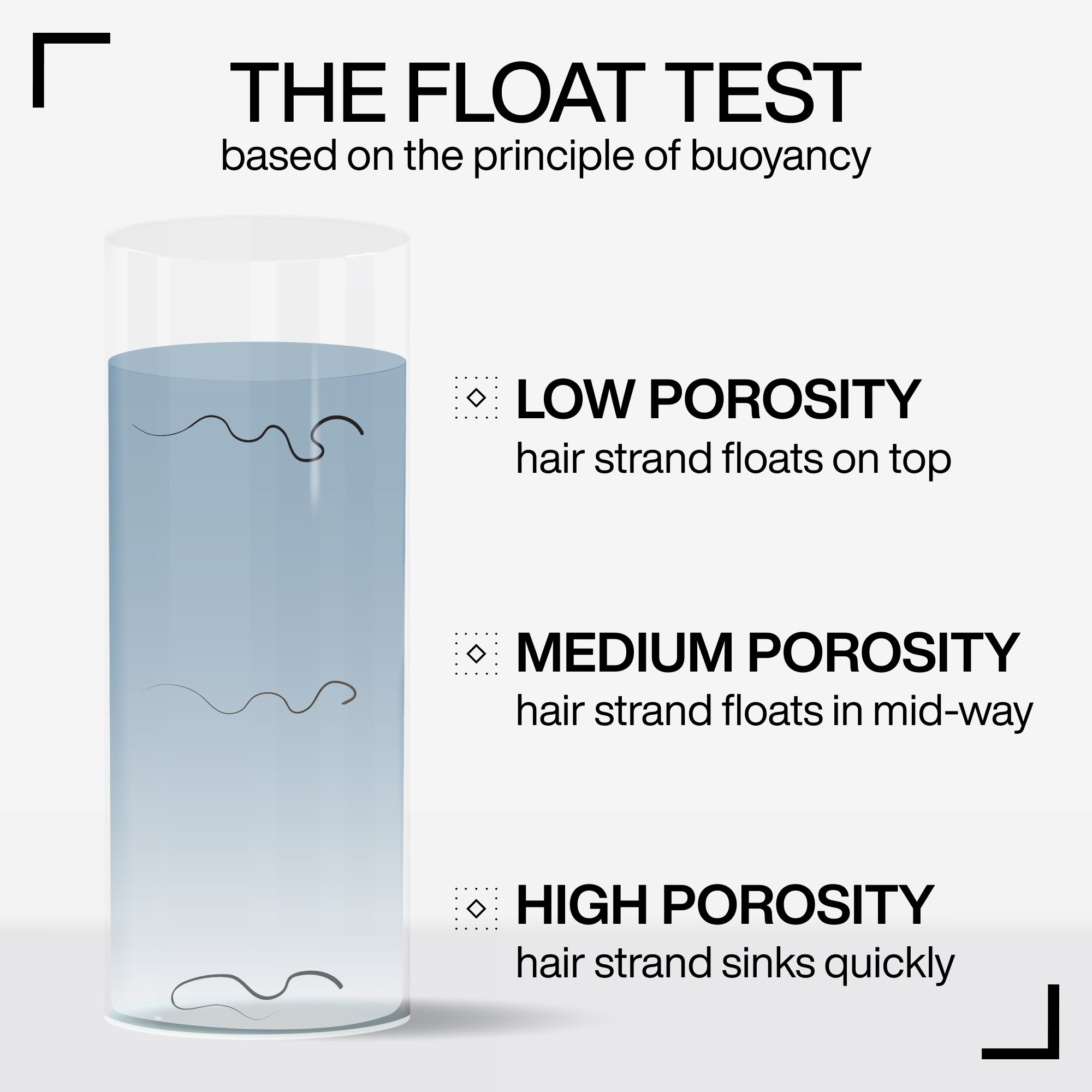
1. Float Test:
Place a clean strand of hair in a glass of water. Wait 5 minutes.
- If it floats, you likely have low porosity.
- If it sinks slowly, it’s medium.
- If it sinks quickly, it’s high porosity.
*Note:* Oils and products can affect this test.
2. Spray Test:
Spray water on clean hair.
- If water beads up on top, it’s low porosity.
- If it absorbs easily, it’s high porosity.
- Touch Test:
Slide your fingers up a hair strand.
- If it feels smooth, cuticle is flat (low).
- If it feels bumpy, cuticle is raised (high).
- How Hair Reacts to Products:
- Low porosity: Products sit on top, hair takes a long time to get wet.
- High porosity: Hair soaks up products/water quickly, dries fast.
Pro tip: Test strands from different parts of your head. Porosity can vary in different areas.
Can You Lower High Porosity Hair?
You can’t change the core structure, but you can make high porosity hair act more like medium or low porosity. Here’s how:
1. Use Protein Treatments
Protein fills in gaps in the cuticle, making hair smoother. This helps seal raised cuticles, reducing porosity temporarily. Use a protein mask once every 1-2 weeks. Be careful—too much protein can make hair stiff.
2. Deep Conditioning
Deep conditioners with oils and butters help seal the cuticle. Look for ingredients like shea butter, coconut oil, or argan oil.
3. Acidic Rinses
Rinses like apple cider vinegar or lemon juice lower the pH, flattening the cuticle. This creates a smoother, shinier surface and helps hair hold moisture.
4. Sealants
After washing, use an oil or silicone serum to “seal” the cuticle and keep moisture inside. Good options are jojoba oil, olive oil, or lightweight silicones.
5. Gentle Handling
Avoid rough towels, tight hairstyles, or over-brushing. All of these can lift the cuticle more.
6. Avoid Excessive Heat And Chemicals
The less you bleach, color, or heat style, the less your cuticle will be damaged.
Non-obvious insight: Water quality matters! Hard water has minerals that can raise porosity, so consider a shower filter if you have hard water at home.
Can You Raise Low Porosity Hair?
Most people want to lower porosity, but some find low porosity hair too hard to hydrate or style. Here’s how to *temporarily* raise the cuticle:
1. Use Heat With Treatments
Heat helps open the cuticle, letting deep conditioners or oils enter. Use a shower cap and a warm towel, or sit under a hooded dryer for 10-20 minutes.
2. Clarifying Shampoos
Clarifiers remove product buildup, letting moisture in. Use once a month if you notice hair feeling coated or stiff.
3. Use Lightweight Products
Heavy butters and oils can weigh down low porosity hair. Try lighter products like aloe vera, glycerin, or water-based leave-ins.
4. Avoid Over-conditioning
Too much conditioner can build up on low porosity hair, making it harder for moisture to get in.
Insider tip: Some people use baking soda rinses to raise the cuticle, but this can be damaging if done too often.

Credit: www.haiirology.com
How To Care For Each Porosity Type
The best care routine depends on your porosity. Here’s a quick guide:
| Porosity | Best Practices | Products to Use | Products to Avoid |
|---|---|---|---|
| Low | – Use heat with treatments – Clarify monthly – Use lightweight products |
Water-based leave-ins, aloe vera, light oils (grapeseed) | Heavy butters, silicones, thick oils |
| Medium | – Balance moisture/protein – Regular trims – Protect from sun/heat |
Moisturizing shampoos, balanced conditioners | Excessive protein, harsh clarifiers |
| High | – Protein treatments – Acidic rinses – Seal with oil/serum |
Deep conditioners, oils, protein masks | High-heat tools, harsh chemicals |
Can Diet Or Supplements Change Hair Porosity?
You might hear that eating certain foods or taking vitamins will “fix” your porosity. The truth is, diet affects new hair growth, not hair that’s already grown out. Eating a balanced diet with enough protein, vitamins, and minerals can help new hair grow stronger and healthier, but it won’t repair raised cuticles on old hair.
Common mistake: Expecting biotin or collagen pills to change the porosity of hair that’s already grown out. They can help with new growth, but not with existing damage.
Myth-busting: Common Misunderstandings About Hair Porosity
Many people believe things about hair porosity that just aren’t true. Let’s clear up some popular myths:
- Myth: Once hair is high porosity, it’s ruined forever.
Fact: While you can’t glue the cuticle back, you can coat or fill in gaps to help hair act healthier.
- Myth: Low porosity hair doesn’t need moisture.
Fact: All hair needs moisture, but you have to use heat or lighter products to get it inside.
- Myth: Hair porosity is fixed for life.
Fact: It can change with time, damage, or even how you style and wash your hair.
- Myth: Only curly hair has high porosity.
Fact: Any hair type can be low, medium, or high porosity.
- Myth: Coconut oil is good for all porosity types.
Fact: Coconut oil is great for high porosity, but can sit on top of low porosity hair and cause buildup.
Real-life Examples: Changing Hair Porosity
Let’s look at two real-life stories to see how porosity can change:
Example 1: The Bleach Disaster
Anna had medium porosity, wavy hair. She decided to bleach her hair platinum blonde at home. After bleaching, her hair became rough, tangled, and dried out within minutes after washing. Products that used to work now made her hair sticky or frizzy.
Anna’s porosity had changed from medium to high due to cuticle damage. She started using protein treatments and sealing oils, which helped, but her hair will always act more porous until she grows it out.
Example 2: The Product Buildup Problem
James had low porosity, straight hair. He loved using heavy oils and butters, hoping to get shiny, soft hair. Instead, his hair became greasy and would not absorb water. After using a clarifying shampoo and switching to lighter products, his hair started soaking up moisture better.
James didn’t change his natural porosity, but he removed the coating so his hair acted more like its real type.
Can You Make Permanent Changes To Porosity?
Here’s a key takeaway: Permanent changes to porosity usually mean damage. You can raise porosity (make cuticles open) by using chemicals, heat, or rough handling, but you can’t lower it permanently. You can only *protect* the cuticle and coat the strand to mimic lower porosity. New hair from your scalp will always have your natural genetics.
Non-obvious insight: Some treatments, like keratin smoothing, can “seal” the cuticle for weeks or months, but the effect fades with washing and wear.
How To Prevent Porosity Changes
If you want to keep your porosity stable and healthy, focus on prevention:
- Limit chemical treatments (dyeing, perming, relaxing)
- Use heat tools on the lowest setting, and always with a heat protectant
- Wear hats or use UV protection in strong sun
- Wash with lukewarm, not hot, water
- Be gentle when detangling, especially when wet
Healthy habits today keep your cuticle smooth and your porosity balanced.
How To Embrace And Work With Your Porosity
Instead of fighting your natural porosity, learn to work with it. Here are some strategies:
- Low porosity: Use heat to help treatments absorb. Avoid heavy products. Clarify regularly to remove buildup.
- Medium porosity: Maintain a balance of moisture and protein. Protect hair from damage, but enjoy a wide range of products.
- High porosity: Focus on sealing and repairing. Layer products (liquid, cream, oil) to keep moisture in. Avoid harsh treatments.
Pro tip: Keep a simple hair diary to track what products and routines work best with your current porosity.
The Role Of Genetics Vs. Environment
There’s a constant debate about how much genetics vs. environment matter for porosity. The truth is, both matter. You are born with your cuticle pattern, but how you treat your hair can make a big difference over time.
- Genetics: Sets your base porosity.
- Environment: Sun, wind, water, and chemicals raise porosity.
- Routine: Products, heat, and handling can help lower or raise porosity temporarily.
Credit: www.redken.com
How Professionals Treat Different Porosity Types
If you go to a salon, a good stylist will adjust treatments based on your porosity. For example:
- For low porosity, they might use a steamer or hood dryer to open the cuticle before deep conditioning.
- For high porosity, they’ll choose protein-rich products and seal with oils or serums.
Professional advice can help you make the most of your hair’s unique needs. For more scientific details on hair structure and care, check out this excellent overview from the Wikipedia: Human Hair.
Diy Vs. Professional Treatments For Changing Porosity
You can do a lot at home, but some porosity changes need professional help.
- DIY: Deep conditioning, protein masks, oil sealing, clarifying, heat caps.
- Professional: Keratin smoothing, Olaplex or bond-building treatments, safe coloring/bleaching, custom cuts for damaged hair.
Practical tip: If you’ve severely damaged your cuticle, sometimes the best solution is a trim. Healthy, new growth will have your true, natural porosity.
The Truth About “porosity Changing” Products
Some products claim to “change your porosity” forever. The reality is, they can only coat the hair or fill in gaps for a few washes. Always read labels carefully and don’t expect permanent miracles from a bottle.
Look for ingredients like:
- Hydrolyzed protein: Temporarily fills gaps in high porosity hair.
- Silicones: Coat the strand and mimic lower porosity (can cause buildup).
- Fatty alcohols: Help soften and smooth the cuticle.
How To Transition Back To Your Natural Porosity
If your hair is damaged and more porous than you want, here’s how to transition:
- Trim regularly to remove the most porous, damaged ends.
- Deep condition weekly to protect what’s left.
- Limit heat and chemicals to avoid more damage.
- Be patient—new hair will grow in with your natural porosity.
Insider advice: Sometimes it takes months to see a big difference, especially if you have long hair. Stick with it!
How Climate Affects Porosity
Where you live makes a big difference:
- Humid climates: High porosity hair gets frizzier because it grabs moisture from the air.
- Dry climates: All porosity types can become dry, but high porosity will struggle most to keep moisture in.
- Hard water areas: Minerals in the water can build up and raise porosity.
Adjust your routine based on your local weather and water.
Porosity And Different Hair Types
Curly, coily, and kinky hair tends to have higher porosity because the twists and turns make the cuticle easier to lift. Straight hair often has lower porosity, but this is not always true.
Data point: According to research, people with type 4 (coily) hair are most likely to have high porosity, while type 1 (straight) hair often has low to medium porosity.
How Long Does It Take To See Results?
Changing how your hair acts can happen quickly—sometimes after one or two treatments. But *reversing* damage or growing out new, healthier hair takes time.
- Temporary changes (like protein or oil sealing) last until the next few washes.
- Permanent damage (like bleach) stays until you cut the hair off.
- New growth can take months to reach your desired length.
Mistakes To Avoid When Trying To Change Porosity
Here are some common mistakes people make:
- Using too much protein: This can make hair hard and brittle.
- Skipping clarifying: Buildup can block moisture, making hair act more porous.
- Too much heat: Even “healthy” blow drying can lift the cuticle if it’s too hot.
- Ignoring water quality: Minerals and chlorine can change your cuticle over time.
- Expecting instant results: Real changes take time, especially for new growth.

Credit: www.lemon8-app.com
How To Build A Routine For Your Porosity
A good routine is more important than chasing a “perfect” porosity. Here’s how to build one:
- Test your porosity and adjust products as needed.
- Moisturize and seal based on your hair’s needs.
- Protect from damage with gentle handling and the right tools.
- Review every few months as your hair grows or changes.
- Consult a professional if you’re unsure or have severe damage.
The Psychological Side: Accepting Your Hair
Many people feel frustrated if their hair doesn’t fit “ideal” standards. Remember, every porosity type has strengths:
- Low porosity: Shiny, less frizzy, resists damage
- Medium porosity: Easy to style, low maintenance
- High porosity: Absorbs moisture and color easily, can be styled in many ways
Learning to work with your hair, not against it, leads to better results and less stress.
Frequently Asked Questions
Can I Permanently Change My Hair Porosity From High To Low?
No, you cannot permanently change your hair’s natural porosity back to low if the cuticle has been damaged. However, you can use treatments to help your hair act less porous until you cut off the damaged parts and let new hair grow in.
How Do I Know If My Hair Porosity Has Changed?
Look for signs like hair drying faster, becoming rougher, or not holding styles as before. You can also do float, spray, or touch tests to check if your hair acts more porous than before.
Do Hair Products That Say “close Cuticle” Really Work?
Some products can temporarily smooth or “seal” the cuticle, like protein treatments or acidic rinses. However, no product can permanently glue the cuticle back down once it is chipped or missing.
Can Hard Water Or Chlorine Change My Hair Porosity?
Yes, minerals in hard water and chlorine can lift or roughen the cuticle over time, making hair act more porous. Using a shower filter or swimmer’s shampoo can help prevent this.
Is There A Best Porosity Type?
No porosity type is “best”—each has pros and cons. The key is understanding your hair’s needs and working with, not against, your natural porosity.
Understanding hair porosity is one of the most important steps to healthy hair. While you can’t change your genetic starting point, you have a lot of power to improve how your hair acts, feels, and looks. Whether your goal is to repair damage, prevent new issues, or just make your routine easier, knowing about porosity gives you the tools to succeed. Take time to learn your hair, adjust your care, and you’ll see better results—no matter what porosity you start with.